Saturday, 3 October 2026
Ashwin, Krishna Paksha · Vikram Samvat 2083 · Shaka 1948
Saptami · Masik Kalashtami
3 October 2026 is Ashwin Krishna Paksha Saptami, a Shanivaar (शनिवार). It is Masik Kalashtami, also called Kalashtami, Kaal Bhairav Ashtami, Bhairava Ashtami and Masik Kalashtami Vrat. The tithi runs from 10:15 AM on 2 October 2026 until 8:00 AM. Sunrise at New Delhi is 6:15 AM and sunset is 6:05 PM. Rahu Kaal falls between 9:12 AM and 10:41 AM, and the Abhijit Muhurat is 11:46 AM to 12:33 PM. DevPunya performs 4 rituals on this date.
Tithi, Paksha and Vaar (तिथि)
Saptami begins 10:15 AM, 2 Oct and ends 8:00 AM. One tithi today is kshaya: it begins after one sunrise and ends before the next, so it prevails at no sunrise at all. These are the days on which published almanacs most often differ about a vrat date.
Masik Kalashtami
Masik Kalashtamiमासिक कालाष्टमी
Ashwin Krishna Paksha Ashtami
Also known as Kalashtami, Kaal Bhairav Ashtami, Bhairava Ashtami and Masik Kalashtami Vrat.
The monthly observance to Kaal Bhairav, the fierce guardian form of Shiva who governs time itself and holds the keys to Kashi. Kept for protection from fear, from enemies and from untimely misfortune. Worship is at night, which is why the date follows Nishita rather than sunrise.
What devotees do
- Fast through the day where the vrat is kept.
- Worship Bhairav after dark with mustard-oil lamps, black sesame and urad.
- Feed dogs, who are Bhairav's vahana.
Ashtami is kshaya this month, prevailing at no sunrise. Saptami holds sunrise on the 3rd and Navami on the 4th. The night-worship rule places Kalashtami on the 3rd.
Shubh Muhurat (शुभ मुहूर्त)
Abhijit is the eighth of the fifteen muhurtas between sunrise and sunset, so it is 47 minutes long today rather than a fixed 48 — it stretches and shrinks with the length of the day.
Ashubh Kaal (अशुभ काल)
We do not publish Varjyam, Dur Muhurat or Godhuli Muhurat. The rules behind them are known, but the underlying tables differ between sources by enough to move a window by the better part of an hour — and these are windows whose whole purpose is telling you not to begin something. We would rather leave them out than print a number we cannot stand behind.
Pujas and chadhaava being performed on 3 Oct 2026



Choghadiya (चौघड़िया)
The day and the night are each divided into eight parts. Amrit, Shubh and Labh are auspicious; Char is neutral; Udveg, Kaal and Rog are best avoided. It is the quickest check there is for whether the next hour and a half is a good time to begin something.
Day — sunrise 6:15 AM to sunset 6:05 PM
Night — sunset 6:05 PM to sunrise 6:15 AM
The night choghadiya belongs to Shanivaar, not to the next day: in the panchang the weekday changes at sunrise, not at midnight.
Nakshatra, Yoga and Karana (नक्षत्र)
The Moon is in Ardra at sunrise, in its 1st pada. A karana is half a tithi, which is why there are more of them in a day than anything else here.
Sun and Moon (सूर्य और चंद्र)
Day length is 11 hours 50 minutes, night 12 hours 10 minutes.
Hora (होरा)
Twenty-four planetary hours from sunrise, in the Chaldean order. The first is always ruled by the lord of the weekday — Saturn (Shani) today, which is what makes it Shanivaar. Day horas and night horas are not sixty minutes each; they are a twelfth of the actual day and a twelfth of the actual night.
Rashi, Masa and Samvat (मास)
The two masa reckonings differ through every waning fortnight, which is why a calendar from Delhi and one from Chennai can name the same day differently. Today it is Ashwin in the north and Bhadrapada in the south.
Questions about 3 October 2026
What tithi is 3 October 2026?
3 October 2026 is Ashwin Krishna Paksha Saptami. The tithi runs from 10:15 AM on 2 October 2026 until 8:00 AM, calculated for New Delhi.
Is 3 October 2026 Masik Kalashtami?
Yes. 3 October 2026 is Masik Kalashtami, also known as Kalashtami, Kaal Bhairav Ashtami, Bhairava Ashtami and Masik Kalashtami Vrat. The monthly observance to Kaal Bhairav, the fierce guardian form of Shiva who governs time itself and holds the keys to Kashi. Kept for protection from fear, from enemies and from untimely misfortune. Worship is at night, which is why the date follows Nishita rather than sunrise.
Why do some calendars show a different date for Masik Kalashtami?
Ashtami is kshaya this month, prevailing at no sunrise. Saptami holds sunrise on the 3rd and Navami on the 4th. The night-worship rule places Kalashtami on the 3rd.
What is the Rahu Kaal on 3 October 2026?
Rahu Kaal on 3 October 2026 is from 9:12 AM to 10:41 AM at New Delhi. Yamaganda is 1:38 PM to 3:07 PM and Gulika Kaal is 6:15 AM to 7:43 AM. These are the periods in which new work is traditionally not begun.
What is the shubh muhurat on 3 October 2026?
Abhijit Muhurat, the window good for almost any undertaking, is 11:46 AM to 12:33 PM. Brahma Muhurat is 4:37 AM to 5:26 AM before dawn, and Vijaya Muhurat is 2:08 PM to 2:55 PM.
What time is sunrise and sunset on 3 October 2026?
At New Delhi, sunrise on 3 October 2026 is 6:15 AM and sunset is 6:05 PM. Moonrise is 11:27 PM and moonset is 1:08 PM.
Which pujas does DevPunya perform on 3 October 2026?
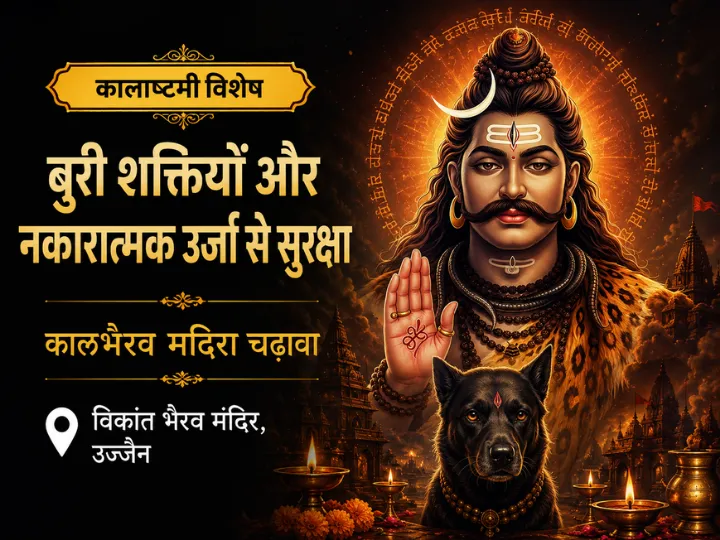
DevPunya performs 4 rituals on 3 October 2026: Kaal Bhairav Sampurn Surakasha kavach Path And Tantrokta Havan at Vikrant Bhairav Mandir, Kalasthmi Special Asht Bhairav Raksha Kavach path and Tantrokta Hawan at Vikrant Bhairav mandir, विक्रांत काल भैरव उज्जैन चढ़ावा at विक्रांत काल भैरव and Vikrant Kaal Bhairav Ujjain Chadhawa for Protection from Negative Energy at Vikrant Bhairav Mandir. Each is performed by pandit jis at the temple itself, in your name and gotra.
What is a kshaya tithi, and why does 3 October 2026 have one?
A kshaya tithi begins after one sunrise and ends before the next, so it prevails at no sunrise at all and appears to be "missing" from the calendar. On 3 October 2026 that happens to Ashtami. These are the days on which published almanacs most often differ about a vrat date.
All timings are calculated for New Delhi, India (28.61°N, 77.21°E) in Indian Standard Time, using the Lahiri (Chitrapaksha) ayanamsha. Sunrise and every muhurat derived from it shift by up to an hour across India, so times will differ for your city.