Vishnupad Temple Gaya — Complete Guide | Pitra Shanti, Pind Daan & Chadhawa
Complete guide to Vishnupad Temple, Gaya — Gayasura story, Ramayana connection, Pitra Dosh explained, Pind Daan, Pitru Paksha, aarti timings, how to reach, and how to offer chadhawa at Shri Vishnupad Vedi online.
Vishnupad Temple, Gaya — Complete Guide
Gaya, Bihar | India's Most Sacred Site for Pitra Karma, Pind Daan & Ancestor Liberation
Quick Navigation
- What is Vishnupad Temple?
- Who is Lord Vishnu — the Deity Here
- The Sacred Footprint — Dharmasila
- The Gayasura Story — Why This Ground is Sacred
- Why Gaya is Supreme for Pitra Karma
- When Ram and Sita Came to Gaya — The Ramayana Story
- Maa Sita's Curse — Why the Falgu Flows Underground
- The Akshayavat — The Immortal Banyan Tree
- What is Pitra Dosh? Signs and Causes
- Pind Daan, Tarpan & Chadhawa — What's the Difference?
- Temple Architecture — Built by Ahilyabai Holkar
- Pitru Paksha — The Most Auspicious Time
- Aarti Timings & Darshan Hours
- How to Reach Gaya
- What is Chadhawa at Vishnupad Vedi?
- Chadhawa Offerings Explained
- Which Chadhawa is Best For...
- 5 Benefits of Offering Chadhawa
- DevPunya Chadhawa Service
- How to Book
- DevPunya Guarantee
- FAQ
- Mantra & Closing
<span id="what-is"></span>
What is Vishnupad Temple?
There are places in India that people visit for peace. There are places people visit for blessings, for darshan, for spiritual tourism. And then there are places people visit because something is unresolved — something that has been unresolved for generations. A debt. A weight. A responsibility toward those who came before.
Vishnupad Temple in Gaya is that kind of place.
This is not primarily a place of celebration. It is a place of resolution — of completing something that the soul owes. For thousands of years, Hindus from every corner of the subcontinent have come to Gaya for one reason above all others: to give their ancestors peace. To give them what the tradition calls mukti — liberation from the cycle of rebirth.
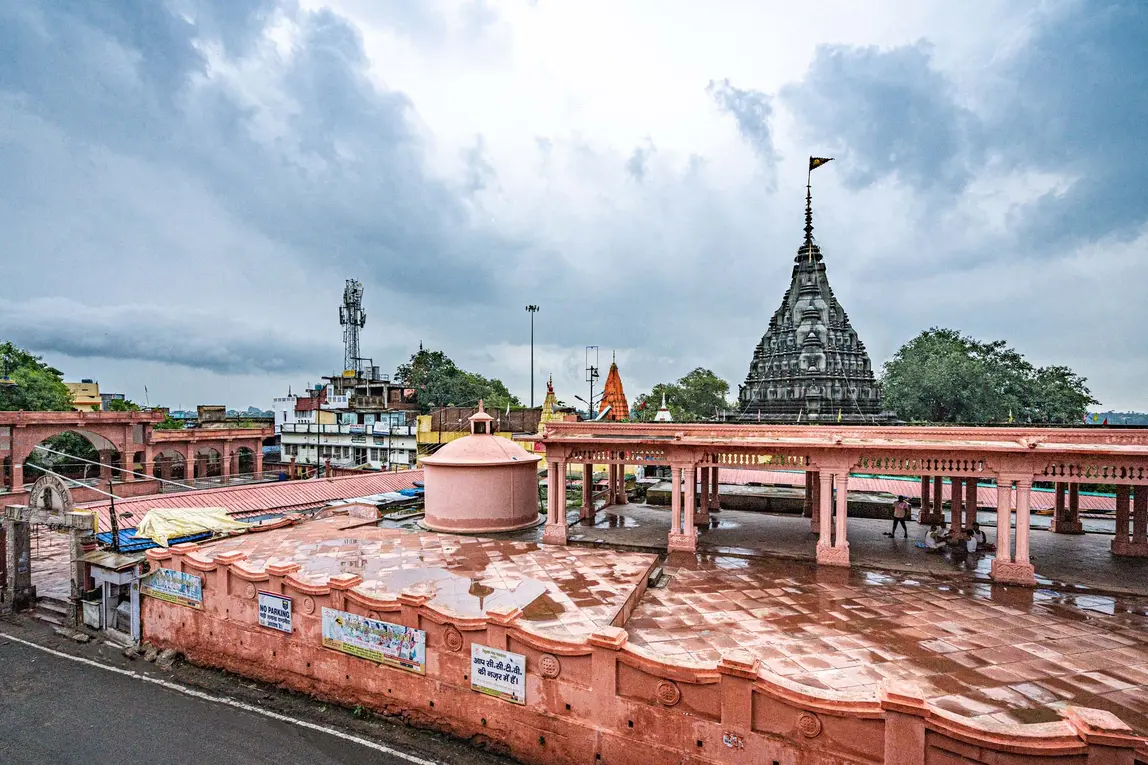
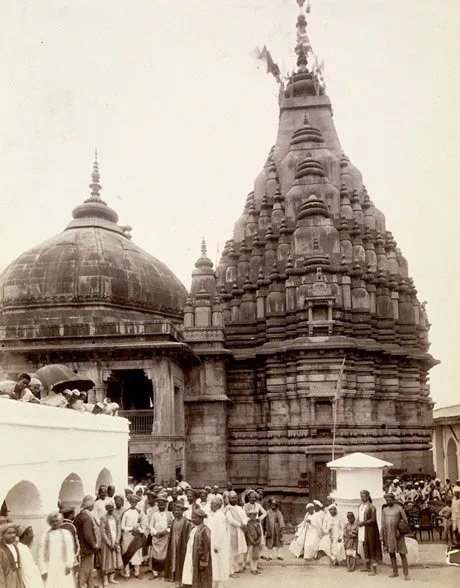
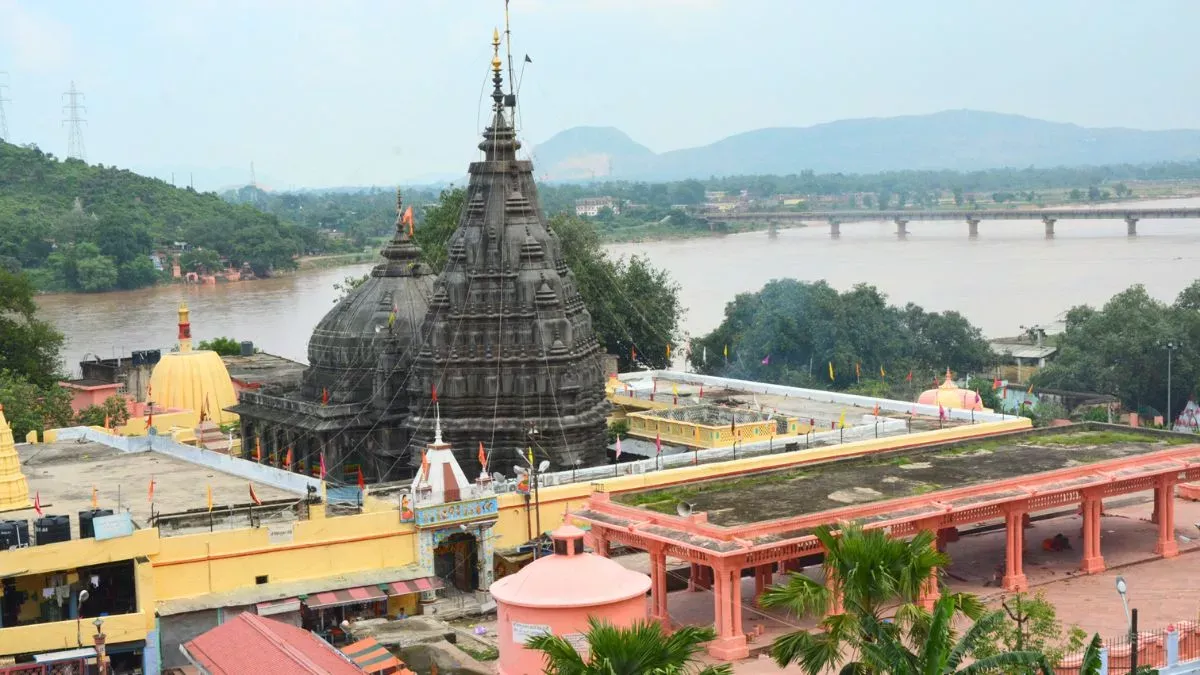
The temple sits on the western bank of the Phalgu River (also called the Falgu) in the city of Gaya, Bihar. At its heart is something that exists nowhere else in the world: a 40-centimeter footprint of Lord Vishnu, imprinted into a block of solid basalt. This footprint — the Dharmasila — is the reason this ground is considered the most powerful site for ancestral rites in the entire tradition.
The Vishnupad Temple has been described in the Vayu Purana, the Agni Purana, the Garuda Purana, and the Brahma Purana — ancient texts that all point to the same truth: Gaya is the place where the line between the living and the departed becomes thin. Where offerings made by the living reach their ancestors directly. Where the karmic debts of a lineage can be addressed and resolved.
FAQ: Is Vishnupad Temple only for those who have lost someone recently? No. The tradition extends far beyond recent loss. People come to Gaya for ancestors who passed generations ago — grandparents, great-grandparents, lineages they may not even know by name. The tradition holds that certain ancestral souls are still seeking liberation, regardless of when they left. The obligation to offer pinda daan at Gaya is not time-sensitive in the way a memorial is. It is a spiritual duty that can be fulfilled at any point in one's life.
<span id="who-is-vishnu"></span>
Lord Vishnu — Who is the Deity of This Temple?
To understand Vishnupad Temple, you first need to understand who is worshipped here.
Lord Vishnu is the Preserver of the universe in the Hindu trinity — Brahma creates, Vishnu preserves, Shiva transforms. But this description barely scratches the surface of who Vishnu is in Vaishnav tradition.
Vishnu is not distant. He is not the remote Supreme. He is the deity who descends — who takes avatars, who comes down into the world again and again whenever the balance of dharma is disturbed. He came as Ram. He came as Krishna. He came as Vamana, as Narasimha, as Parashurama. The defining quality of Vishnu is that he engages — he is invested in the world, in the welfare of his devotees, in the resolution of cosmic and personal imbalance.
Vishnu is specifically associated with the cycle of karma and liberation. He is the one who holds the scales of dharma. He is the one whose grace can dissolve karmic debt. In the Garuda Purana — which is specifically about death, the afterlife, and the fate of souls — Vishnu is the presiding deity. His abode, Vaikuntha, is the final destination of the liberated soul.
This is why, of all places in India, Gaya — the site where Vishnu's footprint is imprinted in the earth — is the supreme site for ancestral rites. When you perform chadhawa here, when you offer Tulsi and Kala Til and Kheer at Vishnu's feet, you are appealing directly to the deity who holds the power over karma, liberation, and the fate of souls.
FAQ: Why is Lord Vishnu associated with pitra karma rather than Shiva? Both Vishnu and Shiva are worshipped for ancestral rites at different sites — Shiva at Kashi (Varanasi), Vishnu at Gaya. The distinction is based on the nature of what each deity governs. Shiva presides over death and transformation — at Kashi, liberation comes through Shiva's direct grace in the final moment. Vishnu presides over karma and the sustained cycle of existence — at Gaya, liberation comes through the resolution of karmic debt accumulated across lifetimes. Both paths lead to moksha, but through different mechanisms. Gaya's Vishnupad specifically addresses the karmic debt owed to ancestors.
<span id="dharmasila"></span>
The Sacred Footprint — Dharmasila
At the center of the Vishnupad Temple's sanctum sanctorum lies the most extraordinary object in the entire complex: the Dharmasila.
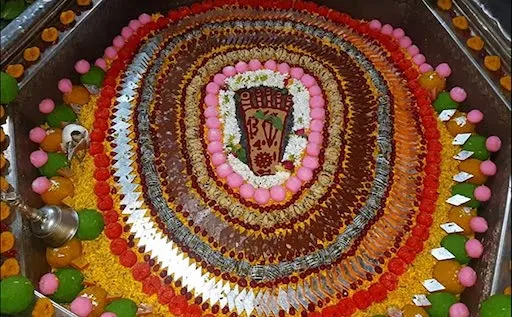
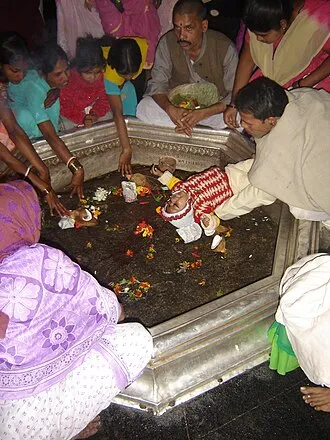
This is a block of solid basalt — ancient, heavy, immovable — in which Lord Vishnu's footprint is permanently imprinted. The footprint is 40 centimeters long. It is set within an octagonal silver basin (a silver kund), which itself is set into the temple's sanctum floor.
What makes this footprint remarkable is not just its existence — it is what the tradition says it contains. Look closely (darshan allows it from a respectful distance), and the footprint is not just a shape. Within it are nine divine symbols: Shankha (conch), Chakra (discus), Gada (mace), Padma (lotus), and five others. These are the very weapons and attributes of Lord Vishnu — all present together in the single impression of his right foot.
This is not an idol carved by human hands. It is not a representation. This is, according to the tradition that has held this belief across thousands of years and millions of pilgrims, the actual impression left by Vishnu's foot when he stepped onto the earth of Gaya. The same ground you stand on. The same basalt that bears the weight of the divine.
The Dharmasila is why this is called Vishnupad — Vishnu's Pada (foot). Not the temple of Vishnu in general. The temple of his foot. His specific presence, his specific contact with this earth.
Devotees who come for darshan touch the edge of the basin, offer Tulsi and sesame, and place their prayers directly at the footprint of the deity of karma and liberation.
🙏 Offer Chadhawa at Shri Vishnupad Vedi, Gaya →
📱 For Pay-After-Video or any queries: WhatsApp / Call +91 9667101992
DevPunya Promise: Video proof within 72 hours • Your name & gotra in the video • Authentic offering at Shri Vishnupad Vedi, Gaya • Not satisfied? Full reschedule or complete refund — no questions asked.
<span id="gayasura"></span>
The Origin Story — The Demon Who Could Grant Moksha
Why is this ground sacred? The answer comes from one of the most unusual origin stories in all of Hindu tradition.
The Story of Gayasura:
In ancient times, there was a demon (asura) named Gayasura — not a demon of malice, but of extraordinary spiritual power. Gayasura performed intense tapasya — penance so rigorous and sustained that even the gods took notice. Brahma appeared and granted him a boon.
Gayasura asked for something unprecedented: the power to grant moksha to anyone who simply looked at him. Whoever set eyes on Gayasura would attain liberation from the cycle of birth and death.
This boon immediately became a cosmic problem.
Moksha — liberation — is meant to be the result of a lifetime of dharmic living, of karma purified through devotion, effort, and grace. If anyone who glimpsed Gayasura received moksha automatically, the entire system of dharma would collapse. Good and evil would become irrelevant. The incentive to live righteously, to honor one's debts to ancestors, to fulfill one's duties — all of it would be made meaningless.
The gods went to Lord Vishnu.
Vishnu's Solution:
Vishnu appeared before Gayasura and asked him to help with something — to become a bed for an immense ritual. Gayasura, devout despite being an asura, agreed. He lay down on the earth.
Then Vishnu placed his foot on Gayasura's chest. His divine, all-powerful right foot. And he pressed down.
Gayasura was pinned beneath the earth. He would remain there — beneath Gaya, beneath the Falgu River, beneath the Dharmasila.
But this was not a punishment. It was a transformation.
Vishnu declared: "The place where my foot rests shall be the most sacred site for ancestral liberation. Rites performed here shall free not just one ancestor, but entire lineages."
Gayasura, pushed into the earth, pleaded: he would be alone, without sustenance. Vishnu gave him a divine assurance: every day, devotees who come to perform pinda daan are in effect feeding Gayasura along with their ancestors. The ritual feeding of ancestors at Gaya simultaneously nourishes the being beneath the earth — and Gayasura's own liberation is secured through this perpetual devotion.
The city that grew around this place — Gaya — takes its name from Gayasura himself.
FAQ: Is the Gayasura story found in any specific scripture? Yes. Versions of the Gayasura story appear in the Vayu Purana, the Agni Purana, and the Brahma Purana. Each version has slight variations, but the core is consistent: a demon with the boon of granting liberation, Vishnu subduing him, and the establishment of Gaya as the supreme site for ancestral rites. The Gaya Mahatmya (the glorification of Gaya) is a specific section of the Vayu Purana that covers this in detail.
FAQ: Why is Gaya considered one of the three best places for pitra karma, along with Varanasi and Prayagraj? Each of the three corresponds to a different aspect of ancestral liberation. At Kashi (Varanasi), Shiva whispers the Taraka Mantra in the ear of the dying at the moment of death — liberation at the threshold. At Prayagraj, the confluence of three rivers (Ganga, Yamuna, Saraswati) purifies karmic weight through the power of the sacred meeting. At Gaya, the rites address the accumulated debt of lineage — the unresolved karmic obligations of ancestors who may have left without receiving their due rites. All three are different solutions to different dimensions of the same problem.
<span id="why-gaya"></span>
Why Gaya is Called the Supreme Kshetra for Pitra Karma
Among all the sacred sites in India, why does Gaya hold a specific and irreplaceable place for ancestral rites?
The Brahma Purana states it directly: Performing Shraddha and Pinda Daan at Gaya liberates not just one ancestor, but seven generations in both directions — seven generations before you and seven after.
This is the promise that has drawn families to Gaya for over two thousand years. Not one soul's liberation. Not just your grandparents' peace. The entire lineage — those you remember and those you have forgotten — receives the benefit of a single sincere offering at Vishnupad.
Why such extraordinary power?
Because of the Dharmasila. Because when Vishnu's foot touched this earth, the ground itself became charged with his power over karma and liberation. The Phalgu River here carries the energy of this contact. The Akshayavat tree at the temple has been absorbing devotion and merit for millennia. The Gayawal Brahmins have been performing these rites continuously for generations without break.
Gaya is not a location that became sacred because a saint or seer visited and meditated here. It is a location where the divine itself touched the earth — where the weight of Vishnu's foot compressed the cosmos into a 40-centimeter footprint that is still present, still accessible, still receiving the offerings of millions of devotees.
The tradition also says:
The merit (punya) accumulated by performing pinda daan at Gaya does not diminish over time — unlike merit earned at other sites, which may require renewal. This is because the offering is made directly at Vishnu's foot, and Vishnu's grace, once given, sustains itself. The punya is akshaya — inexhaustible.
FAQ: Do I have to go to Gaya in person, or can chadhawa be offered on my behalf? The tradition of performing ancestral rites on behalf of someone who cannot travel — because of age, health, distance, or any other reason — is as old as the tradition itself. Families have always sent a representative or pandit to perform these rites at Gaya when the primary person could not come. The offering, made with your name and gotra, reaches your ancestors regardless of who physically performs it at the temple. DevPunya performs chadhawa at Shri Vishnupad Vedi on your behalf and provides video proof so you know exactly what was done.
🙏 Offer Chadhawa at Shri Vishnupad Vedi, Gaya →
📱 For Pay-After-Video or any queries: WhatsApp / Call +91 9667101992
DevPunya Promise: Video proof within 72 hours • Your name & gotra in the video • Authentic offering at Shri Vishnupad Vedi, Gaya • Not satisfied? Full reschedule or complete refund — no questions asked.
Planning Pitra Karma at Brahma Kapal, Badrinath as well? DevPunya also performs the Pitra Shanti MahaPuja at Brahma Kapal Mandir, Badrinath — considered the northern counterpart to Gaya for ancestral rites. 🙏 Explore Brahma Kapal Puja →
<span id="ramayana"></span>
When Ram and Sita Came to Gaya — The Ramayana Story
Gaya's connection to the Ramayana is one of the most deeply felt reasons why this site holds such power in the Hindu imagination.
When Lord Rama, Sita Mata, and Lakshmana were in exile (the fourteen-year Vanvas), they passed through Gaya. The occasion was not accidental — they came with a specific purpose: to perform Pinda Daan for King Dasharatha, Rama's father, who had died of grief after Rama's departure.
The story describes how Rama and Lakshman went to gather the required materials for the ritual — rice, sesame, flowers, water from the Phalgu. While they were away, the time auspicious for the offering was running out.
Sita Mata, unwilling to let the moment pass for her father-in-law's soul, made a decision: she would perform the Pinda Daan herself, right then, with what was available.
She shaped pinda (rice balls) from sand on the bank of the Phalgu. She called upon the river, the Akshayavat tree, a cow, a Brahmin, and Tulsi as witnesses to her act. And she performed the rites.
When Rama returned and asked if the rites were performed, the witnesses — the river, the cow, the Brahmin — denied what had happened. Only the Akshayavat tree and the earth itself bore honest witness.
And then something extraordinary happened: King Dasharatha's hand emerged from the river, reaching up to receive the pinda from his daughter-in-law's hands. The river knew. The earth knew. The offering was real — witnessed by the divine itself even when the human witnesses lied.
This is the story that has made Gaya sacred not just for formal ritual but for the depth of love and commitment it represents. Sita's act was not scheduled. It was not elaborate. It was done with river sand, in the face of time running out, with no one but the earth as witness. And it worked.
The tradition says: the sincerity of the offering matters more than its form. If Sita Mata could perform pinda daan with sand from the Phalgu's bank and have it received by Dasharatha directly — then any honest, sincere offering made at Gaya reaches its destination.
FAQ: Where exactly in Gaya did Sita perform Pinda Daan? Can I visit the spot? The site is connected to the Phalgu River bank at Gaya. There is a Sita Kund in Gaya — a sacred tank associated with this event. Devotees who come to Gaya for pitra karma often include the Sita Kund in their pilgrimage. The Akshayavat tree (now within the Vishnupad Temple complex) is said to be the same tree that bore honest witness to Sita's offering.
<span id="sita-curse"></span>
Maa Sita's Curse — Why the Falgu River Flows Underground
One of the most unusual features of the Phalgu River at Gaya is visible to any visitor: the riverbed looks largely dry. Where there should be a flowing river, there is mostly sand. Children play on the sandy expanse. Visitors walk across what appears to be a dry landscape.
And yet, if you dig into the sand — just a few feet down — you find water. The Phalgu flows. It flows underground, hidden from sight, unable to show itself on the surface.
Why? Because of Maa Sita's curse.
After Rama and Lakshman returned and learned what had happened — that the witnesses had lied, that the cow, the Brahmin, the river had all denied witnessing the truth — Sita Mata was furious.
She cursed each of the false witnesses:
- The Falgu River was cursed to flow underground, to be hidden beneath the sand — never to show its face freely. It lied about witnessing the truth, so it lost the right to be seen.
- The cow was cursed to be worshipped from the back, not the front, unlike other respected creatures.
- Tulsi was cursed not to grow in the soil of Gaya itself.
- The crow was cursed to always fight over food, never to eat peacefully.
- The Brahmin was cursed to never feel fully satisfied — always hungry.
The Akshayavat tree alone was blessed — for being the one honest witness. Sita blessed it with immortality: the tree that told the truth shall never die.
The Falgu River flowing underground at Gaya is not a geological coincidence in the tradition's view. It is a living reminder, still visible today, of an ancient moral choice — and its consequence.
FAQ: If Tulsi was cursed not to grow in Gaya, why is Tulsi Sankalp offered at Vishnupad Vedi? This is a subtle and important distinction. Maa Sita's curse was that Tulsi shall not grow naturally in the soil of Gaya. The tradition holds that Tulsi still holds profound sacred significance for Lord Vishnu — he is inseparable from Tulsi in Vaishnav worship. Tulsi brought from outside and offered at the Dharmasila is considered an act of great devotion. The offering honors Vishnu's love for Tulsi while the curse applies to its natural growth in Gayan soil. Many devotees specifically bring Tulsi from outside and offer it here as a deliberate act of love.
<span id="akshayavat"></span>
The Akshayavat — The Immortal Banyan Tree
Within the premises of the Vishnupad Temple stands one of the most ancient and venerated trees in India: the Akshayavat.
Akshaya means inexhaustible, undecaying, eternal. Vat means banyan. This is the banyan tree that Maa Sita called as a witness to her pinda daan for Dasharatha — the one that told the truth when all others lied — and was blessed with immortality in return.
The Akshayavat is mentioned in both the Mahabharata and the Valmiki Ramayana. It has been growing here for longer than recorded history. Tradition holds that it cannot be destroyed — fire does not harm it, drought does not kill it, time does not age it. This is the tree that received Maa Sita's blessing for honesty, and it has been standing ever since.
Why Pinda Daan Under the Akshayavat:
The tradition says that pinda daan performed under the Akshayavat tree at Gaya accumulates merit that is also akshaya — inexhaustible, undecaying. Normal punya, earned at other sites, diminishes over time or can be dissipated. The merit earned at the Akshayavat in Gaya does not diminish. It remains intact, benefiting the devotee and their lineage across time.
This is why, during Pitru Paksha, the area around the Akshayavat is among the most crowded at the entire temple complex. Families have been coming specifically to perform their rites here — under the shelter of the blessed tree — for generations.
🙏 Offer Chadhawa at Shri Vishnupad Vedi, Gaya →
📱 For any queries or Pay-After-Video: WhatsApp / Call +91 9667101992
DevPunya Promise: Video proof within 72 hours • Your name & gotra in the video • Authentic offering at Shri Vishnupad Vedi, Gaya • Not satisfied? Full reschedule or complete refund — no questions asked.
<span id="pitra-dosh"></span>
What is Pitra Dosh? — Signs and What the Tradition Says
Pitra Dosh is one of the most widely discussed and least clearly understood concepts in Hindu tradition. The confusion is understandable — it touches on something most people find uncomfortable to examine: the idea that our ancestors' unresolved karmic issues can affect us.
Here is what the tradition actually says:
What is Pitra Dosh?
Pitra Dosh is a condition described in Jyotish (Vedic astrology) and in Puranic texts where unresolved karmic debts of ancestors — primarily ancestors who did not receive proper rites, whose wishes went unfulfilled, or who died under difficult circumstances — create a kind of shadow over the lineage. This shadow manifests as repeated obstacles in the descendants' lives.
The Sanskrit term Pitr refers to ancestors — specifically, the souls of those who have passed. Dosh means defect or imbalance. Pitra Dosh is, literally, the ancestral imbalance — the state where the account between the living and the departed is not settled.
What are the signs that may indicate Pitra Dosh?
The tradition describes several patterns that, when they appear repeatedly across a family's generations, are considered indicative:
- Delays in marriage that have no clear worldly explanation — good candidates, no particular obstacles, yet marriage keeps getting delayed
- Repeated miscarriages or difficulties in having children even when medically nothing is wrong
- Business losses or career blocks that appear at the threshold of success — the person works hard, reaches the door, and the door closes
- Chronic health issues in the family, especially affecting the eldest child or the male line
- Discord in the family — siblings who were close becoming estranged, parents and children unable to communicate, marriages that were loving becoming bitter
- Dreams of ancestors — particularly disturbing dreams of the departed, or ancestors appearing asking for something
- A sense of weight or burden that younger family members feel without being able to explain — a heaviness that is present but has no clear cause
An important caution:
These signs are not exclusive to Pitra Dosh. Life brings its own difficulties. A delayed marriage might simply be circumstance. A business failure might be market conditions. Pitra Dosh is not a diagnosis for every difficulty — it is one lens among many.
The tradition's advice is consistent: if these patterns appear persistently, if they skip through generations, if they appear across siblings who have different life circumstances — then performing ancestral rites at a powerful site like Gaya is a sincere offering of resolution. Whether it resolves the specific situation is between your lineage and the divine. Our part is to fulfill the duty.
FAQ: How do I know if I have Pitra Dosh in my horoscope? Pitra Dosh is identified in Vedic astrology primarily by the position of the Sun and Rahu in the same house in the birth chart — most commonly in the 9th house (the house of dharma and ancestors). The Sun represents the father-line and ancestors; Rahu represents unresolved karma and karmic debts. Their conjunction creates what astrologers call Pitra Dosh. Other configurations — debilitated Sun, afflicted 9th house lord — can also indicate ancestral imbalance. A Vedic astrologer can confirm this from your kundali.
FAQ: Is Pitra Dosh permanent? Or can it be resolved? The tradition is clear: Pitra Dosh is not permanent. It is a karmic debt, and karmic debts can be resolved. Performing ancestral rites — Pind Daan, Tarpan, or chadhawa at powerful sites — is specifically for this resolution. Of the three main sites (Gaya, Kashi, Prayagraj), Gaya is considered the most powerful specifically for Pitra Dosh Nivaran because the Dharmasila (Vishnu's footprint) is the source of ancestral liberation. The tradition says a sincere offering at Gaya, even once in a lifetime, settles the Pitra Debt permanently.
<span id="difference"></span>
Pind Daan, Tarpan, and Chadhawa — What is the Difference?
People often use these terms interchangeably, but they are different practices with different forms and contexts.
Pind Daan: Pind Daan is a specific ritual in which rice balls (pinda) mixed with sesame, honey, and other ingredients are shaped and offered to ancestors. The pinda represents the body — offering a pinda to an ancestor is symbolically providing them with sustenance and a form in which to receive your prayers. Pind Daan is a formal ceremony conducted by a pandit with prescribed mantras, specific materials, and at a specific sacred site.
Tarpan: Tarpan (also called Pitru Tarpan) is the act of offering water — sacred water mixed with sesame, barley, or Kusha grass — to ancestors while chanting their names. It is a daily or periodic practice, performed especially on Amavasya (new moon), on Pitru Paksha, and on death anniversaries. It is a more ongoing, maintenance form of ancestral care. Where Pind Daan is a one-time settlement, Tarpan is a regular offering of continued remembrance.
Chadhawa: Chadhawa is the offering of specific items — Tulsi, sesame, Kheer, Kala Til, Gau Seva — at the deity's feet (specifically at the Dharmasila, the footprint of Vishnu). Chadhawa at Vishnupad is the act of offering what the deity loves, with your name and gotra stated, as an act of love and the seeking of grace. It is distinct from formal pinda daan in that it is not a prescribed ceremony — it is a devotional offering, a direct act of communication with Vishnu, seeking his grace for yourself and your lineage.
At Vishnupad Vedi specifically, chadhawa is offered at the sacred site with your name and gotra — making it personally addressed. Vishnu receives the offering from you, from your family, from your lineage. And what Lord Vishnu receives at his own footprint, at the very spot where he subdued Gayasura and promised liberation to ancestors — the tradition says carries enormous weight.
🙏 Offer Chadhawa at Shri Vishnupad Vedi, Gaya →
📱 For Pay-After-Video or any queries: WhatsApp / Call +91 9667101992
DevPunya Promise: Video proof within 72 hours • Your name & gotra in the video • Authentic offering at Shri Vishnupad Vedi, Gaya • Not satisfied? Full reschedule or complete refund — no questions asked.
Looking for puja and chadhawa services at other sacred sites? Explore DevPunya's complete catalog of services across temples in India: DevPunya.com →
<span id="architecture"></span>
Temple Architecture — Built by Ahilyabai Holkar, 1787 CE
The temple standing at Vishnupad today is not a modern construction. It is a structure built with the full weight of royal devotion — and it shows.
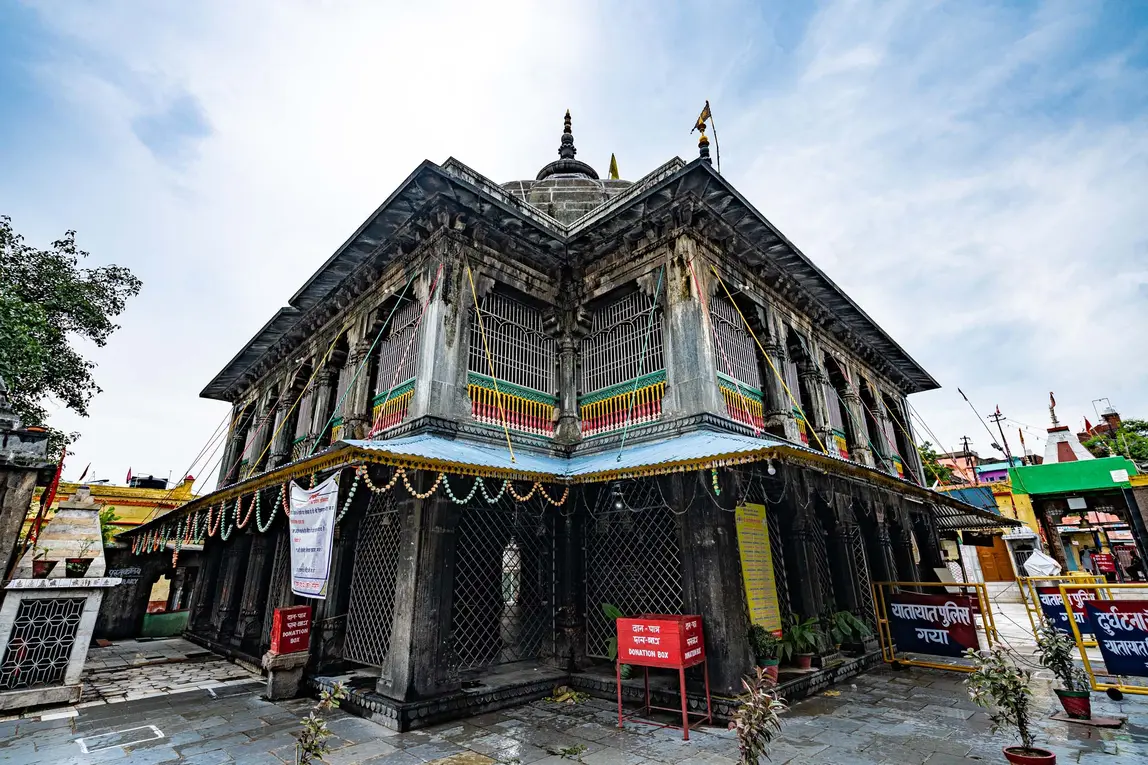
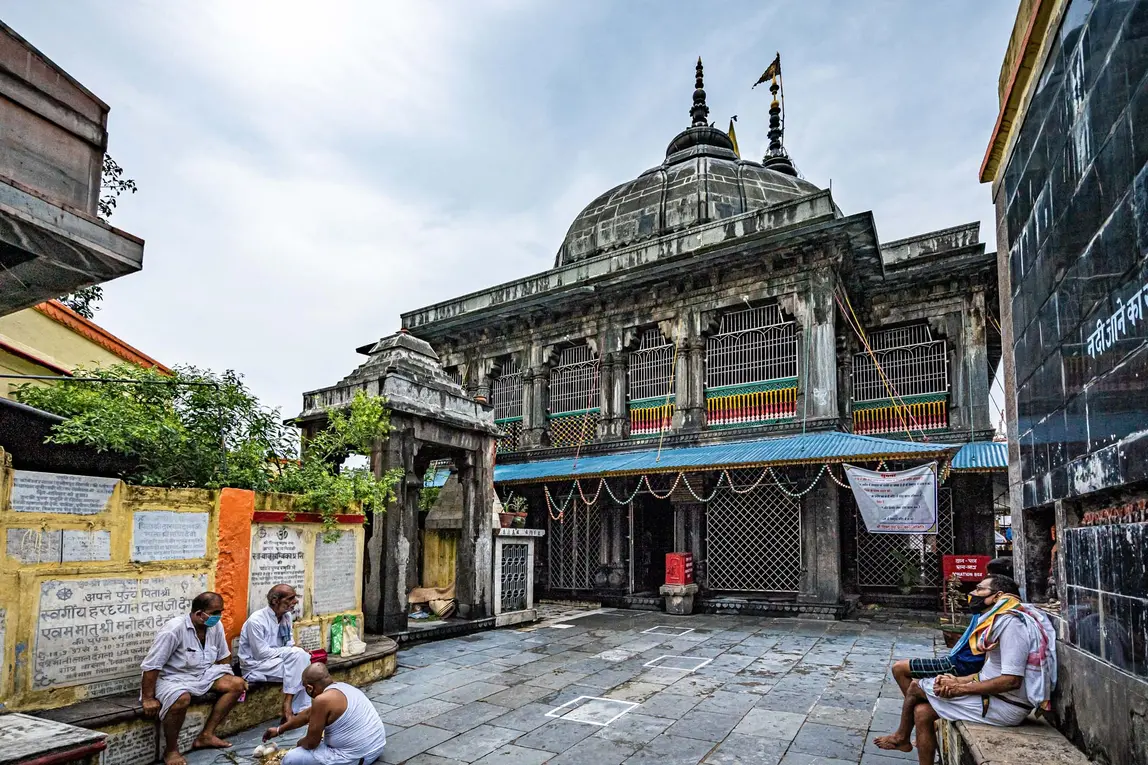
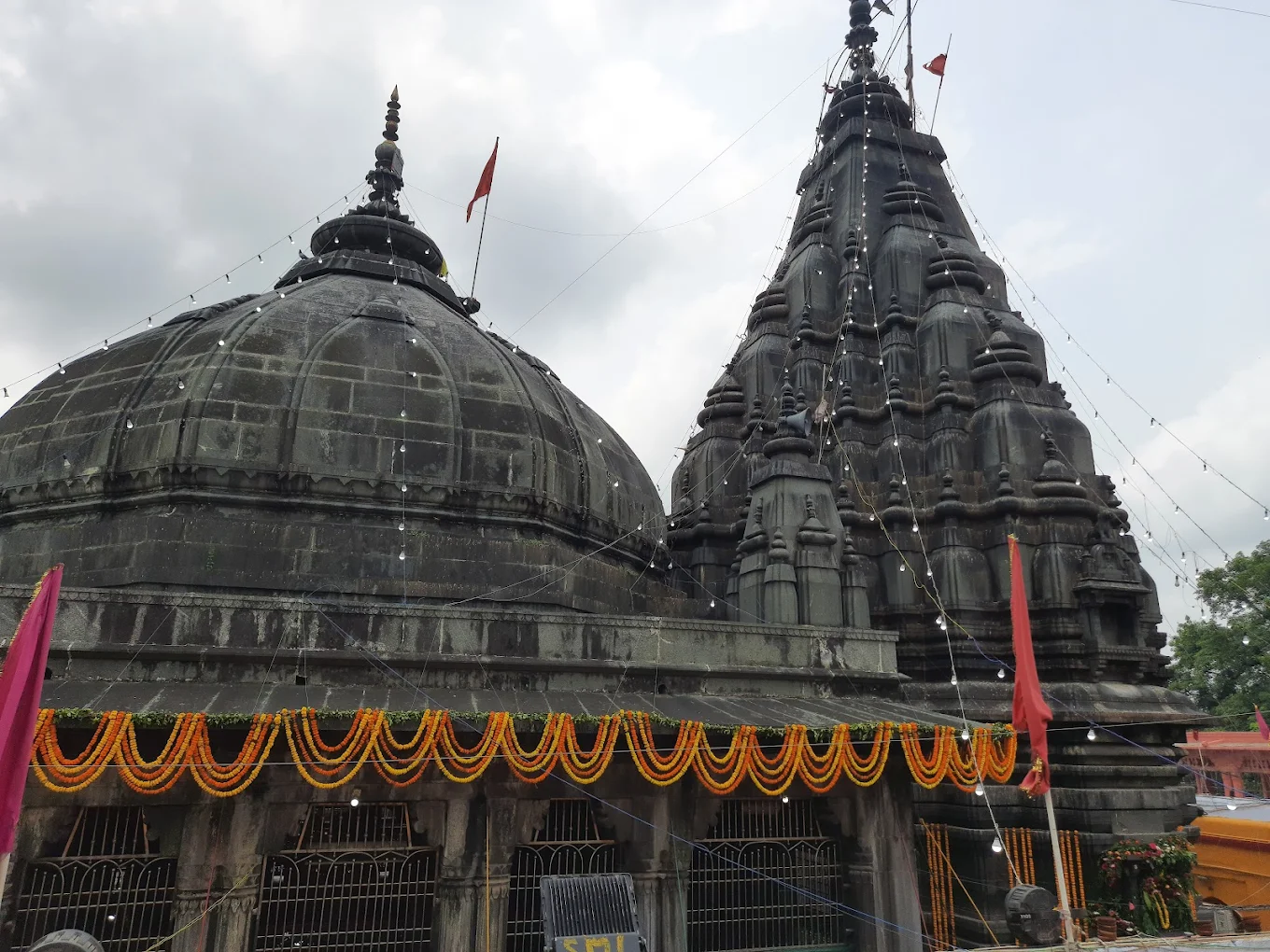
Maharani Ahilyabai Holkar of Indore — one of the most celebrated ruler-devotees in Indian history — rebuilt the Vishnupad Temple in 1787 CE. The same Ahilyabai Holkar who rebuilt the Kashi Vishwanath Temple at Varanasi and contributed to the renovation of temples across the country. She brought black stone from Munger and artisans from Rajasthan to give Vishnupad the structure it wears to this day.
The structure:
- Height: 30 meters (approximately 100 feet) — visible from across Gaya
- The Shikhara (tower): Built on an octagonal base, the tower rises pyramidally, tapering toward the peak — a distinctive silhouette unlike most north Indian temple towers, which are typically circular
- 44 pillars support the outer pavilion, arranged in 8 rows
- Octagonal silver kund: In the sanctum, surrounding the Dharmasila, is an octagonal basin plated in silver — the frame within which Vishnu's footprint sits
- Material: The temple uses black basalt and Chunar sandstone — both materials chosen for their connection to the sacred ground
The overall visual impact of Vishnupad Temple is striking: a dark, massive structure rising over the Phalgu River, its octagonal tower marking the exact point where the divine foot touched the earth.
FAQ: Is the temple built by Ahilyabai Holkar the original temple? The reverence for the site dates back at least to the 4th-5th centuries CE — the Gupta period — when inscriptions and records document the site's sacred status. Earlier structures existed, but most were damaged or destroyed over the centuries. The 1787 structure by Ahilyabai Holkar is the primary temple standing today. She brought in the full resources of her kingdom because she understood the site's significance — the Dharmasila and the traditions surrounding it are far older than any structure above them.
FAQ: Who are the Gayawal Brahmins? The Gayawal Brahmins are the hereditary priests of Gaya — families whose lineage is specifically dedicated to performing pitra karma rites at Vishnupad Temple and the other sacred sites of Gaya. They maintain ancestral records (pitra namavaliya) going back generations. When a family comes to Gaya for pind daan, the Gayawal priests can often locate records of the family's previous visits to Gaya. Their role is to guide the specific rites — which sites, which offerings, in which order — for each family's specific ancestral situation.
<span id="pitru-paksha"></span>
Pitru Paksha — The Most Auspicious Time to Perform Ancestral Rites
Every year, in the month of Ashwin (September-October), the Hindu calendar marks a special fortnight: Pitru Paksha — the fifteen days specifically dedicated to ancestors.
This is when Gaya transforms.
Tens of thousands of pilgrims arrive from across India and from the Indian diaspora worldwide — from the US, UK, Fiji, Mauritius, Southeast Asia, Africa. Hotels fill months in advance. The lanes around Vishnupad Temple become dense with families, pandits, flowers, sesame, and the sound of ancestral names being chanted.
Why is Pitru Paksha so significant?
The Vedic astronomical reason: during this fortnight, the Sun transits into Virgo (Kanya Rashi). This transit, according to the tradition, opens the Pitru Dwar — the channel between the world of the living and Pitru Loka, the realm where ancestors reside. The boundary between the worlds thins. Ancestors become more receptive to offerings made by their descendants.
The Brahma Purana's specific promise for Gaya during Pitru Paksha: offerings made here during this fortnight liberate seven generations in both directions — seven generations of ancestors, and the merit extends forward to protect seven generations of descendants.
Which day of Pitru Paksha is most auspicious at Gaya?
Every day of Pitru Paksha is auspicious at Gaya. But the Amavasya (new moon) at the end of Pitru Paksha — called Sarvapitri Amavasya or Mahalaya Amavasya — is considered the single most powerful day. On this day, offerings reach ancestors regardless of their specific death tithi (lunar date). If you don't know when an ancestor died, this is the day when the offering reaches everyone.
Can rites be performed outside of Pitru Paksha?
Yes. The unique quality of Gaya is that the site itself is perpetually powerful — Amavasya (every month's new moon), Ekadashi, and other auspicious days carry strong energy for ancestral rites throughout the year. The Pitru Paksha intensification is real, but Gaya's grace is not limited to fifteen days annually.
FAQ: I missed Pitru Paksha this year. Should I wait until next year? No — the tradition specifically addresses this. Gaya is one of the few sites where the benefit of ancestral rites is available throughout the year. Monthly Amavasya and Ekadashi are specifically auspicious for offering chadhawa at Vishnupad Vedi. DevPunya performs chadhawa on auspicious dates throughout the year — you do not need to wait for Pitru Paksha to fulfill this duty.
🙏 Offer Chadhawa at Shri Vishnupad Vedi, Gaya →
📱 For Pay-After-Video or any queries: WhatsApp / Call +91 9667101992
DevPunya Promise: Video proof within 72 hours • Your name & gotra in the video • Authentic offering at Shri Vishnupad Vedi, Gaya • Not satisfied? Full reschedule or complete refund — no questions asked.
<span id="timings"></span>
Aarti Timings & Darshan Hours at Vishnupad Temple
Vishnupad Temple has a structured daily schedule that devotees should plan around.
Regular Darshan Timings:
| Session | Hours |
|---|---|
| Morning Darshan | 9:00 AM – 12:30 PM |
| Afternoon Close (Puja & Aarti) | 12:30 PM |
| Evening Opening | 5:00 PM |
| Evening Darshan | 5:00 PM onwards |
| Temple Closes | Late evening (varies) |
Note: During Pitru Paksha, festival days, and special events, timings may extend significantly. Confirm locally before visiting.
Special Aarti: The main aarti at Vishnupad Temple is performed after the morning darshan closes (around 12:30 PM). Evening aarti is performed at closing. Both aartis are significant — the morning aarti is the most attended by locals.
Daily Pinda Daan: Pinda Daan rituals are typically performed in the morning hours, often before the general darshan opens. Families who come specifically for pind daan coordinate with Gayawal Brahmins in advance.
FAQ: Can I go to Vishnupad Temple on any day of the week? Yes. Vishnupad Temple is open every day — there are no specific days it is closed for weekly rest as some temples have. The temple observes a midday break between the morning and evening sessions. Saturdays are considered especially auspicious for Pitra karma (Saturn governs ancestral matters in Vedic tradition), and Amavasya brings particularly large crowds. If you want a quieter, more personal darshan experience, weekday mornings outside of festival season are ideal.
<span id="how-to-reach"></span>
How to Reach Vishnupad Temple, Gaya
Gaya is well connected and accessible from all major cities.
By Air: Gaya International Airport (GAY) is the closest — directly connected to Delhi, Mumbai, Kolkata, and Bangkok, among others. The airport is approximately 8 km from the temple. During Pitru Paksha, special flights are added from major cities. The airport also handles pilgrims traveling from abroad.
Patna Airport (JAY) is approximately 100 km away — connected to more cities. From Patna, take a train or hire a taxi to Gaya (~2.5 hours).
By Train: Gaya Junction (GAYA) railway station — 5 km from the temple. Gaya is a major junction on the Delhi-Kolkata rail corridor, with direct trains from:
| From | Approximate Time | Key Trains |
|---|---|---|
| Delhi (Nizamuddin/New Delhi) | ~10-12 hours | Mahabodhi Express, Rajdhani |
| Kolkata (Howrah) | ~5-7 hours | Multiple express trains |
| Patna | ~1.5 hours | Multiple daily options |
| Varanasi | ~3-4 hours | Multiple connections |
| Mumbai | ~24-28 hours | Via Delhi or Kolkata |
From Gaya station, auto-rickshaws and cycle-rickshaws are available to the temple (~₹30-50). Taxis and cab services are also available.
By Road: Gaya is approximately 100 km south of Patna via NH 83. The road is good and well-maintained. From Patna, taxis and BSRTC buses run regularly (2.5-3 hours).
From Bodhgaya (where the Mahabodhi Temple and Bodhi Tree are located), Gaya is only 13 km — many visitors combine both sites in a single visit.
Within Gaya — Getting to the Temple: The temple is in the main city of Gaya, close to the Phalgu River ghat. Rickshaws, autos, and taxis are available from everywhere in the city. Most accommodation in Gaya is within 2-3 km of the temple.
FAQ: Is there accommodation near Vishnupad Temple? Yes. Gaya has a range of accommodation — from budget dharamshalas and guesthouses to mid-range hotels. Most pilgrims choose to stay close to the temple. During Pitru Paksha, book well in advance (2-3 months) as the city fills up entirely. Outside of Pitru Paksha, accommodation is available without advance booking for most of the year.
FAQ: Can I visit Mahabodhi Temple (Buddha's Bodhi Tree) and Vishnupad Temple in the same trip? Yes, and many visitors do. Bodhgaya — where the Mahabodhi Temple and the Bodhi Tree (under which Buddha attained enlightenment) stand — is 13 km from Gaya city. This makes the two sites easy to combine. Gaya is one of those rare places where the two great spiritual traditions of India — Sanatan Dharma and Buddhism — stand within a short drive of each other, each on ground made sacred by a different kind of divine presence.
If visiting Gaya in person is not possible right now, your chadhawa can still be offered at Shri Vishnupad Vedi. DevPunya performs the offering at the actual temple and sends you video proof within 72 hours.
🙏 Offer Chadhawa at Shri Vishnupad Vedi, Gaya →
📱 Want to see the video first, then pay? WhatsApp / Call +91 9667101992
DevPunya Promise: Video proof within 72 hours • Your name & gotra in the video • Authentic offering at Shri Vishnupad Vedi, Gaya • Not satisfied? Full reschedule or complete refund — no questions asked.
<span id="chadhawa-meaning"></span>
What is Chadhawa at Shri Vishnupad Vedi?
Chadhawa (चढ़ावा) at Vishnupad Vedi is the act of offering specific sacred items at Lord Vishnu's footprint — at the Dharmasila — as an act of devotion, love, and the seeking of divine grace for yourself and your lineage.
The offerings chosen here are not arbitrary. Each item has deep roots in Vaishnav tradition and in the specific Gaya tradition of ancestral rites. Tulsi is inseparable from Vishnu. Sesame — both white and black — has been used in ancestral rites since the Vedic period. Kheer (rice pudding) is the food of prosperity and nourishment. Jaggery and Chana carry the energy of sustenance and strength.
When your chadhawa is offered at Vishnupad Vedi, your name and gotra are stated at the time of the offering. This is not a generic, anonymous act of piety. It is a specific, addressed offering — from you, from your family, from your lineage — placed at the feet of the deity who holds the power over karma and ancestral liberation.
The tradition of chadhawa at Gaya is distinct from formal Pind Daan in its form but connected in its intention. Both are ways of directing devotion and intention toward the liberation and wellbeing of ancestors. Chadhawa is an accessible, sincere act of offering that anyone can do — regardless of whether they are able to perform the full formal rites.
FAQ: I have not done any ancestral rites before. Is it too late? Will offering chadhawa now still help? The tradition does not operate on deadlines. Ancestral souls who have not received rites are, in the tradition's understanding, still seeking them — still hoping that a descendant will remember them and offer something at a sacred site. The act of remembering, of acknowledging the debt, of offering something at Gaya even once — is received with the weight of long-awaited recognition. It is never too late to begin. Lord Vishnu at the Dharmasila has been receiving offerings for thousands of years. He is still receiving.
<span id="chadhawa-items"></span>
The Chadhawa Offerings at Shri Vishnupad Vedi — Explained in Full
Each offering at Vishnupad Vedi has its own traditional significance, its own story, its own connection to Vishnu's nature and to the specific purpose of Gaya pitra karma.
Tulsi Sankalp
Tulsi (the holy basil plant) is Lord Vishnu's most beloved plant — his identity and Tulsi's are inseparable in Vaishnav tradition. There is no Vishnu puja without Tulsi. In the Padma Purana, it is described that Vishnu does not accept any offering — not even flowers, not incense, not food — unless Tulsi is present or unless the devotee has touched Tulsi with devotion first.
This is why Maa Sita chose Tulsi as a witness to her pinda daan for Dasharatha — Tulsi's presence validated the offering in a way nothing else could.
The Tulsi Sankalp at Vishnupad Vedi is specifically connected to marital harmony and divine partnership — the tradition that Vishnu's love for Tulsi represents the devotee's relationship with the divine, the sacred bond between two souls aligned in dharma. For those seeking blessings in marriage, in finding a partner, or in healing a marriage — Tulsi offered at Vishnu's feet in Gaya carries profound meaning.
White Sesame Sankalp (Safed Til)
White sesame is one of the oldest offerings in Vedic tradition. The Atharva Veda mentions til in the context of ancestral rites. In the Pitru Paksha ritual, Tarpan is specifically performed with water mixed with white sesame — the sesame purifies the water and makes it fit to reach the ancestral realm.
White Sesame at Vishnupad Vedi is associated with purity, family peace, and harmony in married life. It is the offering of those whose families have been carrying unspoken conflict, those whose marriages have drifted from their early warmth, those who want to cleanse the subtle atmosphere of their household.
Kheer Sankalp
Kheer — rice cooked in milk with sugar or jaggery — is the food of abundance. It is the food offered at auspicious moments: at births, marriages, celebrations. Offering Kheer to Vishnu at the Dharmasila is an act of invoking his grace for prosperity, nourishment, and abundance in one's life and lineage.
There is also a specific Gaya tradition: Maa Sita, while performing pinda daan, had Kheer in mind as the ideal offering for Dasharatha. Kheer represents the sweetness that a son or grandson hopes to bring to their ancestor — not the bitterness of an unresolved life, but the sweetness of being remembered with love.
Black Sesame Sankalp (Kala Til)
Kala Til — black sesame seeds — is among the most significant offerings in all of pitra karma tradition. The Garuda Purana specifically mentions that black sesame offered to Lord Vishnu on behalf of ancestors removes negative energy from the lineage and grants protection, peace, and health.
Black sesame carries a quality that tradition associates with absorbing negativity — drawing karmic weight out of the lineage and transforming it. For families dealing with unexplained health issues, for those seeking blessings for children, for those who want a protective energy around their household — Kala Til offered at Vishnu's feet at Gaya is what the tradition prescribes.
The fact that it appears in the formal Tarpan ritual (water mixed with Kala Til offered to ancestors) and also as a chadhawa offering here reflects how deeply this item is woven into the fabric of ancestral practice.
Tulsi, Jaggery, Chana Sankalp
This is a compound offering — three items offered together — each representing something specific:
- Tulsi: Vishnu's presence, divine love, the sanctifying principle
- Jaggery (Gur): sweetness, the resolution of bitterness, the desire for good things ahead
- Chana: strength, the sustenance of the body and the lineage
Together, this combination is offered for strength in relationships, devotion, and sweetness in family bonds. It is the offering of someone who wants the relationship between family members — and between the family and the divine — to be strong, sweet, and enduring.
PanchBhet — The Five-Fold Offering
PanchBhet is the comprehensive offering — five items presented together as a complete act of devotion: Tulsi, Kheer, Sesame, Jaggery, Chana.
This is the most complete single offering at Vishnupad Vedi. When you offer PanchBhet, you are not choosing between the energies of the individual items — you are invoking all of them together. Purification (sesame), abundance (Kheer), sweetness (jaggery), strength (chana), and divine love (Tulsi) — all in one act.
For those who are uncertain which specific item to choose, or for those who want to make a comprehensive offering that addresses multiple dimensions at once — PanchBhet is what tradition recommends. It is called panch (five) because, in the Pancha Tattva tradition, five is the number of completeness.
Gau Seva — Service to the Cow
The cow (Gau Mata) holds a unique place in Krishna and Vishnu's tradition. Krishna was Gopal — the cowherd. Vishnu's avatars are consistently associated with cows. In the context of pitra karma, Gau Seva — contributing to the care and feeding of cows — is considered an act of very high merit.
The tradition says: when you serve the cow in Vishnu's name, you are serving what Vishnu loves, which generates merit (punya) that is deep, sustained, and specifically beneficial for the resolution of karmic debts.
Gau Seva at Vishnupad Vedi contributes to the temple's own cows or to a Goshala (cow shelter) connected to the temple. The act generates karmic merit and long-term protection for the lineage — not a single-moment benefit but an accumulation that builds over time.
🙏 Offer Chadhawa at Shri Vishnupad Vedi, Gaya →
📱 For any queries or Pay-After-Video: WhatsApp / Call +91 9667101992
DevPunya Promise: Video proof within 72 hours • Your name & gotra in the video • Authentic offering at Shri Vishnupad Vedi, Gaya • Not satisfied? Full reschedule or complete refund — no questions asked.
Also performing Pitra Karma at Brahma Kapal, Badrinath? DevPunya performs the Pitra Shanti MahaPuja at Brahma Kapal Mandir, Badrinath — the northern sacred site for ancestral liberation, considered highly complementary to Gaya rites. 🙏 Explore Brahma Kapal Puja →
<span id="which-chadhawa"></span>
Which Chadhawa is Best For... — Honest Answers From Tradition
These are the questions devotees actually ask. The answers here are rooted in what tradition says about each offering — not in what any platform wants to sell.
Which chadhawa is best for Pitra Dosh Nivaran and ancestor liberation?
The tradition points to Kala Til (Black Sesame) and PanchBhet as the most directly connected to ancestral liberation.
Kala Til has been used in ancestral rites since Vedic times — it is the specific offering associated with removing negativity from the lineage and granting peace to ancestral souls. The PanchBhet, as the complete five-fold offering, addresses all dimensions of ancestral karma comprehensively.
If your primary reason for coming to Gaya is Pitra Dosh Nivaran — for the liberation of your ancestors, for the resolution of the lineage's karmic debt — these two offerings are the tradition's answer. Offered at Vishnu's footprint, with your name and gotra stated, they create a direct spiritual address from your lineage to the deity who holds the power of ancestral liberation.
That said, the tradition also says: any offering made at the Dharmasila with a sincere heart for one's ancestors reaches them. Prabhu knows the intention behind the offering. He does not weigh the monetary value — he receives the love and sincerity.
Offer Kala Til or PanchBhet → 🙏 devpunya.com/chadhaava/v2/22
Which chadhawa is best for delayed marriage?
Tulsi Sankalp is the traditional answer for marriage-related prayers at Vishnupad Vedi. Vishnu and Tulsi's bond is the symbol of the most devoted, enduring partnership in Vaishnav tradition. Offering Tulsi at his feet with the prayer for the right person to come into one's life — this is what devotees have done at Gaya for generations.
White Sesame also supports this — for the purity and harmony that a good marriage requires.
The tradition says: marriage, at its best, is a dharmic partnership — two people aligned in purpose and love. When that alignment is sought through Vishnu's grace at the Dharmasila, the prayer carries the weight of a sacred site.
Keep working on yourself. Keep meeting people. Keep your heart open. The chadhawa works alongside your own efforts — it is not a replacement for them.
Offer Tulsi Sankalp → 🙏 devpunya.com/chadhaava/v2/22
Which chadhawa is best for family peace and harmony?
Mishri Bhog removes bitterness — that is the Vrindavan tradition. At Gaya and Vishnupad Vedi, the equivalent is Tulsi, Jaggery, Chana — the combination that brings sweetness (jaggery), strength (chana), and divine love (Tulsi) back into the household.
White Sesame is the traditional offering for family peace and married harmony.
For a household where conflict has settled in — where siblings are estranged, where parents and children speak without warmth, where the marriage has become formal rather than loving — these offerings at Vishnu's feet in Gaya are the tradition's remedy.
The energy changes slowly. Trust the process. Keep doing your part — be the one who reaches out, who speaks first, who chooses peace. The chadhawa clears the path; walking it is still yours to do.
Offer Tulsi, Jaggery, Chana or White Sesame → 🙏 devpunya.com/chadhaava/v2/22
Which chadhawa is best for prosperity and financial growth?
Kheer Sankalp is associated with prosperity, nourishment, and abundance — both in its traditional use (offered at auspicious beginnings) and in its specific quality at Vishnupad Vedi.
The tradition around Kheer offering at Vishnu's feet is that it invokes divine sustenance — the quality that makes effort fruitful, that removes the invisible blocks that cause effort to yield less than it should.
Gau Seva is the other significant offering for long-term prosperity — the punya generated by Gau Seva accumulates over time, creating a subtle protective and generative energy around the devotee's work and livelihood.
Keep working. Keep building. The chadhawa is not a substitute for effort — it is a way of inviting divine alignment with your effort. Prabhu does what is best for his devotees in his own time and in his own way.
Offer Kheer Sankalp or Gau Seva → 🙏 devpunya.com/chadhaava/v2/22
Which chadhawa is best for health — especially for children and family health?
Kala Til (Black Sesame) is the tradition's specific answer for health, child blessings, and the removal of negative energy that manifests as illness. The Garuda Purana's use of black sesame in rites specifically addresses the removal of ancestral karmic weight that can manifest as health issues in descendants.
This is one of the signs of Pitra Dosh — unexplained health issues in the family, especially in children. Kala Til offered at the Dharmasila with the intention of the family's health and the removal of ancestral burden is what tradition recommends.
Results are between you and Prabhu. Our duty is to make the offering sincerely. His wisdom determines what follows.
Offer Kala Til Sankalp → 🙏 devpunya.com/chadhaava/v2/22
Can I offer multiple chadhawa items together?
Yes. Many devotees offer a combination — Kala Til with Tulsi, or PanchBhet with Gau Seva. There is no prescribed formula. Choose what resonates with your intention. The PanchBhet, as its name says, is itself already five items combined — for those who want a complete offering in one.
🙏 Offer Chadhawa at Shri Vishnupad Vedi, Gaya →
📱 For any queries or Pay-After-Video: WhatsApp / Call +91 9667101992
DevPunya Promise: Video proof within 72 hours • Your name & gotra in the video • Authentic offering at Shri Vishnupad Vedi, Gaya • Not satisfied? Full reschedule or complete refund — no questions asked.
<span id="five-benefits"></span>
5 Benefits of Offering Chadhawa at Shri Vishnupad Vedi, Gaya
<span id="karma-purification"></span>
1. Purification of Karma & Inner Peace
The devotional understanding: Everyone carries karmic weight — accumulated from this life's actions and from the ancestral lineage we were born into. This weight shows up as a subtle quality of life: a heaviness, a sense of obstacles that appear just when things should be working, an unease that sits beneath the surface even in good times.
Gaya, as the site where Vishnu's foot touched the earth and subdued the demon who threatened the entire structure of karma, carries a specific energy of karmic purification. The Dharmasila is not just a sacred object — it is the point at which divine power addressed the ancestral debt of all of humanity.
What the offering does: When you offer Tulsi, Kala Til, or PanchBhet at the Dharmasila with your name and gotra — you are making a specific, addressed appeal to the deity of karma at the most powerful site for karmic resolution. The tradition says this initiates a purification that works gradually, over time, in ways that are not always immediately visible.
Inner peace is often the first sign. A lightness. A sense of having done something that needed to be done.
🙏 Offer Chadhawa for Karma Purification →
📱 WhatsApp / Call +91 9667101992 DevPunya Promise: Video in 72 hours • Your name & gotra in the video • Full refund if not satisfied, no questions asked
<span id="ancestor-moksha"></span>
2. Liberation for Ancestors — Moksha and Peace for the Departed
The devotional understanding: In Hindu cosmology, death is not the end of a soul's journey. Souls pass through multiple states after death — some finding liberation, others remaining in intermediate states waiting for specific karmic conditions to be resolved. Ancestors who did not receive proper rites, who died in difficult circumstances, or whose unfulfilled duties keep them bound — these souls are believed to remain in a state of seeking, unable to move forward.
The promise of Gaya, stated in the Brahma Purana and the Vayu Purana, is specific: offerings made at the Vishnupad Temple, at Vishnu's own footprint, have the power to grant liberation to ancestral souls — to move them from waiting to liberation, from the cycle to Vaikuntha.
What the offering does: Your chadhawa at the Dharmasila, offered with the names of your ancestors and your gotra, creates a direct line of addressed devotion from the living to the departed. Lord Vishnu — who governs the cycle of karma and the granting of moksha — receives your appeal at the site where his power over ancestral liberation is most concentrated.
Some people report a distinct change after performing ancestral rites at Gaya: the dreams of departed ancestors stop. The sense of weight lifts. A quality of peace enters the family that was not there before. Whether this is what the tradition describes, or simply the psychological effect of having fulfilled a long-standing duty — only the one who experiences it can say.
🙏 Offer Chadhawa for Ancestor Liberation →
📱 WhatsApp / Call +91 9667101992 DevPunya Promise: Video in 72 hours • Your name & gotra in the video • Full refund if not satisfied, no questions asked
<span id="pitra-dosh-removal"></span>
3. Removal of Pitra Dosh & Life Obstacles
The devotional understanding: Pitra Dosh — the ancestral imbalance described in Jyotish and in the Puranas — manifests as repeated obstacles in the lineage. Delays, blocks, patterns that reappear generation after generation. The tradition is clear that these are not random — they are the downstream effect of unresolved ancestral karma.
Gaya is specifically, directly, and prominently cited in every major Puranic and astrological text as the primary site for Pitra Dosh Nivaran. Not as one option among many — as the primary site. The Vishnupad Temple is at the center of this.
What the offering does: The tradition says that a sincere, addressed offering at Gaya — with name and gotra, with the specific intention of Pitra Dosh resolution — initiates a clearing of the ancestral imbalance. The obstacles that have their roots in unresolved karmic debt begin to loosen.
Life still requires your effort. The obstacles being addressed are the ones with spiritual roots — the ones that arise not from your actions but from the lineage you carry. Your work, your relationships, your health — these are supported by the clearing of what was blocking them at the lineage level.
🙏 Offer Chadhawa for Pitra Dosh Nivaran →
📱 WhatsApp / Call +91 9667101992 DevPunya Promise: Video in 72 hours • Your name & gotra in the video • Full refund if not satisfied, no questions asked
<span id="prosperity-wellbeing"></span>
4. Wealth, Prosperity & Family Well-being
The devotional understanding: Prosperity in the Hindu tradition is not just financial. It is the wholeness of a life — health, relationships, livelihood, peace of mind, and the flourishing of one's children. This wholeness is what the tradition calls Saubhagya — the state of being blessed in all dimensions.
Lord Vishnu is also Narayan — the one who sustains and nourishes all of creation. His grace is not just for liberation in the distant future. It is for the health of the present life — for the removal of what blocks abundance and the invitation of what sustains it.
Kheer offered at Vishnu's feet invokes this dimension. Gau Seva accumulates punya that manifests as long-term prosperity. Tulsi, Jaggery, and Chana together invoke sweetness and strength — the qualities a thriving household needs.
🙏 Offer Chadhawa for Prosperity →
📱 WhatsApp / Call +91 9667101992 DevPunya Promise: Video in 72 hours • Your name & gotra in the video • Full refund if not satisfied, no questions asked
<span id="divine-grace"></span>
5. Fulfillment of Wishes & Divine Grace
The devotional understanding: Beyond the specific categories — health, marriage, prosperity, ancestral liberation — there is a dimension that resists categorization. It is the simple desire to be in the grace of the divine. To have Prabhu's attention. To know that your name has been spoken at his feet, at one of the most powerful sites in India, and received.
Vishnu is Bhagwan — the one with all the attributes of completeness. His grace is not limited to specific domains. When you approach him with an honest heart, with Tulsi and sesame at the Dharmasila, with your name and gotra stated — you are doing what devotees have done for thousands of years at this exact spot. Ram and Sita came here. Generations of families have come here. The devotion accumulates.
The tradition says: whatever you bring to Vishnu at the Dharmasila with an honest heart, he receives. What he does with it — his answer, his grace, his timing — is his wisdom, not ours. Our part is to come sincerely. His part is to respond as the Preserver, the Sustainer, the one who holds the balance of karma and love together.
🙏 Offer Chadhawa at Shri Vishnupad Vedi — for whatever you carry in your heart →
📱 WhatsApp / Call +91 9667101992 DevPunya Promise: Video in 72 hours • Your name & gotra in the video • Full refund if not satisfied, no questions asked
<span id="devpunya"></span>
DevPunya Chadhawa Service at Shri Vishnupad Vedi, Gaya
DevPunya performs chadhawa at Shri Vishnupad Vedi, Gaya — at the Dharmasila, Lord Vishnu's sacred footprint — on your behalf.
How it works: You choose your chadhawa items and complete your booking with your name and gotra details. A DevPunya representative performs the chadhawa at the actual Vishnupad Vedi in Gaya — the items are offered at the Dharmasila, Lord Vishnu's footprint, on the sacred site itself. Your name and gotra are clearly included in the offering.
What you receive: A video proof of your chadhawa being performed at Shri Vishnupad Vedi, Gaya — delivered to you within 72 hours. You can see the temple, see the offering, see your name and gotra included. The video is your confirmation that your devotion reached Vishnu's feet at Gaya.
The Pay-After-Video option: If you want to see the video of the chadhawa first and pay only after you are satisfied — DevPunya offers this option. Contact us on WhatsApp before booking: 📱 +91 9667101992
This reflects a simple belief: we are confident in what we do. If you want proof before payment, we will provide it.
What makes DevPunya different: Many platforms offer chadhawa and puja services online. The differences worth knowing: DevPunya provides video proof for every single booking — not as a premium option, but as the standard. Your name and gotra are in that video. You can see the temple, see the offering, and verify what was done.
Other platforms often provide only a confirmation email or a generic receipt. At DevPunya, you receive video proof of the actual offering. If you want to confirm before paying — contact us on WhatsApp. If you are not satisfied for any reason after — full reschedule or complete refund. No conditions, no questions from our side.
🙏 Offer Chadhawa at Shri Vishnupad Vedi, Gaya →
📱 For Pay-After-Video or any queries: WhatsApp / Call +91 9667101992
DevPunya Promise: Video proof within 72 hours • Your name & gotra in the video • Authentic offering at Shri Vishnupad Vedi, Gaya • Not satisfied? Full reschedule or complete refund — no questions asked.
<span id="how-to-book"></span>
How to Book
Step 1: Click the link below. Select your chadhawa items — Tulsi Sankalp, Kala Til, Kheer, PanchBhet, Gau Seva, or any combination.
Step 2: Select the number of members and enter your name and gotra details.
Step 3: Complete your booking. DevPunya schedules your chadhawa on an auspicious date — Ekadashi, Amavasya, Purnima, or other sacred days.
Step 4: Receive your video proof within 72 hours.
Want to pay after watching the video? WhatsApp or call us at +91 9667101992 before booking. We will arrange it.
🙏 Offer Chadhawa at Shri Vishnupad Vedi, Gaya →
📱 WhatsApp / Call: +91 9667101992
<span id="guarantee"></span>
DevPunya Guarantee
- Video proof delivered within 72 hours
- Your name & gotra clearly included in the video
- Authentic chadhawa performed at Shri Vishnupad Vedi, Gaya
- Updates given throughout the process
- If not satisfied: Full reschedule or complete refund, no questions asked
<span id="faq"></span>
Frequently Asked Questions
About the Temple & Deity
What is the Dharmasila? Is it actually Vishnu's footprint? The Dharmasila is a block of solid basalt in the sanctum of Vishnupad Temple with a 40-centimeter footprint imprinted in it. The tradition holds that this is the actual impression left by Lord Vishnu's right foot when he stepped on Gayasura's chest, subduing the demon and sanctifying the ground. Within the footprint are nine divine symbols — Shankha, Chakra, Gada, Padma, and others. The silver kund (basin) surrounding it was installed by Maharani Ahilyabai Holkar when she rebuilt the temple in 1787.
Why is Gaya specifically called the supreme site for pitra karma rather than any other Vishnu temple? There are thousands of Vishnu temples across India — but Gaya has a specific quality that no other site possesses: the Dharmasila. Lord Vishnu's physical contact with this ground created a site where his power over karma and liberation is uniquely concentrated. The Puranas do not say "any Vishnu temple will do." They specifically name Gaya, the Phalgu River, the Akshayavat, and the Vishnupad as the combination of sacred elements that make ancestral liberation here uniquely powerful.
What is the Akshayavat and why is it inside the temple? The Akshayavat is an ancient banyan tree believed to be immortal — the same tree that Maa Sita called as a witness to her pinda daan for Dasharatha, and which was blessed with eternal life for telling the truth when others lied. It is inside the Vishnupad Temple complex. Performing ancestral rites near the Akshayavat is considered especially meritorious because the punya earned here is also akshaya — inexhaustible, eternal.
Is Vishnupad Temple only for Hindus? The formal pinda daan rites, which have specific Vedic procedures, are performed by Hindu families following the Brahmanical tradition. However, the temple itself is open to all those who come with respect and devotion. The Dharmasila — Vishnu's footprint — receives the reverence of devotees from all traditions who recognize the sanctity of the site.
What is the connection between Vishnupad Temple in Gaya and Brahma Kapal in Badrinath? Both are considered supreme sites for ancestral liberation — Gaya in the plains, Brahma Kapal at Badrinath in the Himalayas. Many families perform ancestral rites at both — Gaya for the full formal pinda daan, and Brahma Kapal at Badrinath when visiting the Char Dham. The tradition holds that performing rites at both sites ensures complete resolution of ancestral karma from multiple dimensions. DevPunya offers services at both sites. 🙏 Explore Brahma Kapal Puja at Badrinath →
About Pitra Dosh & Ancestral Rites
How do I know if my family has Pitra Dosh? The clearest indication is through Vedic astrology — specifically, the Sun and Rahu in conjunction in the horoscope, especially in the 9th house (the house of dharma and ancestors). Beyond astrology, the traditional signs include: delays in marriage across generations, unexplained health issues (especially in children), repeated business failures at the threshold of success, family discord that has no clear worldly cause, and recurring dreams of the departed asking for something. If these patterns appear persistently and across siblings, a qualified Vedic astrologer can confirm through the kundali.
My parents didn't do Pind Daan for my grandparents. Does that create Pitra Dosh? The tradition says that ancestors who did not receive proper rites remain in a state of seeking. This does not automatically create Pitra Dosh in every descendant, but it is a duty that has been left unfulfilled. Performing chadhawa at Gaya now — even generations later — is considered a sincere fulfillment of that duty. Lord Vishnu at the Dharmasila has been receiving such belated offerings for centuries.
Can I do Pind Daan and chadhawa on the same visit to Gaya? Yes. Many families who come to Gaya perform formal Pind Daan with a Gayawal Brahmin and also offer chadhawa at the Dharmasila as a complementary act of devotion. They address different aspects of the same intention — the formal rites through the prescribed ceremony, the chadhawa as a direct act of love at the deity's feet.
Should I do ancestral rites for only known ancestors, or for all unknown ancestors too? The tradition includes both. The practice of offering Pind Daan for Sarvapitru — all ancestors, named and unnamed — is specifically designed for those whose lineage is not fully known. On Sarvapitri Amavasya (the Mahalaya Amavasya at the end of Pitru Paksha), offerings made at Gaya reach all ancestral souls regardless of whether you know their names. DevPunya's chadhawa offering uses your name and gotra — the gotra traces back through the entire patrilineal lineage and serves as the spiritual address for the entire ancestral line.
Why does the tradition say Pind Daan at Gaya benefits seven generations in both directions? The Brahma Purana's specific promise — seven generations before and after — reflects the understanding that karma is not individual, it is lineage-level. An ancestor's unresolved karma can affect descendants; resolving it at the most powerful site creates a ripple both backward (toward the departed) and forward (toward future generations). The number seven in this context is the tradition's way of saying: the resolution is comprehensive, not partial.
About the Phalgu River & Sacred Elements
Why does the Falgu River flow underground at Gaya? Because of Maa Sita's curse. When the river falsely denied witnessing her pinda daan for Dasharatha — Sita cursed it to flow hidden beneath the sand, unable to show itself on the surface. The Phalgu's subsurface flow at Gaya is visible even today — the riverbed appears sandy and largely dry, but water is found just a few feet below the surface. This is considered a living reminder of an ancient moral truth.
If Tulsi was cursed not to grow in Gaya's soil, is it appropriate to offer Tulsi there? Maa Sita's curse applied to Tulsi growing naturally in Gaya's soil. Tulsi brought from outside and offered at the Dharmasila is not only appropriate — it is considered especially devotional, because it requires the deliberate effort of bringing what is normally unavailable. Vishnu's love for Tulsi does not diminish based on where the leaf grows. The offering honors that love.
About the DevPunya Service
How do I know the chadhawa was actually performed at Vishnupad Vedi, Gaya? You receive a video proof within 72 hours of the chadhawa being performed. The video shows the offering being made at the actual Shri Vishnupad Vedi in Gaya, with your name and gotra included. You can see the sacred site, see the offerings, and verify your details. This is DevPunya's standard practice for every booking — not an optional extra.
Many online platforms provide only a booking confirmation or a generic receipt. You have no way of knowing what was actually done. DevPunya's standard is video proof for every booking. If you want to confirm the video before paying — contact us on WhatsApp at +91 9667101992.
What is the Pay-After-Video option? For those who want complete confidence before making a payment: contact DevPunya on WhatsApp or call us at +91 9667101992 before booking. We will arrange for you to see the video of your chadhawa first — you pay only after you are satisfied with what you see.
What if I don't know my gotra? If you don't know your gotra, the traditional default is Kashyap gotra — this is the lineage attributed to Kashyapa Muni, considered the ancestor of all humanity in Vedic tradition. Kashyap gotra is used when the specific family gotra is unknown. This ensures the offering still has a precise spiritual address rather than being anonymous.
What if I am not satisfied with the service? Contact DevPunya directly. We offer a full reschedule or complete refund — no conditions, no explanation required from your side. This is not fine print — it is the standard we hold ourselves to. If you are not satisfied, say so and we will make it right.
Can I offer chadhawa for a family member — parent, spouse, or sibling — who has passed away recently? Yes. The chadhawa is offered with the name and gotra of the relevant family member. DevPunya will ensure the offering is made in the name you specify.
Can I book chadhawa from outside India? Yes. DevPunya accepts bookings from devotees worldwide. The chadhawa is performed at Shri Vishnupad Vedi in Gaya; the video proof reaches you wherever you are in the world.
How often should I offer chadhawa at Vishnupad Vedi? The formal pinda daan at Gaya is traditionally considered a once-in-a-lifetime duty — one sincere offering at the Dharmasila is considered sufficient to fulfill the ancestral obligation. However, many devotees offer chadhawa regularly — on Amavasya, on Pitru Paksha, on death anniversaries — as an ongoing act of remembrance and devotion. There is no rule that limits this. If your heart draws you to offer regularly, do so. The tradition welcomes regular devotion.
About Results and Expectations
Will offering chadhawa at Gaya definitely resolve my Pitra Dosh? The tradition says sincere ancestral rites performed at the Dharmasila — at Vishnu's own footprint — are received by the deity and by the ancestors. What changes in the material world, how quickly, and in what form — that is in Prabhu's wisdom, not ours. Our duty is to make the offering sincerely, to fulfill the lineage's obligation with love and intention. Leave the rest in his hands. He does what is best for his devotees — in his own time, in his own way.
The tradition also says: doing your own work is essential. If there are career obstacles, keep working. If there is a marriage delay, keep meeting people and keeping your heart open. The chadhawa works alongside your effort — it is not a replacement for it. Prabhu honors those who fulfill their duties both in the outer world and in the inner one.
I have done multiple pujas before and nothing changed. Why should this be different? Gaya is not one option among many for ancestral rites — it is the primary site specifically designated by the Puranas for this purpose. The Dharmasila carries a concentrated energy that other sites do not. The question of whether any particular offering will change a particular situation is one only Prabhu can answer. What the tradition says consistently is that sincere ancestral rites at Gaya, offered at Vishnu's footprint with genuine love and intention, are never wasted. They reach their destination.
How long after offering chadhawa might I see some change? There is no fixed timeline. Some devotees describe an inner shift — a sense of peace, a feeling that something has been addressed — quite quickly after the offering. Others describe gradual outer changes over months. What almost everyone who performs ancestral rites at Gaya sincerely reports is a quality of peace — a sense of having fulfilled something that needed to be fulfilled. The ancestral burden, even if it does not immediately manifest as specific outer changes, begins to lift.
Do not watch for results. Offer with sincerity and trust Prabhu's judgment. That is the tradition's consistent guidance.
🙏 Offer Chadhawa at Shri Vishnupad Vedi, Gaya →
📱 For any queries or Pay-After-Video: WhatsApp / Call +91 9667101992
DevPunya Promise: Video proof within 72 hours • Your name & gotra in the video • Authentic offering at Shri Vishnupad Vedi, Gaya • Not satisfied? Full reschedule or complete refund — no questions asked.
Also doing Pitra Karma at Brahma Kapal, Badrinath? Both Gaya and Brahma Kapal are cited in the Puranas for ancestral liberation — from different dimensions. DevPunya performs Pitra Shanti MahaPuja at Brahma Kapal Mandir, Badrinath as well. 🙏 Explore Brahma Kapal Puja →
<span id="mantra"></span>
Mantra for Lord Vishnu — Daily Connection
The Vishnu Sahasranama — a thousand names of the Lord:
For those who want to build a daily connection with Lord Vishnu, chanting the Vishnu Sahasranama — or even a portion of it — is the most powerful practice in the Vaishnav tradition. It is specifically recommended in the Puranas for those who want to remove ancestral burden and invite Vishnu's grace.
The primary mantra for Vishnu:
ॐ नमो भगवते वासुदेवाय Om Namo Bhagavate Vasudevaya
This is the 12-syllable Dvadashakshara Mantra of Lord Vishnu — chanted since the Vedic period. Chanting it 108 times daily, especially during Pitru Paksha, on Ekadashi, and on Amavasya, builds a sustained connection with the deity of karma and liberation.
For pitra karma — the Pitru Gayatri:
ॐ पितृदेवाय विद्महे जगत-धारिणे धीमहि तन्नो पितरो प्रचोदयात् Om Pitrdevaya Vidmahe Jagat-dharinae Dhimahi Tanno Pitaro Prachodayat
This mantra, chanted while performing Tarpan or facing south (the direction of the ancestral realm) on Amavasya, is considered a powerful daily practice for maintaining the connection between the living and the departed.
Jai Shri Hari.
There is a saying in Gaya among those who have come for generations: whoever comes to Gaya with a sincere heart leaves lighter. Not because the world changed overnight. But because something that was waiting to be addressed — a debt, a duty, a longing on behalf of those who came before — was finally addressed. The weight that had been carried, sometimes without even knowing it was there, was placed at the feet of Vishnu on the Dharmasila. And Vishnu, the Preserver, received it.
May your offering reach him. May he receive it with grace. And may your lineage — those who came before you and those who will come after — be touched by the light of that offering.
🙏 Offer Chadhawa to Lord Vishnu at the Dharmasila, Gaya →
📱 For Pay-After-Video or any queries: WhatsApp / Call +91 9667101992
DevPunya Promise: Video proof within 72 hours • Your name & gotra in the video • Authentic offering at Shri Vishnupad Vedi, Gaya • Not satisfied? Full reschedule or complete refund — no questions asked.
Watch Vishnupad Temple, Gaya — Darshan and Offerings: