Varahi Devi Shaktipeeth, Devidhura — Complete Temple Guide | Land, Property & Victory Blessings
Complete guide to Maa Varahi Devi Shaktipeeth at Devidhura, Uttarakhand — history, Shaktipeeth story, Maa Varahi's powers, Bagwal Mela, how to reach, and how to book puja and chadhawa online.
Varahi Devi Shaktipeeth, Devidhura — Complete Temple Guide
Champawat District, Uttarakhand | One of the 51 Shaktipeeths of India
Quick Navigation
- What is a Shaktipeeth?
- About the Temple
- Who is Maa Varahi?
- Who Are the Sapt Matrikas?
- The Copper Idol — Why It Stays Covered
- Mahabharata Connection
- Why Maa Varahi for Land, Property & Victory
- 5 Problems Maa Varahi Helps With
- Who Should Do This Puja?
- Bagwal Mela — The Stone Pelting Festival
- Aarti Timings & Darshan Hours
- How to Reach Devidhura
- Best Time to Visit
- The Sapt Matrika Mahayagya — DevPunya Puja
- Chadhawa Offerings for Maa Varahi
- DevPunya — Puja & Chadhawa
- How to Book
- DevPunya Guarantee
- FAQ
- Mantra for Maa Varahi
<span id="shaktipeeth"></span>
What is a Shaktipeeth? The Story of 51 Sacred Sites
Before we talk about the temple, it helps to understand what a Shaktipeeth actually is — because this changes how you experience the place.
Shaktipeeth (शक्तिपीठ) means "seat of Shakti." These are 51 supremely sacred sites spread across India, Nepal, Bangladesh, Sri Lanka, and Tibet. Each one marks the spot where a part of Goddess Sati's divine body fell to the earth.
Here is the story:
Sati was the daughter of King Daksha, one of the sons of Lord Brahma. She loved Lord Shiva with her entire being and married him — even though her father deeply disapproved of Shiva's wild, ascetic ways. Daksha was a proud king and considered Shiva beneath his daughter.
One day, Daksha organized a grand Yagna (sacred fire ritual) and invited every god, sage, and king — but deliberately excluded Shiva and Sati. Sati went to the Yagna uninvited, hoping to understand why. Instead, she was publicly humiliated. Her father insulted Shiva in front of the entire gathering.
Sati could not bear this insult to her husband. She gave up her body in the sacred fire of that very Yagna.
When Shiva learned what had happened, his grief turned into something no universe could contain. He lifted Sati's body and began the Tandava — his cosmic dance of destruction. The three worlds shook. The gods feared everything would be destroyed.
To stop the destruction and restore balance, Lord Vishnu used his Sudarshana Chakra to cut Sati's body. Her divine form was divided into 51 pieces. Each piece fell somewhere on the earth.
Every place where a part of Sati fell became a Shaktipeeth — a permanent seat of the Divine Mother's energy. The goddess at each peeth is believed to be a living manifestation of Sati herself. That is why Shaktipeeths are considered jagrat (awakened, alive) — the mother's presence is constant and direct.
At Devidhura, Mata Sati's lower teeth fell — making this one of the 51 sacred peeths of India. The presiding goddess here is Maa Varahi. Her consort Bhairava at this peeth is Maharudra Bhairava.
FAQ: How many Shaktipeeths are there? The most widely accepted tradition mentions 51 Shaktipeeths. Some texts mention 18 major peeths (Maha Shaktipeeths) and others mention 108. But 51 is the standard count followed across most traditions and temple records.
FAQ: Why are Shaktipeeths considered more powerful than regular temples? Because a Shaktipeeth is where divine matter literally touched the earth. These are not just temples built in honor of the goddess — they are places where the goddess's own body is believed to rest. The energy at these sites is not symbolic. It is direct.
<span id="about"></span>
About Varahi Devi Shaktipeeth, Devidhura
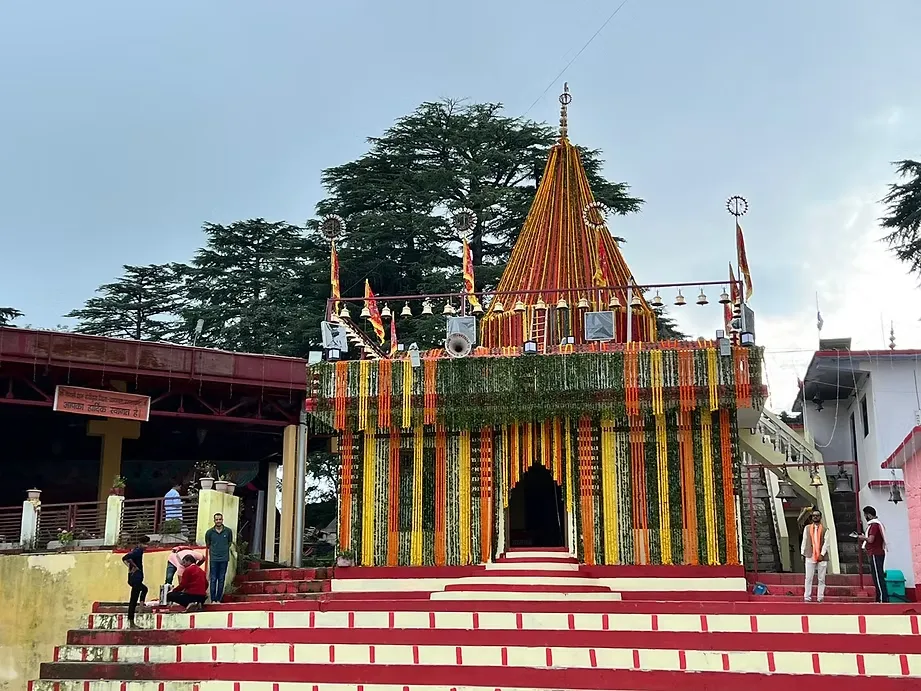
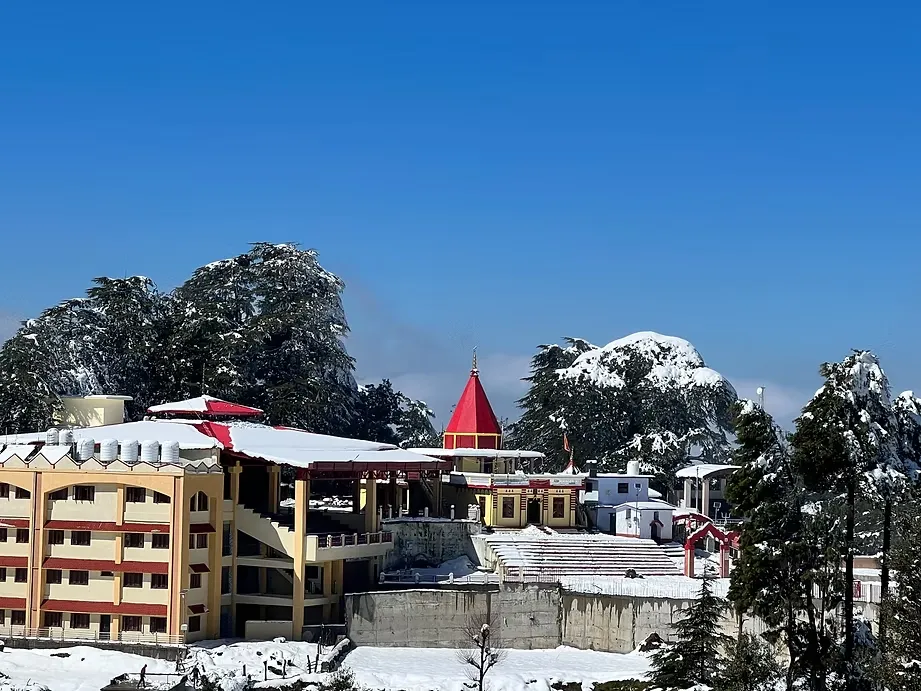
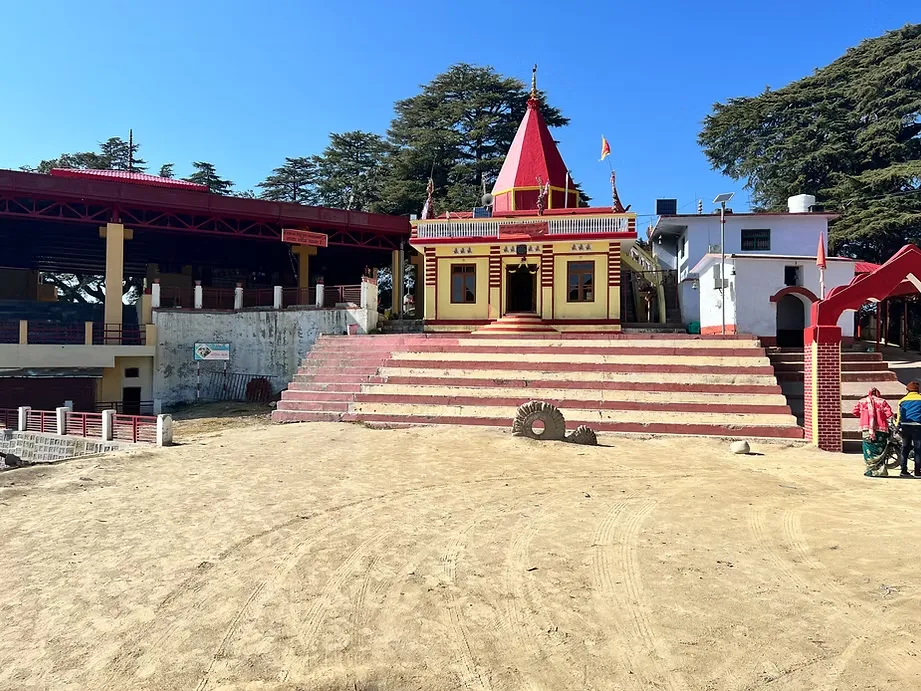
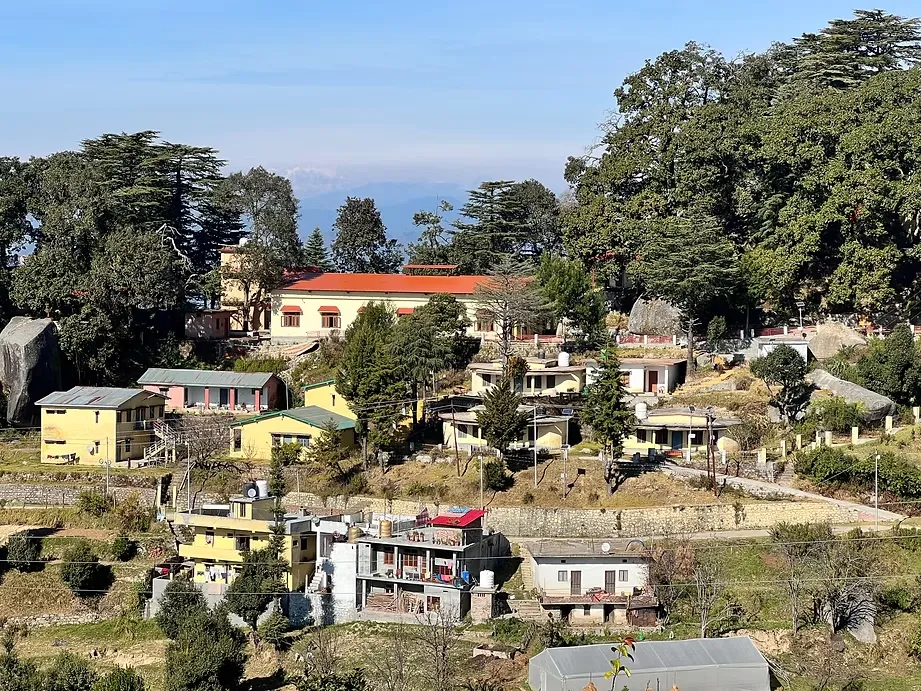
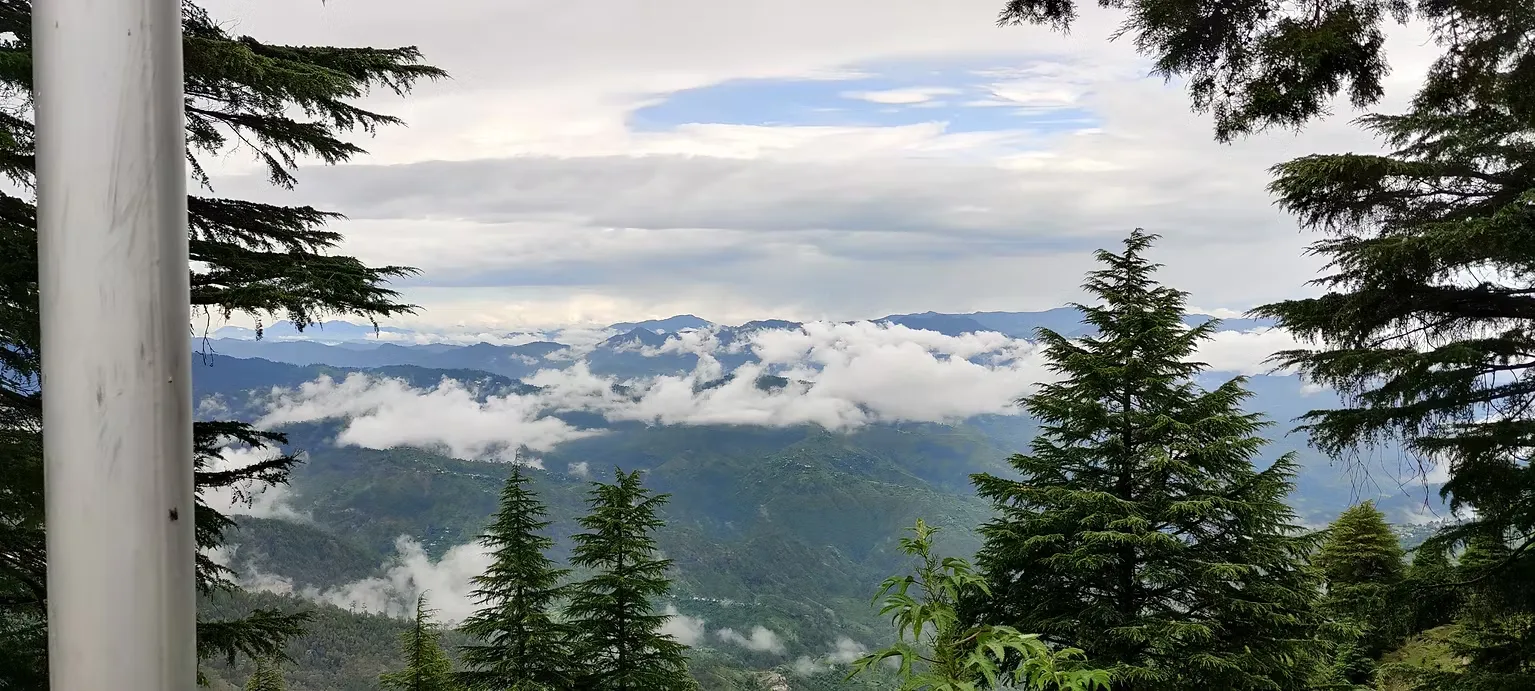
The Varahi Devi Temple is located in Devidhura village, Champawat district, Uttarakhand, at an altitude of 1,850 meters (about 6,070 feet) above sea level. It sits at the junction of three Kumaon regions — Almora, Nainital, and Champawat — surrounded by dense deodar forests and Himalayan hillsides.
This is one of the most significant pilgrimage sites in Kumaon. Devotees from all over Uttarakhand, UP, Delhi, and beyond travel here — especially for the famous Bagwal Mela on Raksha Bandhan.
The temple's history goes back to the time of the Katyuri Kings, who originally established the Varahi idol in this forest. Later, during the reign of the Chand Kings of Kumaon, additional idols of Champa Devi and Mahakali were established within the temple complex.
What makes this temple stand out among the 51 Shaktipeeths is its unique idol, its ancient festival, its Mahabharata connection, and the fierce but maternal energy of Maa Varahi — a goddess who is simultaneously the divine mother and the supreme warrior.
FAQ: Is Devidhura a well-known temple or lesser-known? The temple is well-known throughout Uttarakhand and the Kumaon belt. Among the 51 Shaktipeeths, Devidhura is one of the more spiritually active peeths — its Bagwal Mela draws thousands of devotees each year. Outside the pilgrimage belt, it remains lesser-known compared to Vaishno Devi or Kamakhya, which makes it a more intimate, less commercialized sacred experience.
<span id="maa-varahi"></span>
Who is Maa Varahi?
Maa Varahi (माँ वाराही) is one of the most powerful and fierce forms of the Divine Mother. Her name comes from Varaha — the sacred boar avatar of Lord Vishnu. She carries the energy of that avatar: fierce, protective, earth-upholding, and unstoppable.
Her Appearance: Maa Varahi has the face of a boar (Varah Mukh) and a dark complexion like storm clouds. She wears a crown (Karanda Mukuta) and is adorned with jewels and anklets. She has eight arms (Ashtabhuja) — a form that represents her multi-dimensional protective power.
Her Weapons: In her eight hands she carries:
- Khadga (sword) — cuts through enemies and obstacles
- Chakra (divine discus) — destroys negativity
- Danda (rod/staff) — punishment of wrongdoers
- Pasha (noose) — binds evil forces
- Hala (plow) — overturns obstacles from the root
- Shakti (divine spear) — pierces through illusion and adversity
Two hands rest in the gesture of blessing and protection (Varada mudra) — because even in her fiercest form, she is always a mother first.
Her Energy: Among the Sapt Matrikas (the seven divine mothers), Varahi is considered the general of the divine army — the Senapati of the goddess. She is called Dandanatha in some traditions — the one who wields the danda, the authority and punishment. She is the energy of Lord Varaha himself — the same force that once dove into the cosmic ocean and rescued the Earth from darkness.
When you call on Maa Varahi, you are calling on that energy — the force that lifts what has been buried, that defends the earth, that does not yield to injustice.
FAQ: Why does Maa Varahi have a boar face? She is the Shakti — the divine feminine power — of Lord Varaha, Vishnu's boar avatar. Lord Varaha descended to the depths of the cosmic ocean to rescue Bhu Devi (the Earth goddess) from the demon Hiranyaksha. Because Maa Varahi carries this same protective energy — the energy of upholding the earth and rescuing what belongs rightfully to us — she appears in his form. Her boar face is not fearsome for the devotee. It is fearsome for injustice.
FAQ: Is Maa Varahi a form of Durga or Parvati? Maa Varahi is one of the Sapt Matrikas — the seven divine mothers who emerged from the energies of the major gods and Devi herself. She is part of the same family of the Divine Mother as Durga and Parvati, but she has her own distinct energy, form, and tradition of worship. In Tantra especially, she is worshipped as a sovereign goddess with her own lineage of sadhana.
<span id="sapt-matrikas"></span>
Who Are the Sapt Matrikas — The Seven Divine Mothers?
The Sapt Matrikas (सप्त मातृका) are the seven divine mothers of the Hindu tradition. "Sapt" means seven, "Matrika" means divine mother. Together, they represent the complete feminine power of the cosmos — creation, protection, strength, justice, victory, and dissolution.
Each Matrika is the Shakti (feminine power) of a major deity:
| Matrika | Power Source | Energy |
|---|---|---|
| Brahmani | Lord Brahma | Creation, knowledge |
| Maheshvari | Lord Shiva | Dissolution, Shakti |
| Kaumari | Lord Kartikeya | Victory in war |
| Vaishnavi | Lord Vishnu | Protection, preservation |
| Varahi | Lord Varaha | Earth, property, defeating enemies |
| Indrani | Lord Indra | Power, authority, rain |
| Chamunda | Lord Yama | Justice, destruction of evil |
Together, these seven are invoked when the forces of dharma need to be protected — when the ordinary is insufficient and divine power must be called in full.
The worship of the Sapt Matrikas is ancient — going back to at least the 3rd millennium BCE. By the time of the Mahabharata, their worship was well established. The Sapt Matrikas have a direct connection to Lord Kartikeya — in mythology, they became his seven foster mothers.
In the Sapt Matrika Mahayagya performed at Devidhura through DevPunya, all seven of these divine mothers are invoked together — with Maa Varahi at the center. This is not a puja to one goddess. It is a full gathering of divine feminine force.
FAQ: Why is invoking all Sapt Matrikas together considered more powerful? Each Matrika represents one dimension of divine energy. When all seven are invoked together, it is like bringing the complete protection — not just one face of the Mother, but all her faces simultaneously. For serious matters like property disputes, legal battles, or removing deep-rooted negative energy, this complete invocation is traditionally recommended.
<span id="copper-idol"></span>
The Copper Idol — Why It Stays Covered
This is one of the most unusual and sacred facts about the Devidhura temple.
The idol of Maa Varahi here is made of copper — which itself is rare among goddess temples. But more striking is this: the idol is permanently covered with a copper plate (Tamrapatra). Devotees do not view the idol directly. They receive darshan through the covering.
The reason given in local tradition is profound: the radiance of Maa Varahi's copper idol is so intense, so filled with divine light, that directly viewing it with open human eyes would cause blindness. The goddess's presence is believed to be too concentrated, too pure, for the ordinary eye to bear.
This is not a limitation on devotion — it is a statement about the goddess's power. The covered darshan is itself considered deeply auspicious. Many devotees say that the bhav (feeling of presence) at this temple is unlike any other — precisely because the idol is hidden, the goddess feels more alive, more immediate, more present.
<span id="mahabharata"></span>
The Mahabharata Connection
The Devidhura Shaktipeeth has a direct link to the Mahabharata.
According to tradition, Lord Shri Krishna himself directed the Pandavas to come to this temple and perform a Yagna before the great war of Kurukshetra. The Pandavas needed more than weapons and allies — they needed the blessing of the divine feminine force that commands victory. Krishna sent them here.
The Pandavas came to Devidhura, performed their sacred rites, and received Maa Varahi's blessings. After that, they went to Kurukshetra — and despite all odds, they won.
There is another connection too: the giant stones scattered around the temple complex are said to have been used by the Pandavas for games during their time here. Some traditions say the stone-pelting ritual of the Bagwal Mela evolved from this memory of the Pandavas at Devidhura.
This is why devotees — especially those facing major battles, disputes, legal struggles, or turning points — have come to this temple for centuries. The precedent was set by the Pandavas themselves.
FAQ: Does the Mahabharata connection make this temple especially powerful for disputes and victory? That is exactly the tradition. The Pandavas came here before their biggest battle. The belief is that Maa Varahi's energy specifically helps those who are fighting a righteous struggle — where dharma is on their side but the obstacles are real. Whether it is a land dispute, a legal case, a business rivalry, or personal conflict — if the cause is just, Maa Varahi's blessing is sought to tip the scales.
<span id="why-varahi"></span>
Why Maa Varahi for Land, Property & Victory?
This is a question many people ask — why specifically this goddess for land and property matters?
The answer is rooted in mythology and Shastra.
Lord Varaha, whose energy Maa Varahi embodies, is the god who rescued Bhu Devi — the Earth goddess herself. When the earth was buried under the cosmic ocean by the demon Hiranyaksha, Lord Varaha dove to the depths, fought the demon, and lifted the Earth back to the surface on his tusks. He is the protector and upholder of the earth.
Because Maa Varahi carries this energy, she is directly connected to:
- The earth itself — land, soil, property
- Upholding what is rightfully ours — just as Varaha reclaimed the Earth
- Victory over those who wrongfully take or harm — just as Varaha defeated Hiranyaksha
- Removing what is buried or blocked — the plow (Hala) in her hand overturns and clears
In the Varaha Tantra and related texts, Varahi worship is specifically prescribed for:
- Resolving property disputes and inheritance conflicts
- Protecting property from loss or legal troubles
- Clearing obstacles in real estate
- Victory over enemies and adversaries
- Removing Vastu dosh (architectural/directional negative energy)
- Destroying negative forces, evil eye, and malefic energies
She is not just powerful in a general sense. Her power is specifically oriented toward the earth, toward property, toward justice in material matters, and toward victory in conflict.
<span id="five-problems"></span>
5 Problems Maa Varahi Helps With
<span id="land-dispute"></span>
1. Land Disputes and Property Court Cases
The Problem: A property dispute can consume years of your life. Money spent on lawyers. Relationships destroyed. Sleepless nights. And beneath all of it, the feeling that something that is rightfully yours is being taken away.
Whether it is a land ownership conflict, a boundary issue, a property inheritance fight, or a case where someone has forcibly occupied your land — the emotional and financial toll is heavy.
What the Shastra says: The Varaha Tantra tradition specifically identifies Maa Varahi's domain as resolving property disputes and defeating those who wrongfully claim what belongs to others. Just as Lord Varaha reclaimed the Earth from one who had taken it unlawfully, Maa Varahi's energy is invoked when someone's rightful claim is being denied.
What this puja does: The Sapt Matrika Mahayagya at Devidhura invokes all seven divine mothers together — particularly Maa Varahi — to clear the path for justice. Devotees report that long-pending cases begin to move, that clarity comes, that the right support appears at the right time.
Keep doing your work — consult your lawyer, file your documents, follow the process. The puja works alongside your effort. Maa Varahi clears the divine path; your persistence walks it.
🙏 Book Sapt Matrika Maa Varahi Mahayagya → 🙏 Offer Chadhawa to Maa Varahi →
<span id="vastu-dosh"></span>
2. Vastu Dosh in Home or Property
The Problem: Vastu dosh (वास्तु दोष) is the term for directional or architectural imbalance in a property — when the energy flow of a home or office is disrupted. The signs: repeated financial losses from that address, unexplained illness, relationship conflicts that started after moving in, a general feeling that the house does not support the people living in it.
Some Vastu issues can be fixed by physical changes. But some are deeper — connected to the land's history, to the soil's energy, or to causes that a compass cannot measure.
What the Shastra says: Maa Varahi is the goddess of the earth itself. The land on which a structure stands is her domain. When there is an imbalance in a property's energy, invoking Maa Varahi is traditionally recommended to purify and realign that energy at a foundational level — beyond what physical Vastu remedies alone can address.
What this puja does: The Mahayagya performed at the Shaktipeeth — where the goddess's presence is live and direct — sends a divine intention toward the property. Paired with whatever Vastu corrections you are making physically, the puja works at the energy level.
🙏 Book Sapt Matrika Maa Varahi Mahayagya → 🙏 Offer Chadhawa to Maa Varahi →
<span id="buying-property"></span>
3. Struggling to Buy Land or a New Home
The Problem: You have been trying to buy a home or a piece of land for years. Every deal falls through at the last minute. The loan gets rejected. The seller backs out. A legal problem surfaces. It feels like something is working against you.
Sometimes this is just bad luck. Sometimes there is a pattern — and a pattern suggests something deeper.
What the Shastra says: Obstacles in property acquisition are traditionally attributed to blocked earth energy — either in one's own chart (a weak Bhu Karaka or malefic Saturn influence on the 4th house of property) or in the land itself. Maa Varahi's energy specifically works to unblock this — to open the path that the earth has closed.
What this puja does: A sincere invocation of Maa Varahi — especially through a complete Mahayagya at a jagrat Shaktipeeth like Devidhura — is believed to remove these hidden obstacles. Not by bypassing reality, but by clearing what is genuinely in the way.
Continue doing the practical work: search properties, get your paperwork ready, work with your agent. The puja meets sincere effort.
🙏 Book Sapt Matrika Maa Varahi Mahayagya → 🙏 Offer Chadhawa to Maa Varahi →
<span id="enemies-negativity"></span>
4. Enemies, Negative Forces, and Evil Eye
The Problem: Some struggles are not about property or money directly — they are about people and energies working against you. A competitor who uses unfair means. A person who seems to carry ill-will toward your progress. A streak of bad luck that you cannot explain. The feeling of being watched or dragged down.
In traditional understanding, this is called vighna (obstacle from external sources) — sometimes deliberate, sometimes the result of jealousy, sometimes just negative accumulation.
What the Shastra says: Maa Varahi is the divine general (Senapati) of the goddess army. Her specific function among the Sapt Matrikas is to confront, bind, and neutralize hostile forces. Her Danda (rod) punishes wrongdoers. Her Pasha (noose) binds harmful forces so they cannot act. Her Chakra cuts through negativity.
Ancient texts prescribe Varahi worship specifically for:
- Protection from evil eye (nazar dosha)
- Neutralizing those who work against your interests
- Removing malefic influences from your space and life
- Shielding family from harm
What this puja does: The Mahayagya builds a protective shield — an invocation of divine force on your behalf. It does not harm anyone else. It simply aligns the energy of protection around you and what is yours.
🙏 Book Sapt Matrika Maa Varahi Mahayagya → 🙏 Offer Chadhawa to Maa Varahi →
<span id="wealth-prosperity"></span>
5. Wealth and Prosperity Obstacles
The Problem: Money comes but does not stay. Businesses that should succeed do not. An income that does not grow no matter the effort. Financial progress that seems blocked at some invisible ceiling.
This is one of the most common reasons devotees seek Maa Varahi's blessings.
What the Shastra says: Wealth in the traditional understanding is not just about effort — it is also about the flow of divine grace (anugraha) in a person's life. When that flow is blocked — by past karma, by Vastu issues, by negative energy around a person or their household — even sincere hard work yields less than it should.
Maa Varahi is worshipped for removing these blockages. Her connection to the earth — to material reality, to resources — makes her a natural ally for those seeking prosperity.
What this puja does: The Mahayagya creates a powerful sankalp for your wealth and prosperity — invoking all seven divine mothers to remove what is obstructing the natural flow of abundance in your life.
Keep working. Keep building. Maa Varahi's grace meets the devotee who does not sit still.
🙏 Book Sapt Matrika Maa Varahi Mahayagya → 🙏 Offer Chadhawa to Maa Varahi →
<span id="who-should"></span>
Who Should Do This Puja?
This puja is for anyone who carries a weight they cannot move alone.
Specifically recommended for:
- Anyone involved in a land or property dispute — ownership conflict, boundary issue, inheritance fight, court case
- Anyone dealing with Vastu dosh in their home or workplace
- Anyone trying to buy a home or land and facing repeated obstacles
- Builders, developers, real estate professionals who want divine protection and clarity in their work
- Anyone dealing with enemies or rivals using unfair means against them
- Anyone experiencing unexplained financial blocks despite hard work
- Anyone who feels surrounded by negative energy, evil eye, or malefic forces
- Anyone going through a legal battle of any kind
- Anyone who feels that something unseen is working against their progress
- Anyone seeking general protection for their home and family
- Anyone who wants to strengthen their connection to Maa Varahi and the Sapt Matrikas
- Anyone who simply feels called to this goddess — devotion itself is reason enough
There is no requirement to have a "big problem" to seek the goddess's blessings. Many devotees come simply to offer their gratitude, to seek her grace for their family, or because they feel pulled toward this sacred peeth.
FAQ: Can I do this puja for my children or family members? Yes. You can book the puja for yourself, your family, or someone you wish to offer this to. The name and gotra of those you are booking for will be declared in the sankalp.
FAQ: Do I need to be Hindu or follow any specific tradition to book this puja? The goddess does not require a certificate. If you feel drawn to seek Maa Varahi's blessings, that pull itself is a form of her grace reaching toward you. Come as you are.
<span id="bagwal"></span>
Bagwal Mela — India's Most Unique Festival
Of all the things that make Devidhura special, the Bagwal Mela is perhaps the most extraordinary.
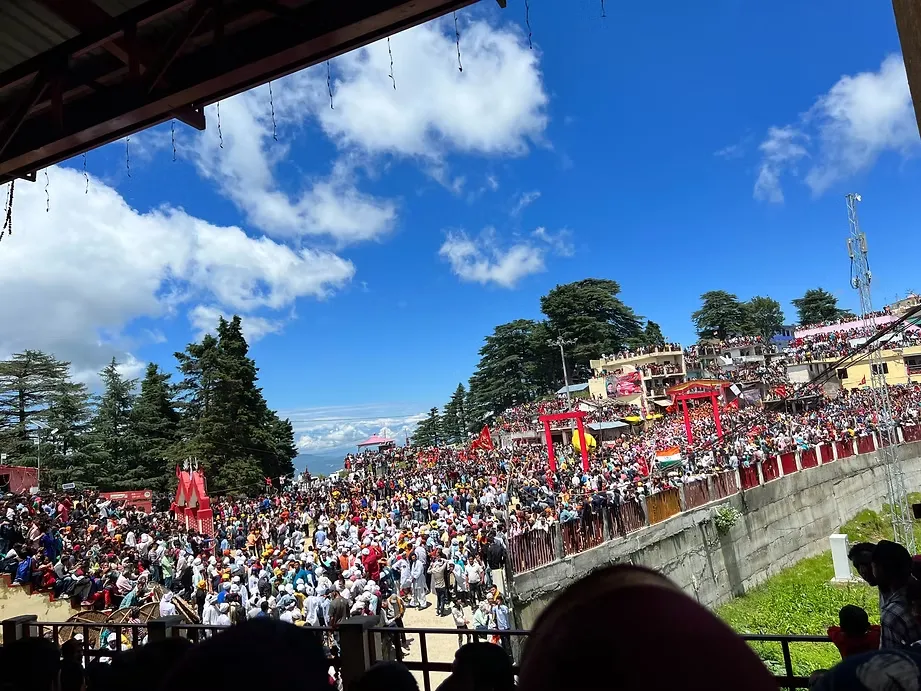
What is the Bagwal Mela? Bagwal (also called Pathar Maar or Asadi Kautik) is an annual festival celebrated at the Varahi Devi Temple on Raksha Bandhan (the full moon of the Hindu month of Shravan — usually July/August). It involves ritual stone pelting between two groups of devotees — and it has been happening for centuries.
How it works: Participants are divided into four Khams (traditional community groups):
- Langaria and Balig Khams face off against Garhwal and Chamyal Khams
The groups pelt stones at each other while protecting themselves with large wooden shields. The ritual continues until enough blood has been shed as an offering to the goddess. The pandit declares the ceremony complete when the offering is considered sufficient.
Why stones? The story behind it: Long ago, the Kham communities practiced Narbali — a yearly human sacrifice to honor Maa Varahi. According to tradition, when the time came for one year's sacrifice, the chosen one was the only grandson of an elderly woman. She had no one else in the world.
In complete devotion and desperation, she prayed to Maa Varahi — asking the goddess to show mercy. The goddess heard her. She appeared and said: if blood equivalent to one human life can be offered, the grandson can be spared.
From that day, the Kham communities transformed Narbali into the ritual of stone pelting — offering blood through wounds, not death. The goddess accepted. The tradition held.
What is remarkable: In the entire recorded history of this festival — through all the years of stone pelting, all the injuries, the shields, the momentum of hundreds of participants — there has been no loss of life. This is widely considered a miracle and a sign of Maa Varahi's constant protective presence over her devotees.
In 2013, following a directive from the Uttarakhand High Court, the tradition was modified — fruits and flowers are now thrown alongside stones, reducing the severity of injuries while preserving the sacred ritual.
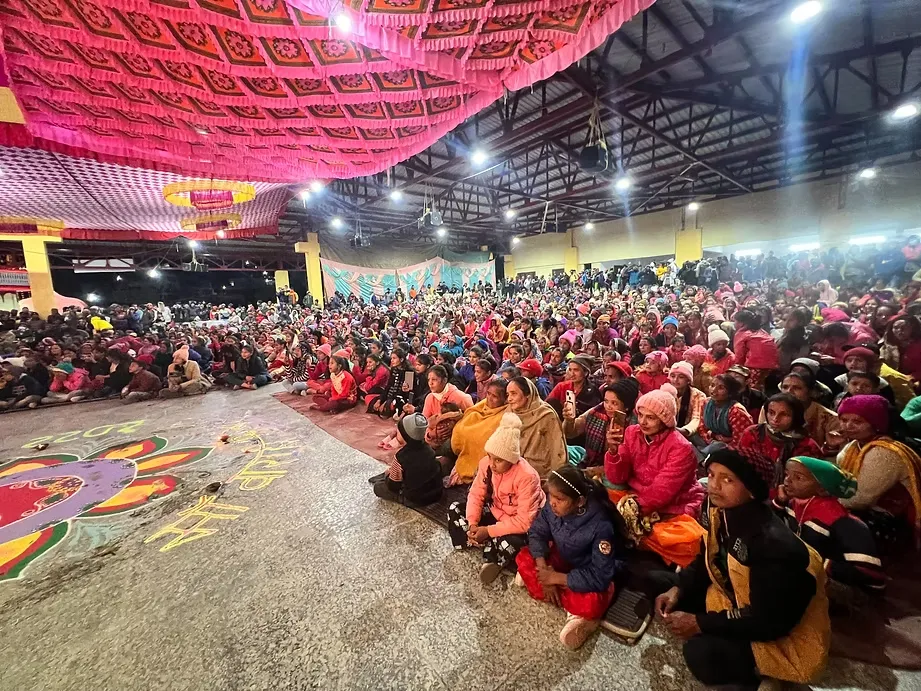
FAQ: Is the Bagwal Mela safe to watch? Yes. Thousands of spectators attend every year. The participants are the two competing groups — the community members who voluntarily take part in the ritual. Spectators watch from the surrounding area. The atmosphere is both intense and devotional — something between a battlefield and a temple. Those who have witnessed it say it is unlike anything else.
FAQ: Can tourists attend the Bagwal Mela? Yes. The Bagwal Mela is not restricted to locals. Pilgrims and visitors are welcome. It draws crowds from across Uttarakhand and beyond. Plan accommodation in advance if you are visiting during Raksha Bandhan — the area fills up.
<span id="aarti-timings"></span>
Aarti Timings & Darshan Hours
The Varahi Devi Temple, Devidhura is open for darshan:
Daily Timings: 5:00 AM to 7:00 PM
Special pujas and aartis are performed at opening and closing. During major festivals like Navratri and Bagwal Mela, the temple remains open for extended hours with special ceremonies.
Timings may vary during festivals and special occasions. Confirm locally before planning a visit.
<span id="how-to-reach"></span>
How to Reach Devidhura
Devidhura is in Champawat district, Uttarakhand. It is a hill village at 1,850 meters altitude.
By Road (recommended):
| From | Distance | Approximate Time |
|---|---|---|
| Haldwani | ~174 km | ~4.5 hours |
| Kathgodam | ~201 km | ~4.5–5 hours |
| Almora | ~132 km | ~4 hours |
| Lohaghat | ~45 km | ~1 hour |
| Champawat | ~58 km | ~1.5 hours |
Route from Haldwani: Haldwani → Champawat → Lohaghat → Devidhura
Private car or hired cab is the most comfortable option given the mountain roads. Bus services run through the Kumaon belt but are infrequent for this route.
By Train: Nearest railway station is Kathgodam (Haldwani area) — well-connected to Delhi, Lucknow, and major cities. From Kathgodam, take a cab or bus via Haldwani to Devidhura (~200 km).
By Air: Nearest airport is Pantnagar Airport (near Haldwani). From there, the drive to Devidhura is approximately 4.5 hours. Most visitors fly to Delhi and take a train or drive to Kathgodam/Haldwani.
PIN Code: 262580
<span id="best-time"></span>
Best Time to Visit
Best overall: July to November
This window gives you the most pleasant weather — post-monsoon freshness, clear skies, comfortable temperatures for hill travel, and access to the full experience of the temple.
For Bagwal Mela: Plan specifically for Raksha Bandhan (August). This is the most spiritually charged and visually extraordinary time to visit. Book accommodation well in advance.
Navratri (April and October): Both Navratris are celebrated with special ceremonies at the temple. Visiting during Navratri offers an elevated devotional atmosphere.
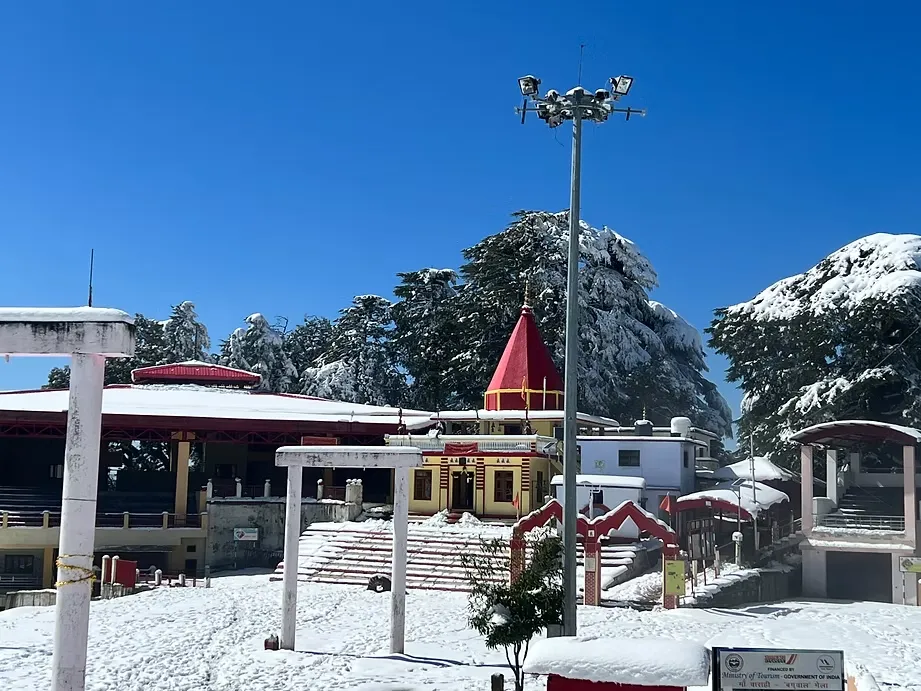
Avoid December–February if you are not prepared for cold and potential snowfall — roads to the village can become difficult. The temple remains open, but travel is harder.
<span id="devpunya-puja"></span>
The Sapt Matrika Maa Varahi Mahayagya — What Happens in the Puja
The puja offered through DevPunya at Devidhura is a Sapt Matrika Mahayagya — a complete fire sacrifice that invokes all seven divine mothers, with Maa Varahi at the center.
This is not a small personal ritual. A Mahayagya is a full ceremonial fire sacrifice (Yagna) performed by the pandit on your behalf at the temple — in the presence of the goddess, at the Shaktipeeth itself.
What happens during the puja:
- Your name and gotra are declared in the sankalp at the beginning of the ceremony
- The Sapt Matrikas are invoked through Vedic mantras and Tantrik prayers
- The sacred fire is lit and offerings are made — ghee, herbs, grains — with specific mantras and prayers
- Maa Varahi's specific mantras are chanted
- The puja closes with an aarti and final offering
The puja is performed at the actual Shaktipeeth — not at a generic temple. This matters. The energy at a jagrat peeth where Sati's body fell is different from a regular temple. The connection is more direct.
After the puja:
- You receive a video of your puja within 72 hours — so you can witness the ceremony yourself
- Blessed prasad from the ceremony is shipped to your address
🙏 Book Sapt Matrika Maa Varahi Mahayagya →
<span id="chadhawa"></span>
Chadhawa Offerings for Maa Varahi — What You Can Offer
Chadhawa (चढ़ावा) means making a direct offering to the goddess — sending something to her feet at the temple. This is a deeply personal act of devotion, separate from the puja ceremony.
DevPunya offers the following chadhawa items for Maa Varahi at Devidhura:
Shringar Kit A complete set of sacred adornments for the goddess. Maa Varahi is the divine mother — she is honored with shringar the way a beloved mother is honored. Offering shringar is a gesture of love and reverence.
Mata ki Chunri The red or patterned sacred cloth offered to the goddess. Draping the goddess with a chunri is one of the most personal and traditional offerings a devotee can make — it is like placing your care directly on her.
Saree Offering a full saree to the goddess is considered one of the highest expressions of devotion and gratitude. It is traditionally done when seeking or fulfilling a major wish.
Silver Bichwe (Bichiya) Silver toe rings offered to Maa Varahi's feet. This offering specifically honors the goddess as the divine feminine — her feet are sacred ground.
Kamal ka Phool (Lotus Flower) The lotus is the symbol of purity, spiritual power, and divine grace. Offering a lotus to Maa Varahi is traditional and deeply auspicious.
Sindoor The sacred red vermillion — a symbol of the living, active goddess. Offering sindoor is a mark of worship and devotion to the divine mother.
Mithai Bhog Sweet offerings presented to the goddess as bhog — food offered with love and received as her prasad.
Nariyal (Coconut) The coconut is the universal sacred offering in Hindu tradition — the hard outer shell representing ego and the soft interior representing surrender. Breaking a coconut before the goddess is an act of offering oneself.
Gau Seva (Cow Service) Contributing to the care and feeding of cows at the temple. The cow is sacred in Hindu tradition and Gau Seva is considered one of the most meritorious acts of devotion.
🙏 Offer Chadhawa to Maa Varahi at Devidhura →
FAQ: Can I offer multiple chadhawa items together? Yes. You can choose any combination of chadhawa items in your booking. Many devotees combine the shringar kit with chunri and sindoor, or offer a saree with Gau Seva. There is no strict rule — offer what feels right from the heart.
FAQ: Which chadhawa should I offer if I have a specific wish? The tradition does not prescribe specific chadhawa for specific wishes. Any offering made with a pure, sincere intention is received by the goddess. What matters most is the devotion behind the offering, not the item itself. That said, offering a saree or silver bichwe is traditionally associated with major wishes and expressions of deep gratitude.
<span id="devpunya"></span>
DevPunya — Puja & Chadhawa at Maa Varahi's Shaktipeeth
DevPunya offers two distinct services for Maa Varahi at Devidhura:
Puja (Sapt Matrika Mahayagya): A complete fire sacrifice ceremony performed by the temple pandit on your behalf. Your name and gotra are declared in the sankalp at the beginning. The Sapt Matrikas are invoked. The sacred fire is lit. You receive a video of your puja within 72 hours and blessed prasad is shipped to you.
Chadhawa: A direct personal offering at the goddess's feet — your chosen items physically offered at the Devidhura temple. No ceremony, just a pure offering of love and devotion.
Both can be booked online, performed at the Shaktipeeth, and you receive video confirmation.
🙏 Book the Puja → 🙏 Offer Chadhawa →
<span id="how-to-book"></span>
How to Book
Step 1: Click the puja or chadhawa link below.
Step 2: Choose the number of members for whom the sankalp will be taken. One member is sufficient. You can include more if you wish — the choice is yours.
Step 3: Complete your booking with your name and details. The pandit takes your sankalp and performs the puja at the Devidhura temple.
Step 4: Receive your puja video within 72 hours. Blessed prasad is shipped to your address.
🙏 Book Sapt Matrika Maa Varahi Mahayagya → 🙏 Offer Chadhawa to Maa Varahi →
<span id="guarantee"></span>
DevPunya Guarantee
- Puja video delivered within 72 hours
- Free rescheduling if something comes up
- Full refund, no questions asked if the puja cannot be performed
<span id="faq"></span>
Frequently Asked Questions
About Maa Varahi & the Goddess
Which puja is best if I have a land dispute? The Sapt Matrika Maa Varahi Mahayagya is specifically associated with this. Maa Varahi's energy — rooted in Lord Varaha's act of reclaiming the Earth — is traditionally invoked in matters of land ownership, property conflict, and rightful claims. Combined with your own practical efforts (legal, administrative, personal), the puja works alongside you. 🙏 Book the puja →
Which puja should I do if I want to buy land or a new home? This one. The Varahi Mahayagya is specifically for removing obstacles in property acquisition — repeated deal failures, unexplained blocks, persistent bad luck in real estate. Keep working on the practical side. The puja clears the energy path. 🙏 Book the puja →
Which puja is best for removing Vastu dosh? Maa Varahi is the goddess of the earth itself. The Mahayagya at her Shaktipeeth works at a foundational energy level on the property. Combine it with whatever physical Vastu corrections you are making, and the effect is stronger on both fronts. 🙏 Book the puja →
Which puja should I do if I have enemies or rivals working against me? Maa Varahi is the Senapati — the general — of the divine army. Her Danda and Pasha are specifically for binding and neutralizing forces working against you. This puja invokes her for your protection. It does not harm anyone — it aligns divine protection around you. 🙏 Book the puja →
Which puja is best for wealth and removing financial obstacles? Maa Varahi's connection to the earth — to material reality and resources — makes her a powerful ally for removing financial blockages. The Mahayagya invokes all seven divine mothers for your prosperity. Keep doing your work alongside it. 🙏 Book the puja →
Which puja should I do if I feel surrounded by negative energy or evil eye? This puja is one of the best options for protection from negative forces. Maa Varahi specifically destroys malefic energies. Many devotees who experience unexplained bad luck, repeated setbacks, or feel they are under someone's ill-will seek her blessings through this Mahayagya. 🙏 Book the puja →
Is Maa Varahi the right goddess for protection of my home? Yes. She is the protector of the earth and what stands on it. Offering her chadhawa regularly — a chunri, sindoor, flowers — is a beautiful and powerful way to maintain her protective presence around your home. 🙏 Offer Chadhawa →
About Results and Expectations
Will the puja give me a guaranteed result? The result is between you and Maa Varahi. That is an honest answer. The puja creates a sincere, complete invocation of the goddess's energy on your behalf — performed at a jagrat Shaktipeeth, by a qualified pandit. What the goddess does with that is in her wisdom, not ours.
What we know from tradition and from the experience of countless devotees: Maa Varahi watches those who are sincere and who continue working. She does what is best for them, in her own timing. Keep doing your part. Do not stop your practical efforts. The puja works alongside hard work — it is not a replacement for it.
How quickly will I see results? There is no fixed timeline. Some devotees report movement in their situation within weeks. Others describe change happening gradually over months. The goddess operates on her own timeline.
What you can do: remain consistent. If a situation is ongoing — a dispute, a purchase, a legal battle — consider making regular offerings and maintaining your connection with Maa Varahi over time.
I already did a puja at another temple and nothing changed. Will this one work? Different temples carry different energy. A Shaktipeeth — where Sati's body itself rests — is a different category. But no temple, no puja, and no promise of results can substitute for your own effort and sincerity. The goddess meets the devotee who is truly trying. Come with honest intention, keep working, and trust her judgment.
About the Temple
Is Devidhura a Shaktipeeth or just a famous temple? It is one of the 51 authentic Shaktipeeths of India — the site where Mata Sati's lower teeth fell. It is a jagrat peeth (awakened/alive seat of the goddess), not merely a historical temple. The goddess's presence here is considered direct and continuous.
Which Bhairava is at this Shaktipeeth? The Bhairava (masculine consort deity) at Devidhura is Maharudra Bhairava. In Shaktipeeth tradition, each peeth has a presiding goddess and a corresponding Bhairava — together they represent the complete divine pair.
What is the famous Bagwal Mela? An annual festival on Raksha Bandhan where two community groups ritually pelt stones at each other as an offering to the goddess. The practice evolved from an ancient tradition of blood offering — the goddess is said to have accepted this symbolic offering after showing mercy to a devoted grandmother. Despite the intensity of the ritual, there has never been a loss of life in its entire history. It is one of the most unique religious festivals in India.
Can I visit the temple in winter? The temple is open year-round. However, Devidhura is at 1,850 meters altitude and road conditions can be difficult in December–February due to snowfall. If you plan a winter visit, check road conditions in advance.
About the Puja & Chadhawa Service
How will I know my puja was performed? DevPunya sends you a video of your puja within 72 hours of it being performed. You can see the ceremony, the fire, and the offerings made on your behalf at the Devidhura temple.
Do I need to travel to Devidhura for the puja? No. DevPunya performs the puja at the temple on your behalf. You receive the video and prasad at home. Your name and gotra are declared in the sankalp by the pandit through the entire ceremony.
How many members can I include in the sankalp? You can book for one member or more — the choice is yours. One member is perfectly sufficient. If you want to include a spouse, a parent, or another family member in the intention, you can add them.
What is the difference between the puja and the chadhawa? The puja is a complete Mahayagya ceremony performed by the pandit — a fire sacrifice with mantras, invocations, and sankalp. The chadhawa is a direct personal offering at the goddess's feet — items like flowers, chunri, saree, or sindoor physically offered at the temple. Both are meaningful, and both can be done together or separately.
I live outside India. Can I still book? Yes. DevPunya accepts bookings from devotees worldwide. The puja is performed at Devidhura, the video reaches you wherever you are, and prasad can be shipped to your address.
Can I offer chadhawa without booking the full puja? Yes. Chadhawa and puja are separate services. You can offer chadhawa on its own as a pure act of devotion, without booking the full ceremony. 🙏 Offer Chadhawa →
For Those Physically Visiting
Is photography allowed at the temple? Confirm with temple authorities on arrival — policies can vary and may change during festival periods.
Are there accommodation options near Devidhura? Lohaghat (45 km) has more accommodation options. Some guesthouses may be available closer to the temple. During Bagwal Mela, book well in advance.
Is the road to Devidhura accessible for regular cars? The road is manageable in good weather but is a mountain road — narrow sections, turns, and gradients are normal. An SUV or experienced hill driver is preferable. Post-monsoon road conditions (September–November) are generally the best.
<span id="mantra"></span>
Mantra for Maa Varahi
The following mantra is traditionally chanted for Maa Varahi's blessings:
Maa Varahi Moola Mantra:
ॐ ह्रीं वाराह्यै नमः Om Hreem Varahyai Namah
This mantra invokes Maa Varahi directly. It is simple, complete, and powerful.
How to chant:
- Sit in a clean, quiet space, ideally facing east or north
- Light a small diya (lamp) if available
- Begin by holding Maa Varahi in your mind — her form, her copper face, her weapons, her blessing hands
- Chant the mantra 108 times with a Rudraksha mala if you have one
Chanting consistently — daily or at least on Tuesdays, Fridays, and Saturdays (days associated with the fierce goddesses) — builds a sustained connection with Maa Varahi's energy.
A Panchmukhi Rudraksha Mala is considered ideal for chanting goddess mantras. It carries the energy of all five faces of Shiva and is used by practitioners across Shaiva and Shakta traditions. If you are establishing a regular practice of Varahi worship, having a dedicated mala for it is recommended.
🛒 Panchmukhi Rudraksha Mala by DevPunya →
Jai Maa Varahi.
The goddess who once reclaimed the Earth from the depths of the ocean does not forget those who call on her with a sincere heart. Keep doing your work. Let her do hers.
🙏 Book Sapt Matrika Maa Varahi Mahayagya → 🙏 Offer Chadhawa to Maa Varahi →
Watch the Devidhura temple and Bagwal Mela: