Brahma Kapal, Badrinath — Complete Guide to Pitra Shanti & Pitra Dosh Nivaran
Complete guide to Brahma Kapal, Badrinath — the most sacred Pind Daan site in Hinduism. Learn about Pitra Dosh signs, Pitra Shanti, the story of Brahma Kapal, and how to book the Pitra Shanti Mahapuja.
Brahma Kapal, Badrinath — Complete Guide to Pitra Shanti & Pitra Dosh Nivaran
Badrinath Dham, Chamoli District, Uttarakhand | The Most Sacred Site for Ancestral Liberation in Hinduism
Quick Navigation
- What is Brahma Kapal?
- The Story Behind Brahma Kapal
- Why This Place Above All Others?
- What is Pitra Dosh?
- Signs You May Have Pitra Dosh
- What is Pitra Shanti?
- 4 Benefits of the Puja
- Who Should Perform This Puja?
- When is Brahma Kapal Open?
- How to Reach Badrinath
- The Mahapuja — DevPunya Service
- How to Book
- DevPunya Guarantee
- FAQ
- Mantra for Pitra Shanti
<span id="about"></span>
What is Brahma Kapal?
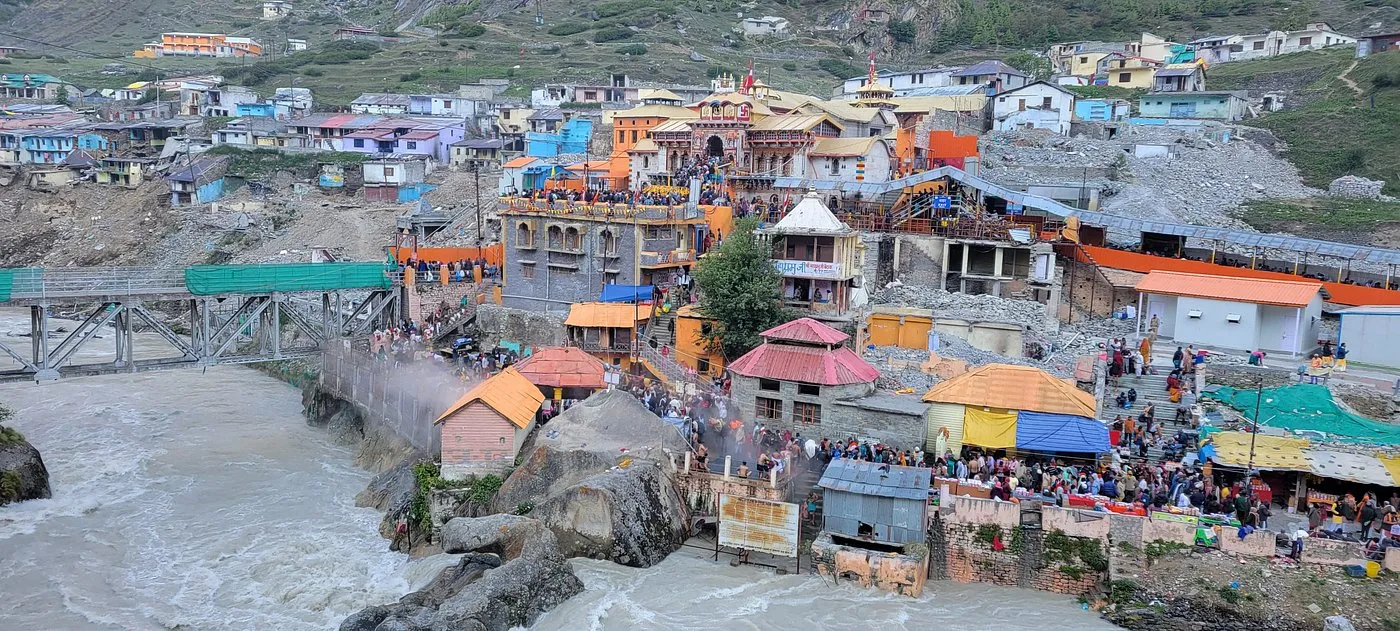
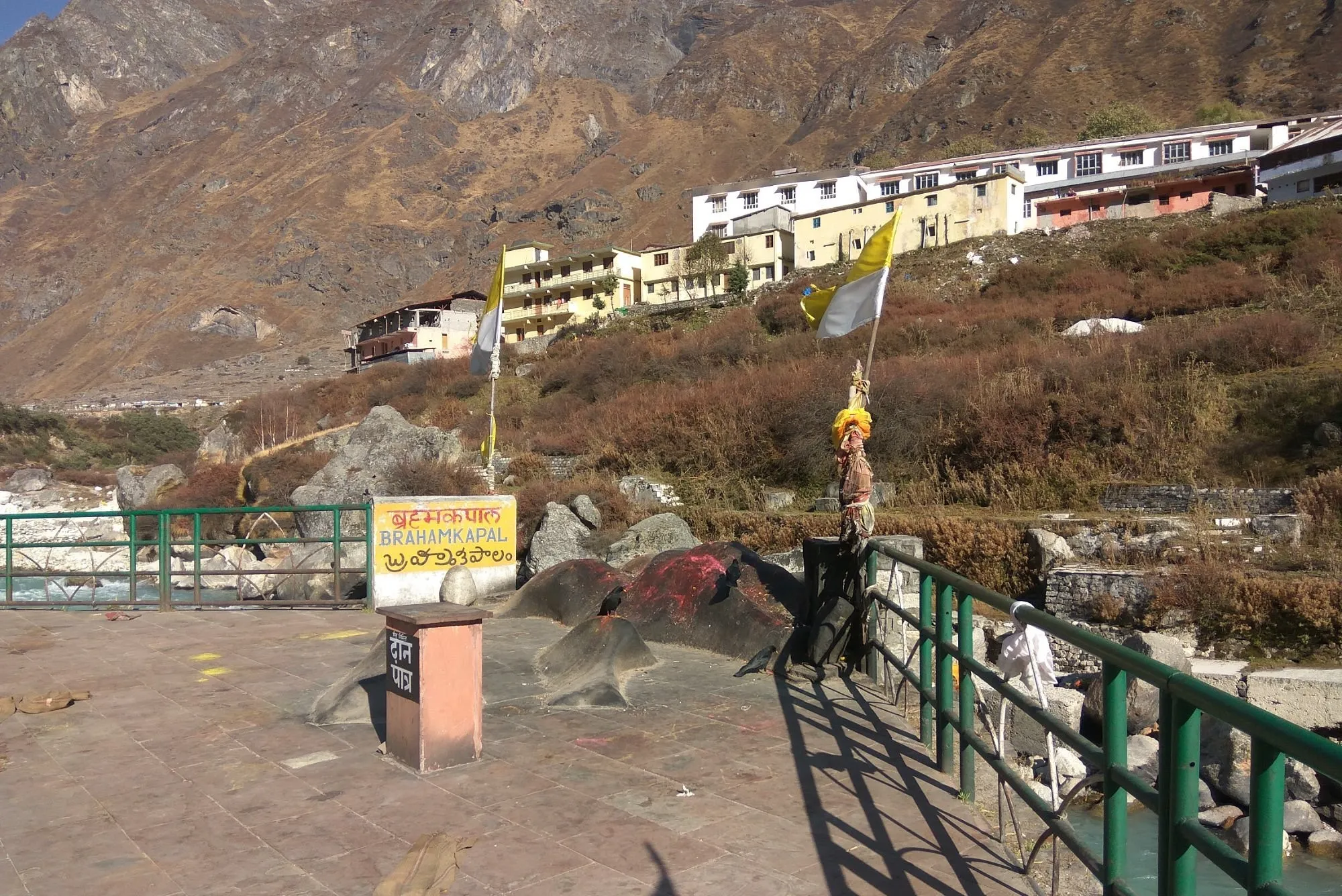
Brahma Kapal (ब्रह्मकपाल) is a flat rocky platform on the banks of the sacred Alaknanda River, approximately 200 to 300 meters north of the Badrinath temple in the Chamoli district of Uttarakhand. In the Himalayan landscape at over 3,000 meters altitude, this small platform is considered the single most important site for Pind Daan (ancestral offering) and Pitra Shanti (peace of ancestors) in all of Hinduism.
This is not a grand structure or an ancient carved temple. It is simply a place — a sacred flat ground on a riverbank — where, according to scripture and tradition, the most powerful event of cosmic forgiveness took place. And it is that event which makes this ground what it is.
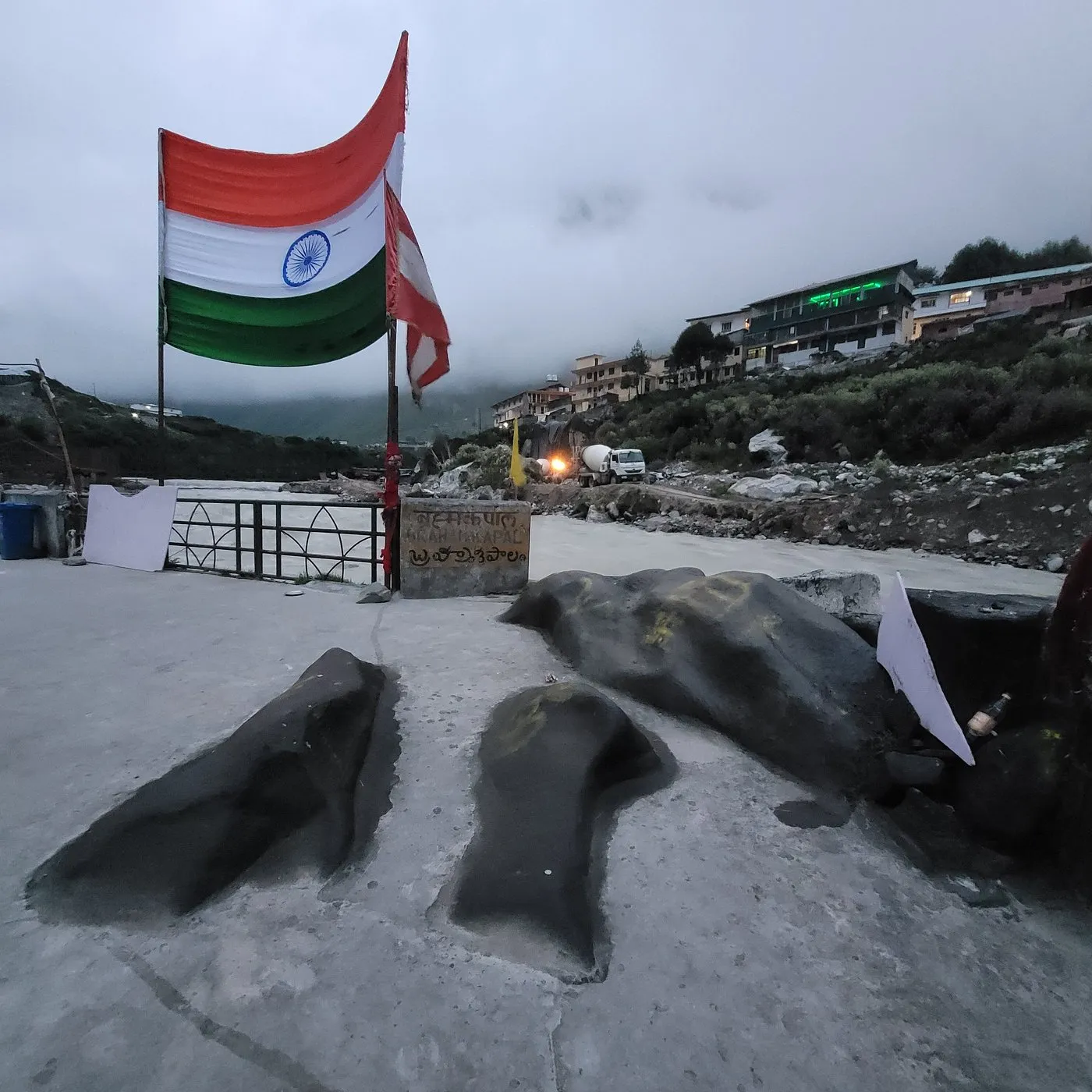
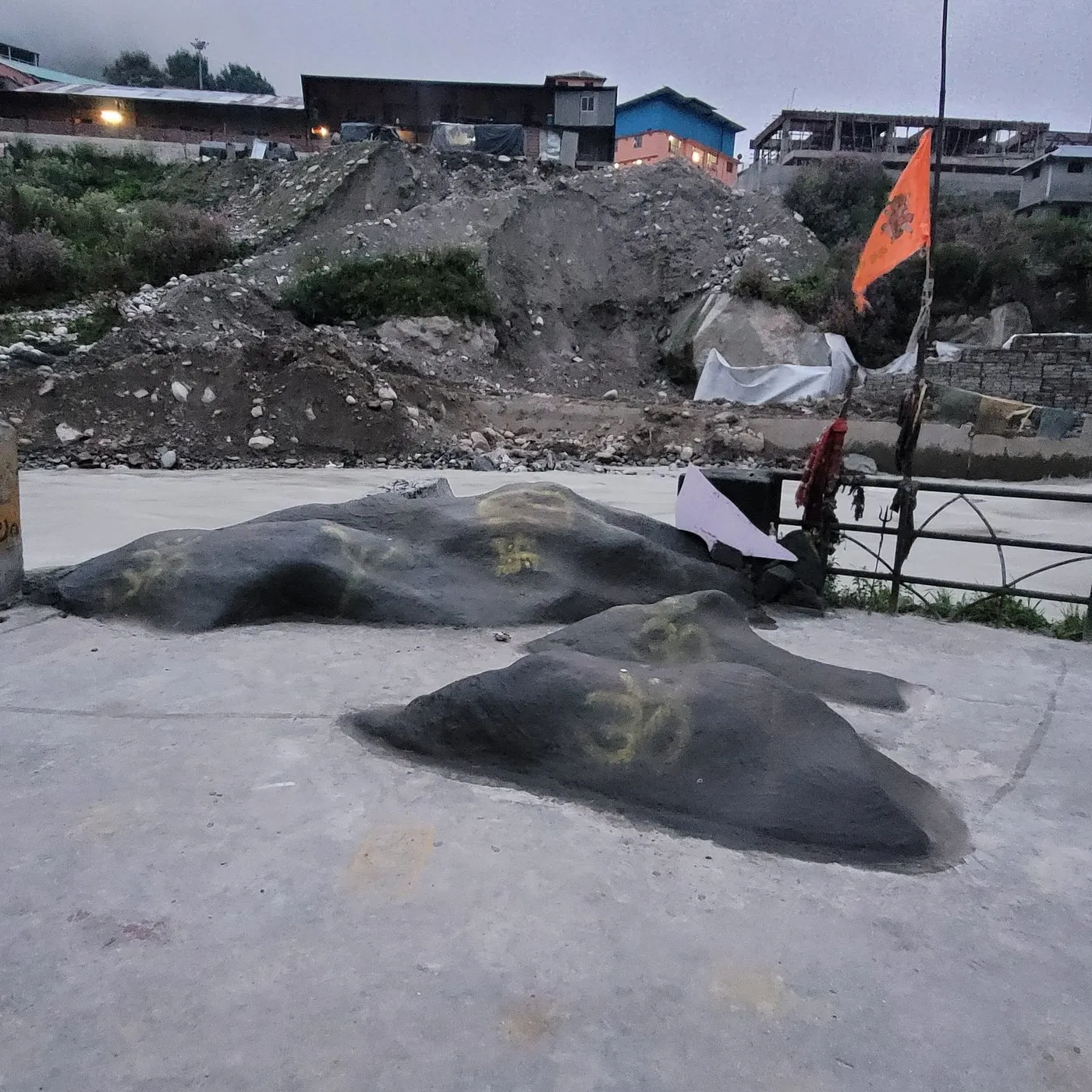
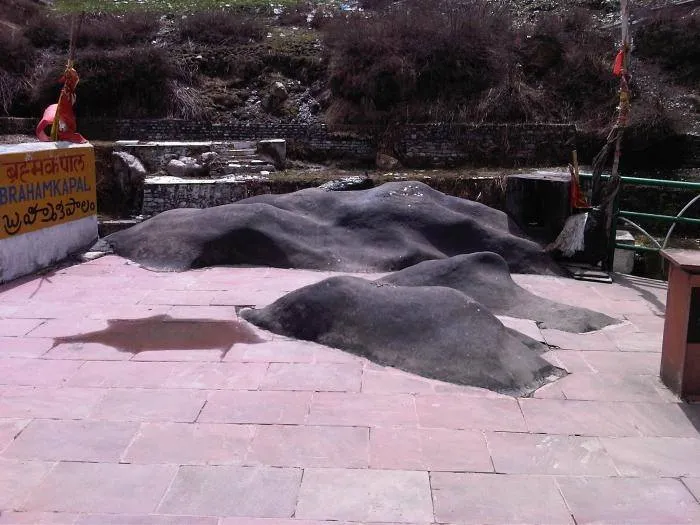
At Brahma Kapal, a boulder shaped like Brahma's head rests on the riverbank. The priests here have been performing ancestral rites for centuries. Pilgrims who come from across India and the world sit on the banks, offer rice balls (pinda) to the waters of the Alaknanda, chant the names of their ancestors, and believe — with deep sincerity — that those ancestors receive the offering and find peace.
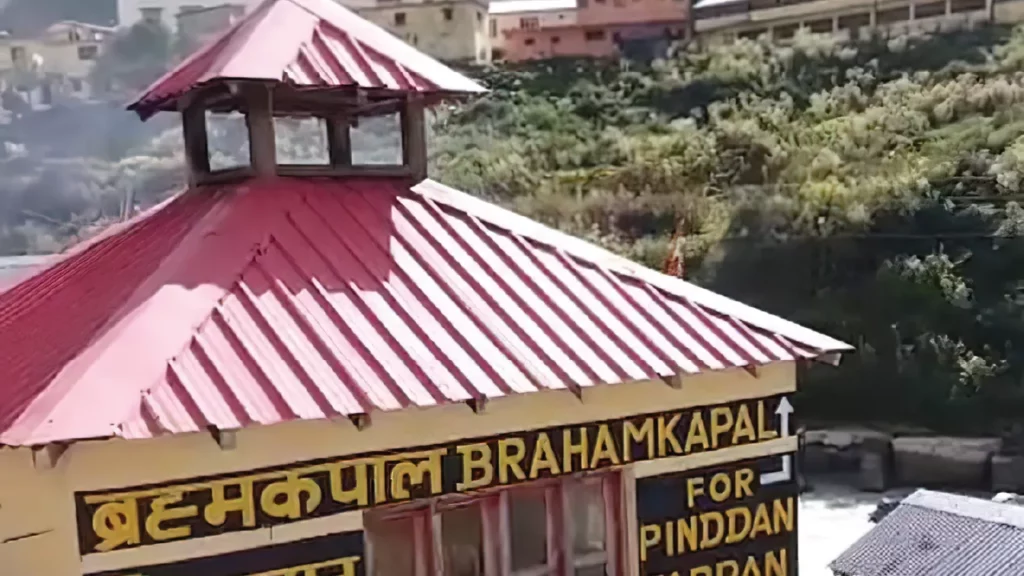
Why is this place so special? The answer is in the story — and the story is unlike anything else in Hindu scripture.
FAQ: Is Brahma Kapal a temple? It is not a conventional temple with a deity idol and a sanctum. Brahma Kapal is an open sacred platform — a Teertha (pilgrimage site) on the riverbank. Its sanctity comes from the cosmic event that occurred here, not from a structure. That said, the site is formally recognized and managed, with priests available for performing rituals.
FAQ: Is Brahma Kapal part of the Badrinath temple complex? It is adjacent to Badrinath — a short walk from the main temple. It is a separate sacred site but inseparably linked to the energy of Badrinath Dham. Coming to Badrinath and not visiting Brahma Kapal is considered incomplete by most pilgrims.
<span id="story"></span>
The Story Behind Brahma Kapal — Why Lord Shiva's Liberation Made This Place Sacred
To understand Brahma Kapal, you need to understand one of the most powerful stories in Hindu scripture — the story of Brahma Hatya.
The sin that Lord Shiva could not remove:
Long ago, Lord Brahma — the creator of the universe — committed a great transgression. He developed improper desires toward his own daughter Saraswati. Lord Shiva, witnessing this act, became enraged. In his fierce form as Bhairava, he cut off one of Brahma's five heads.
Now, here is what made this terrible: although Brahma's act was wrong, killing a god — especially Brahma, the creator himself — was the gravest sin in existence. This sin was called Brahma Hatya (Brahma-vaadha). And the moment Shiva committed it, Brahma's skull attached itself to Shiva's hand and refused to let go.
Years of penance and wandering:
Lord Shiva — one of the three supreme gods of the universe — was now cursed. He could not remove the skull. He wandered the earth as a naked beggar, carrying Brahma's skull as his begging bowl, performing penance. This was the Kapali vow. Shiva, who holds the universe in his matted hair, was now walking from place to place seeking relief from a curse that nothing and no one could lift.
Years passed. He went to sacred rivers, to pilgrimage sites, to the abodes of gods. The skull stayed.
Liberation at Badrinath:
Finally, Lord Shiva came to Badarikashrama — the abode of Lord Badrinath (Narayana/Vishnu) in the high Himalayas. He stood before Lord Badrinath and prayed with his full being — seeking relief after years of carrying the weight of his greatest sin.
Lord Badrinath heard his prayer. With the grace of Mahalakshmi, he intervened.
The moment Lord Shiva stepped into the sacred precincts of Badarikashrama, the personification of Brahma Hatya began to tremble. And then — the skull detached from Lord Shiva's hand and fell to the ground, disappearing from sight.
The place where this happened — where even Lord Shiva was freed from his greatest sin — is Brahma Kapal.
What this means for ancestors:
If Lord Shiva himself was liberated from the worst sin imaginable at this spot, it tells you something about the power of this place. Lord Badrinath gave a specific boon: whoever performs Shraddha (ancestral rites) here will see their ancestors liberated. Not temporarily comforted — liberated. Moksha. The cycle ends here.
The Puranas say explicitly: "After donating Pind at Brahmakapal, Pind Daan is no longer required."
One offering. Final liberation.
FAQ: Is the story of Brahma Kapal found in scripture or is it folklore? The story of Brahma Hatya and Lord Shiva's liberation at Badarikashrama is found in the Shiv Purana, Skanda Purana, and Badrinath Mahatmya — all authoritative Hindu texts. This is not folk legend. The Skanda Purana explicitly states that performing Shraddha at Badrinath kshetra yields eight times the spiritual benefit of Gaya. These are sacred texts, not tourist literature.
FAQ: Did the Pandavas also come to Brahma Kapal? Yes. According to the Shrimad Bhagwat Mahapuran and Badrinath Mahatmya, the Pandavas came to Brahma Kapal under Lord Krishna's guidance after the Kurukshetra war. They had incurred the karmic debt of killing their own kin. They performed Pind Daan here to seek liberation for all those who died in the war — and for their own ancestors. If Brahma Kapal could help the Pandavas carry that weight, it speaks to the depth of what this place holds.
<span id="why-brahma-kapal"></span>
Why Brahma Kapal — Why Not Gaya or Kashi?
Gaya in Bihar is the most famous site for Pind Daan in India. Kashi (Varanasi), Prayagraj, Pushkar, Haridwar — all are considered sacred for ancestral rites. So why specifically Brahma Kapal?
The Skanda Purana answers this directly:
"Performing Shraddha in Badrinath kshetra is eight times more effective than performing it in Gaya kshetra."
This is an explicit scriptural statement — not interpretation, not folk belief. Eight times.
But the difference goes beyond effectiveness:
At other pilgrimage sites, the Pind Daan benefits ancestors to varying degrees — it reduces their suffering, it moves them toward liberation, it helps them. At Brahma Kapal, the tradition says the pinda reaches ancestors directly and completely. After one Pind Daan here, further rites are not required.
This finality — this completeness of liberation — is what makes Brahma Kapal different.
For ancestors who found no peace elsewhere:
The scriptures say something remarkable: ancestors who did not find salvation at Gaya, at Kashi, at Haridwar — ancestors who have been stuck in between despite rituals performed at other places — can find their final liberation at Brahma Kapal.
If you have performed Pitra Shanti rituals before and feel the situation in your family has not changed, if Pitra Dosh symptoms persist despite prior pujas — Brahma Kapal is traditionally recommended as the ultimate remedy.
FAQ: If I have already done Pind Daan at Gaya, do I still need Brahma Kapal? Many Hindu traditions recommend beginning ancestral rites at Gaya and completing them at Brahma Kapal. The two are complementary, not competing. Gaya is auspicious. Brahma Kapal is the final destination for complete liberation. If you have done Gaya and still feel unresolved in your family situation, Brahma Kapal is the next step.
<span id="pitra-dosh"></span>
What is Pitra Dosh?
Pitra Dosh (पितृ दोष) literally means "the fault of the ancestors" — but that translation can mislead. It is not really a fault. It is a karmic imbalance, a disruption in the spiritual connection between you and your ancestral lineage.
Here is how to understand it simply:
When a person dies with unfulfilled desires, unresolved grief, or incomplete last rites — their soul does not move on freely. It carries unfinished business. That restlessness does not disappear. It ripples forward, affecting the living descendants. This is Pitra Dosh.
How it originates:
Pitra Dosh can arise from multiple causes:
- Improper or incomplete last rites — if an ancestor's death rituals (Antim Sanskar, Shraddha) were not performed correctly or not performed at all
- Ancestors who died with deep unfulfilled desires — a wish that never came true, a wrong that was never made right, a relationship left broken
- Neglect of ancestral rituals — many families have drifted away from Shraddha, Pitru Paksha observance, and annual death anniversaries over generations. That absence accumulates.
- Ancestors who died sudden, violent, or unnatural deaths — these souls often have difficulty finding peace
- Karmic debts carried forward — actions committed by ancestors that were never resolved or atoned
Astrologically, Pitra Dosh shows up in your birth chart (kundli) through:
- Affliction of the 9th house (the house of ancestors, father, and divine blessings)
- Rahu with the Sun or in the 9th house
- Saturn with the Sun or afflicting the 9th house lord
- Weak or malefic Sun in the chart
The 9th house in Vedic astrology is your karmic connection to your lineage. When it is damaged, the flow of ancestral blessings — which should naturally nourish every generation — gets blocked.
FAQ: Does everyone have Pitra Dosh? Not everyone has it. But it is more common than people think — particularly in families where ancestral rituals have been neglected for one or more generations, or where ancestors died under difficult circumstances. If you are unsure, a qualified astrologer can check your kundli for Pitra Dosh indicators.
<span id="signs"></span>
How to Check If You Have Pitra Dosh — Signs in Everyday Life
Pitra Dosh does not always announce itself through the kundli. Often, people feel its effects for years without knowing the source. Here are the signs to look for:
In Marriage and Relationships:
- Repeated, unexplained delays in marriage despite everything being in place
- Marriages breaking down or facing constant conflict from the start
- Estrangement between family members for no clear reason
- Relationships that keep falling apart in a pattern
In Health:
- Chronic illnesses that doctors cannot diagnose clearly or cure fully
- Mental health struggles — depression, anxiety, emotional breakdowns — that seem disproportionate to life circumstances
- The same illness appearing in multiple family members across generations
- Repeated hospitalizations or health crises in the family
In Career and Finances:
- Money that comes but does not stay — unexplained losses, bad investments, stolen money
- Career stagnation despite genuine hard work and qualifications
- Business ventures failing repeatedly at the last stage when success seemed assured
- A sense that no matter how much effort you put in, the results are always less than they should be
In the Home:
- No peace at home despite material comfort — constant tension, arguments, underlying unease
- A heavy or sad feeling in the house that visitors also notice
- Sleep disturbances, nightmares, or feeling of unseen presences
- Children facing behavioral problems, learning difficulties, or repeated setbacks
In the Family Pattern:
- Untimely or unnatural deaths in the family across generations
- A pattern of tragedy or difficulty that seems to repeat every generation
- Feeling of being stuck — life not moving forward despite time passing
- Property or inheritance disputes recurring in the family
The key marker is pattern. One bad year is life. A persistent pattern of the same kind of difficulty, repeating across time and family members — that is when Pitra Dosh is traditionally suspected.
FAQ: If I recognize these signs, does that confirm I have Pitra Dosh? These signs point toward it — but only a proper kundli reading by a qualified astrologer can confirm Pitra Dosh astrologically. What the signs tell you is that something in your family's energetic inheritance may be unresolved. Whether or not the astrology confirms it, performing Pitra Shanti is considered beneficial for the entire family.
FAQ: Can Pitra Dosh affect someone who has no knowledge of their ancestors? Yes. Pitra Dosh operates through the lineage, not through your personal knowledge of it. You do not need to know the names of your great-grandparents for their unresolved energy to affect you. The karmic connection runs through blood, not through memory.
<span id="pitra-shanti"></span>
What is Pitra Shanti — And Why Does It Need to Be Done at Brahma Kapal?
Pitra Shanti (पितृ शांति) means "peace of the ancestors." It is the set of rituals performed to bring liberation and peace to ancestral souls — to resolve the unfinished business they carry, settle the karmic debt, and free both the ancestors and the living descendants from the cycle of its effects.
The three core rituals within Pitra Shanti are:
Pind Daan (पिंड दान) Rice balls (pinda) made with black sesame seeds, barley, ghee, and honey are offered to the water with prescribed mantras. The pinda represents the physical body — nourishment offered to the ancestor's soul on its journey. When offered at Brahma Kapal with proper sankalp, the tradition holds that the pinda reaches the ancestor directly.
Tarpan (तर्पण) Water mixed with black sesame seeds, barley, and flowers is offered to ancestors while chanting their names. "Tarpan" comes from the Sanskrit root meaning "to satisfy" — this is the act of quenching the spiritual thirst of departed souls. It bridges the world of the living and the world of the ancestors.
Shraddha (श्राद्ध) The broader ceremony of honoring the departed — offering prayers, food, and devotion to the ancestors with faith (shraddha means faith). It is the formal act of acknowledging your lineage and expressing gratitude and care toward those who came before you.
Why Brahma Kapal specifically:
These rituals can technically be performed anywhere. The question is depth of effect. At Brahma Kapal, the tradition says these offerings land differently — they reach further, they free more completely. The Skanda Purana's statement of "eight times more effective" is not about quantity but about the permanence and completeness of the liberation achieved here.
At other sites, the ancestor may be comforted, moved toward liberation, or helped along the path. At Brahma Kapal, the path ends. Moksha is the outcome.
FAQ: Are there specific days when Pitra Shanti should be performed? The most auspicious times are: Pitru Paksha (the lunar fortnight dedicated to ancestors, September–October), Amavasya (each new moon day), and the death anniversary (tithi) of the specific ancestor. However, Pitra Shanti can be performed on any auspicious date when Brahma Kapal is accessible. DevPunya performs the puja on carefully chosen auspicious muhurat dates throughout the open season.
<span id="four-benefits"></span>
4 Benefits of the Brahma Kapal Pitra Shanti Mahapuja
<span id="moksha"></span>
1. Moksha and Eternal Peace for Ancestors
What this means: The soul of a person who dies does not always move freely toward liberation. If that person died with unfulfilled wishes, with grief, with anger, with unresolved relationships — the soul carries that weight. In Hindu understanding, a soul carrying unresolved energy often remains in a liminal state — neither fully in this world nor at peace in the next.
Your ancestors may be in this state right now. The heavy feeling in your family, the persistent pattern of difficulty, the sense that something is dragging — these are often signs of ancestral souls seeking resolution.
What the puja does: The Pitra Shanti Mahapuja at Brahma Kapal is specifically designed to give those souls what they need: acknowledgment, nourishment, love, and release. The pinda offered here, the tarpan given with their names, the mantras chanted on their behalf — these reach them. According to the Puranas, the pinda offered at Brahma Kapal is accepted directly and grants complete Moksha — liberation from the cycle of birth and death.
The scriptural promise: The Puranas say: "After donating Pind at Brahmakapal, Pind Daan is no longer required." Once done here, the liberation is complete. The ancestors are free.
🙏 Book Brahma Kapal Pitra Shanti Mahapuja →
<span id="freedom-pitra-dosh"></span>
2. Freedom from Pitra Dosh Effects
What this means: Pitra Dosh creates a block in the energy flow of your life — a kind of ancestral drag that slows down your growth, your relationships, your peace. The marriage that keeps getting delayed. The job that won't come. The money that flows away. The health problems that have no explanation. These are the everyday face of Pitra Dosh.
Pitra Dosh is not a punishment. It is an unhealed wound in the family lineage. And like any wound, it needs treatment — not ignoring.
What the puja does: When the ancestral souls find peace through the Mahapuja, the Pitra Dosh that was created by their restlessness begins to dissolve. The karmic block that was created by unfinished business starts to clear. The downstream effects — the delays, the obstacles, the heaviness — begin to lift.
This does not happen instantly in every case. But it begins. And as the ancestors find peace, their descendants tend to find progress.
Keep working on your situations with full effort — the puja clears what is energetically blocked, but your own action is what walks through the opened door.
🙏 Book Brahma Kapal Pitra Shanti Mahapuja →
<span id="prosperity-protection"></span>
3. Prosperity, Harmony and Protection for the Family
What this means: In Hindu understanding, ancestors are not just memories — they are active spiritual presences. When your ancestors are at peace, they become protectors of the living. They send blessings down the lineage. They watch over their descendants. They become the invisible hands that open doors.
When they are restless, the opposite happens. Their restlessness creates disturbance in the family's energy — conflicts, losses, illnesses, lack of peace.
What the puja does: By bringing the ancestors to a state of liberation and peace, the puja activates this protective energy. Devotees who have performed Pitra Shanti at Brahma Kapal report that the atmosphere in their homes shifts — conflicts reduce, financial situations improve, health stabilizes. These are the blessings of satisfied ancestors flowing into the living generation.
The Puranas say that Lord Shiva gave Brahma Kapal a special boon: those who perform Shraddha here will see their ancestors' blessings extend across many generations — not just one lifetime, but forward through the lineage.
🙏 Book Brahma Kapal Pitra Shanti Mahapuja →
<span id="karmic-burdens"></span>
4. Removal of Karmic Burdens
What this means: Every family carries karma. Some of it is beautiful — the legacy of good deeds, service, devotion. Some of it is heavy — the weight of actions that created suffering, of wrongs done and not resolved, of debts accumulated across generations.
Karmic burden is not about blame. Your ancestors may have done things they were not proud of — or they may have suffered things that created energetic damage they could never heal in their own lifetime. That damage does not disappear when they die. It passes into the family field.
This is the weight some families carry — the feeling that no matter how hard each generation tries, something keeps pulling them back.
What the puja does: The Mahapuja at Brahma Kapal performs the deepest form of ancestral clearing. By invoking Lord Badrinath's grace — the same grace that freed even Lord Shiva from Brahma Hatya, the greatest sin — the puja reaches into the accumulated karmic burden of the lineage and begins to dissolve it.
The Pandavas came here with the weight of having killed their own kin in a war they were destined to fight. If Brahma Kapal could carry that karma, it can carry yours.
Keep working. Keep building your life. The karmic clearing the puja creates gives your effort the clean ground it needs to bear fruit.
🙏 Book Brahma Kapal Pitra Shanti Mahapuja →
<span id="who-should"></span>
Who Should Perform This Puja?
Anyone who senses unresolved ancestral energy in their family.
More specifically:
- Anyone whose kundli shows Pitra Dosh — afflictions in the 9th house, Rahu with Sun, Saturn with Sun
- Anyone experiencing persistent, unexplained difficulties in marriage, career, finances, or health that don't respond to practical efforts
- Families where ancestral rituals have not been performed in years — where Shraddha has been neglected across one or more generations
- Anyone whose ancestors died with unfulfilled wishes — an elder who never saw their child's wedding, a parent who died in conflict with the family, someone who went suddenly without preparation
- Anyone whose ancestors did not receive proper last rites or whose cremation/burial was incomplete or rushed
- Families carrying a generational pattern of tragedy, loss, or stagnation that repeats
- Anyone who has performed Pind Daan at Gaya or other sites but still feels the ancestral situation is unresolved
- Anyone going through marriage delays, childlessness, or repeated pregnancy loss and suspects an ancestral cause
- Anyone who simply wants to express love and gratitude to their ancestors and ensure their peace — you do not need to have a problem to offer this
FAQ: Can a daughter perform this puja for her parents' ancestors? Yes. The tradition that only sons can perform Shraddha is a product of historical custom, not of divine law. Devotion and sincere intention matter more than gender. A daughter's love for her family is not lesser. DevPunya performs the puja on your behalf — your name and gotra are declared in the sankalp regardless of your gender.
FAQ: Can I perform this puja if I don't know my gotra? Yes. If you do not know your gotra, the pandit uses Kashyap gotra — which is the traditional default for those whose lineage is uncertain. This does not reduce the efficacy of the puja in any way.
FAQ: Can I do this puja for a parent who is still living? No. Pitra Shanti and Pind Daan are specifically for those who have departed. For a living parent's blessings and wellbeing, other pujas are appropriate. This puja is for the souls of the deceased.
<span id="when-open"></span>
When is Brahma Kapal Open?
Brahma Kapal is accessible only during the months that the Badrinath temple is open — roughly May to November each year.
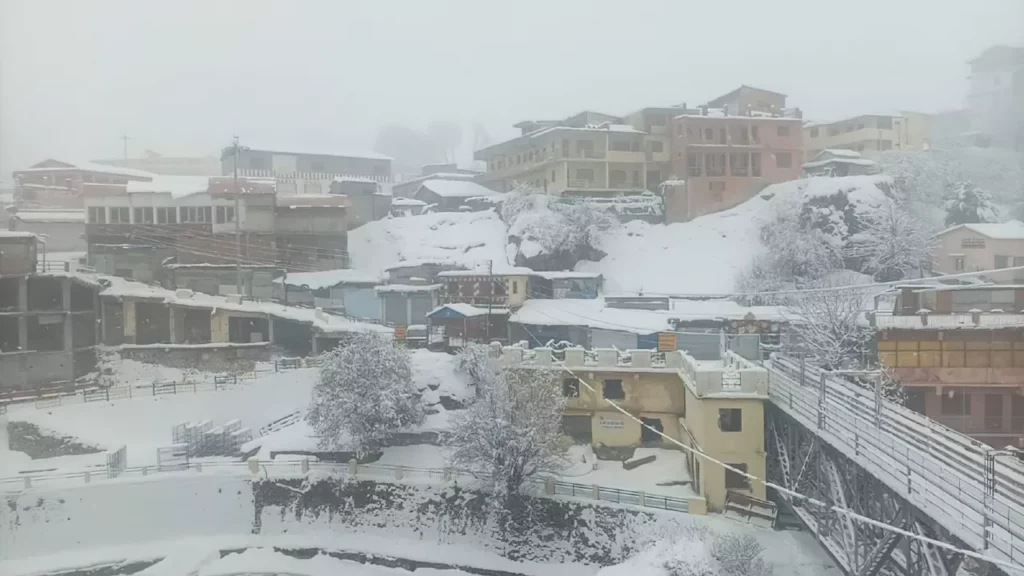
Badrinath sits at over 3,100 meters altitude. In winter, the entire area is buried under several feet of snow, roads are blocked, and temperatures fall well below zero. The temple formally closes for the winter season (usually in November), and opens again in spring (usually in May) — the date is announced each year on Basant Panchami.
During the winter months, Lord Badrinath is worshipped at the Narsingh Temple in Joshimath — a lower altitude location where the priests maintain the worship tradition through the closed season.
Best times to visit for Pitra Shanti:
- Pitru Paksha (September–October, the lunar fortnight dedicated to ancestors) — this is the most auspicious time. Thousands of pilgrims make the journey specifically for this period.
- Amavasya (new moon day) — each month during the open season
- Immediately after the Kapat opens in May — the first days of the season carry a special spiritual charge
If you cannot travel to Badrinath:
This is where DevPunya's service matters. The puja is performed at Brahma Kapal by the pandit on your behalf, on an auspicious date during the open season. You do not need to be physically present. Your name and gotra are declared in the sankalp through the full ceremony.
🙏 Book Puja on Auspicious Date →
<span id="how-to-reach"></span>
How to Reach Brahma Kapal, Badrinath
Brahma Kapal is within the Badrinath Dham complex. Once you reach Badrinath, the site is a short walk (200–300 meters) from the main temple.
By Road:
| From | Distance | Approximate Time |
|---|---|---|
| Haridwar | ~320 km | ~10–12 hours |
| Rishikesh | ~250 km | ~9–10 hours |
| Joshimath | ~45 km | ~2.5 hours |
| Dehradun | ~280 km | ~9–10 hours |
Route: Haridwar → Rishikesh → Devprayag → Rudraprayag → Karnaprayag → Joshimath → Badrinath
The road from Rishikesh follows NH 58 through the Panch Prayag (the five sacred confluences) — Devprayag, Rudraprayag, Karnaprayag, Nandprayag, Vishnuprayag — before reaching Joshimath and then Badrinath. The road is scenic but mountain terrain — narrow sections, sharp curves, and altitude gain are expected. Hire an experienced hill driver or take government/private bus services from Haridwar or Rishikesh.
By Helicopter: Helicopter services run from Dehradun (Sahastradhara Helipad) to Badrinath — approximately one hour. This avoids the 10-hour road journey. Advance booking required; costs are significantly higher.
By Train + Road: Nearest railway station is Rishikesh (connected to Delhi, Haridwar, and major cities). From Rishikesh, travel by road to Badrinath (~250 km).
FAQ: Is the road to Badrinath safe? During the open season (May to November), the road is regularly maintained and is generally safe. Mountain roads have their natural challenges — weather can change, there can be minor landslides in monsoon season, and night driving is not recommended. Travel during daylight hours and check road conditions before starting. From June to August (monsoon), roads can occasionally be blocked for short periods due to landslides.
<span id="best-time"></span>
Best Time to Visit
For Pitra Shanti: September–October during Pitru Paksha is the most auspicious. The entire lunar fortnight is dedicated to ancestral rites across Hinduism, and performing Pind Daan at Brahma Kapal during this window is considered extraordinarily powerful.
For comfortable travel: May–June and October–November offer the most pleasant weather — clear skies, moderate temperature, good road conditions.
Avoid: December to April. The area is under deep snow, roads are blocked, and Brahma Kapal is inaccessible.
<span id="devpunya-puja"></span>
The Brahma Kapal Pitra Shanti Mahapuja — DevPunya Service
The puja offered through DevPunya is a Pitra Shanti & Pitra Dosh Nivaran Mahapuja performed at Brahma Kapal, Badrinath — by a qualified pandit, at the sacred riverbank, on an auspicious muhurat date during the Badrinath open season.
What happens during the Mahapuja:
- Your sankalp is taken at the beginning — your name and gotra are declared
- Pind Daan is performed on the sacred Brahma Kapal platform — the pinda is made and offered to the Alaknanda with prescribed Vedic mantras
- Tarpan is performed — water offerings made with sesame seeds and barley, chanting the names of your ancestors
- Shraddha — the full ceremony of ancestral honor is completed
- The puja closes with prayers for the Moksha of your ancestors and the wellbeing of your family
The puja is performed at the actual Brahma Kapal — on the same sacred ground where Lord Shiva was freed from his greatest sin, where the Pandavas performed their Shraddha, where devotees have been coming for centuries with the same prayer in their hearts.
After the puja:
- You receive a video of your puja within 72 hours — so you can witness the ceremony at Brahma Kapal yourself
- Blessed prasad from the ceremony is shipped to your address within 8–10 days
Packages:
- 1 Member / 2 Members / 4 Members / 6 Members
- One member is sufficient. The number refers to how many family members are named in the sankalp. Choose what feels right for your family — the puja's core efficacy does not change.
🙏 Book Brahma Kapal Pitra Shanti Mahapuja →
<span id="how-to-book"></span>
How to Book
Step 1: Click the link below and select your puja package.
Step 2: Choose the number of members to be named in the sankalp. One member is enough. You can include more if you wish — the choice is yours.
Step 3: Complete your booking and enter your name and gotra details. The pandit takes your sankalp and performs the Mahapuja at Brahma Kapal on an auspicious date.
Step 4: Receive your puja video within 72 hours. Prasad is delivered to your address.
🙏 Book Brahma Kapal Pitra Shanti Mahapuja →
<span id="guarantee"></span>
DevPunya Guarantee
- Puja video delivered within 72 hours
- Full refund or free reschedule, no questions asked if the puja cannot be performed
<span id="faq"></span>
Frequently Asked Questions
About Pitra Dosh
How do I know if I have Pitra Dosh in my kundli? The main astrological indicators are: Rahu in the 9th house or with the Sun, Saturn with the Sun, an afflicted 9th house lord, or a weak/malefic Sun in the birth chart. A qualified astrologer can read your kundli and tell you definitively. If you do not have access to an astrologer, look at the pattern of your family's difficulties — persistent, unexplained obstacles in marriage, health, finances, or career that repeat across time are strong indicators.
Can Pitra Dosh affect someone who is doing everything right? Yes. This is what makes Pitra Dosh difficult to recognize. You can be hardworking, sincere, and doing all the right things — and still face an invisible headwind. That headwind is often ancestral. It is not about your actions; it is about the unresolved energy in the lineage you were born into.
Does Pitra Dosh pass from parents to children? Yes. Pitra Dosh operates through the lineage. If it is not resolved in one generation, it continues into the next — and the next. This is why performing Pitra Shanti is considered a gift not just to your ancestors but to your own children and grandchildren. You are clearing something for the generations that follow you.
Can Pitra Dosh cause problems in the next generation even if the current generation seems fine? Yes. Pitra Dosh can lie dormant for a generation and then manifest strongly in the next. The absence of symptoms now does not mean the karmic debt has been cleared — it may simply mean it has not yet activated fully.
Is Pitra Dosh the same as ancestral curse (Pitru Shaap)? Not exactly. Pitru Shaap (ancestral curse) is a specific situation where an ancestor actively cursed the lineage due to being wronged. Pitra Dosh is broader — it includes all forms of ancestral restlessness and unresolved karma, whether it comes from neglect, improper rites, or unfulfilled wishes. Pitru Shaap is one type of Pitra Dosh, but Pitra Dosh covers much more.
About Brahma Kapal and the Puja
Why is Brahma Kapal considered more powerful than Gaya for Pind Daan? The Skanda Purana states explicitly that Shraddha at Badrinath kshetra is eight times more effective than at Gaya. Gaya is the standard recommended site for Pind Daan. But Brahma Kapal is the site where Lord Shiva himself was liberated from Brahma Hatya — the gravest sin in existence. Lord Badrinath gave a specific boon that pinda offered here grants complete Moksha. This is the difference: Gaya helps, Brahma Kapal completes.
How many times do I need to perform Pind Daan at Brahma Kapal? The tradition says once is sufficient. The Puranas explicitly state: "After donating Pind at Brahmakapal, Pind Daan is no longer required." One complete, sincere offering here is believed to accomplish what might require multiple visits elsewhere.
I have already done Pind Daan at Gaya. Should I still do it at Brahma Kapal? The Hindu tradition actually recommends performing Pind Daan at Gaya first, and concluding with Brahma Kapal for complete liberation. If you have done Gaya and still feel ancestral issues persist in your family, Brahma Kapal is the traditional next step. Many families do both.
Can I do this puja on behalf of an ancestor I never met — like a great-grandparent? Yes. In fact, Pitra Shanti is specifically recommended for ancestors whose generation is removed — those who died long before you were born, whose rites may not have been properly observed, whose stories have been lost. You do not need to have known them. The intention and the bloodline connection is sufficient.
Will the puja give guaranteed results? The result is between you and your ancestors, and between them and the divine. What this puja does is create a sincere, complete offering on their behalf — performed at the most sacred site for ancestral liberation in Hinduism, by a qualified pandit. Whether and how the ancestors respond is in their journey and in divine timing, not ours.
What we know from tradition: when offered sincerely, Brahma Kapal's Pind Daan reaches. Keep working on your own life with full effort. The puja removes what is energetically blocked — your effort walks through what opens.
What if my family situation doesn't change after the puja? Some karmic imbalances are deep — rooted in multiple generations, carrying heavy unresolved energy. A single puja may begin the clearing without completing it. Many families perform the puja annually during Pitru Paksha as a regular practice, not just as a one-time remedy. Consistent devotion to ancestors, combined with your own sincere effort in life, is the fuller path.
Can I do this puja if my ancestors were not Hindu? The tradition of Pitra Shanti is rooted in Hindu Vedic practice. If your family comes from a different faith background, this specific Vedic ceremony may not be the right fit. The underlying intention — honoring those who came before us and seeking their peace — is universal. But the specific Vedic rites are most meaningful for families within the Hindu tradition.
About the Service
Do I need to travel to Badrinath for the puja? No. DevPunya performs the puja at Brahma Kapal on your behalf. Your name and gotra are declared in the sankalp by the pandit through the full ceremony at the sacred site. You receive a video of the puja and prasad at home.
I don't know my gotra. Can I still book? Yes. If you do not know your gotra, the pandit uses Kashyap gotra — the traditional default in Hindu practice for those with uncertain lineage. This is a recognized and accepted practice. It does not reduce the efficacy of the puja.
When will the puja be performed? DevPunya performs the puja on auspicious muhurat dates during the Brahma Kapal open season (May to November). The exact date depends on the available schedule and muhurat calendar.
How will I know the puja was actually performed at Brahma Kapal? You receive a video of your puja within 72 hours. The video shows the pandit performing the ceremony at Brahma Kapal — the sacred platform, the Alaknanda river, the offerings made on your behalf. You can see and hear the full ceremony.
<span id="mantra"></span>
Mantra for Pitra Shanti — Prayer for Ancestors
The simplest and most universal prayer for ancestral peace:
Pitra Tarpan Mantra:
ॐ पितृभ्यः स्वधायिभ्यः स्वधा नमः Om Pitribhyah Svadhayibhyah Svadha Namah
Meaning: I bow to the ancestors. May this offering (svadha) reach them. May they be satisfied and at peace.
How to use this mantra:
On Amavasya (new moon day) each month, face south (the direction of the ancestors in Hindu tradition), offer a handful of water mixed with black sesame seeds, and chant this mantra 11 times while thinking of your ancestors by name. This simple practice — done consistently — maintains your connection with the ancestral lineage and sends them ongoing nourishment.
For the complete Pitra Shanti — the Pind Daan, the Shraddha, the full ceremony — that requires a qualified pandit at a sacred teertha. For the monthly connection, this mantra and tarpan practice is what you can do from home.
Jai Badri Vishal.
Your ancestors were once where you are now — doing their best, carrying their weight. Offer them peace. Let their journey complete. And let that completion be the foundation on which your family moves forward.
🙏 Book Brahma Kapal Pitra Shanti Mahapuja →
Watch Brahma Kapal and the Pitra Shanti ceremony: