What is Rudraksha? Origin, Meaning, Significance in Hinduism | Complete Guide
What is Rudraksha bead, how it originated, scientific name, where it grows, significance in Sanatan Dharma, why sacred to Lord Shiva. Complete guide.
What is Rudraksha? Origin, Meaning & Significance Explained
Sacred seed from Shiva's tears · Elaeocarpus ganitrus tree · Himalayan origins · Why it's sacred in Hinduism
Quick Answer: What is Rudraksha?
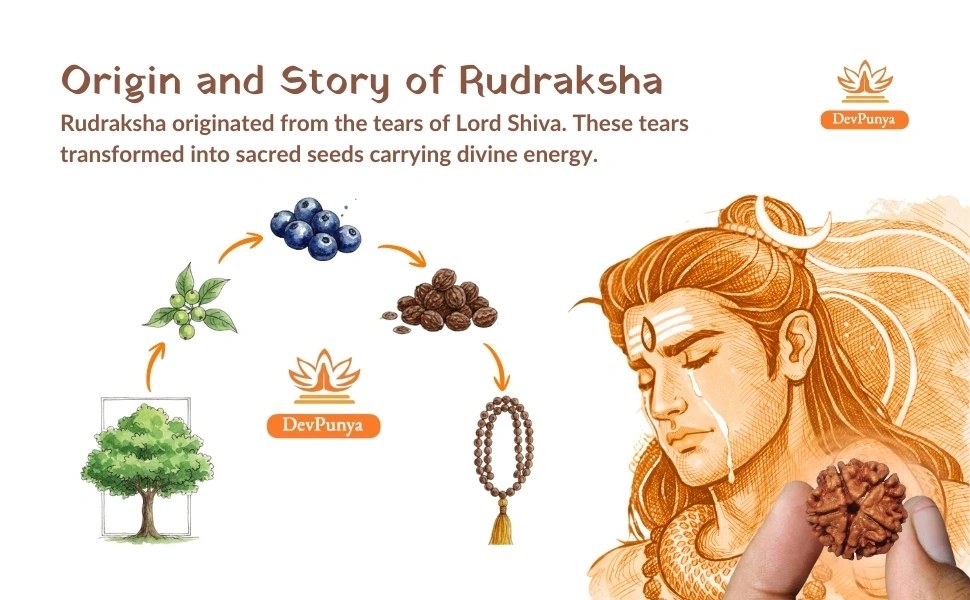
Rudraksha is a sacred seed from the Rudraksha tree (Elaeocarpus ganitrus), traditionally used in Hindu and Buddhist practices for spiritual protection, meditation, and planetary balance. The name means "Shiva's tear" — according to legend, Rudraksha trees grew where Lord Shiva's tears of compassion touched the earth.
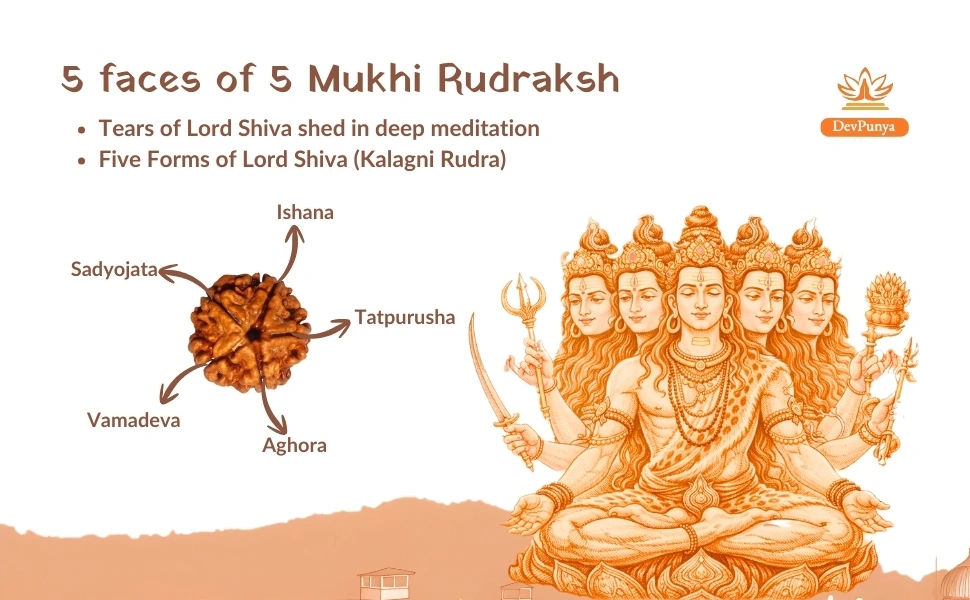
The seed has natural facets called "mukhi" (faces) formed by deep lines. These faces range from 1 to 21, each carrying different spiritual properties. 5 Mukhi (Panchmukhi) Rudraksha is the most common and universally beneficial type.
The Legend: Rudraksha Origin Story
Shiva's Tears of Compassion
The Shiva Purana narrates the sacred origin:
After thousands of years of deep meditation for the welfare of all living beings, Lord Shiva opened his divine eyes. Overcome with compassion for humanity's suffering, tears fell from his eyes onto the earth.
Where these tears touched the ground in different regions:
- Himalayan region — tears from his left eye created Rudraksha trees
- Indonesia region — tears from his right eye created Rudraksha trees
The trees that grew carried Shiva's divine energy in their seeds. These seeds became known as Rudraksha — literally "Rudra's (Shiva's) tears (aksha)."
Why This Matters
This isn't just mythology — it establishes Rudraksha as Lord Shiva's direct blessing to humanity. Wearing Rudraksha is considered wearing a piece of Shiva's compassion itself.
📿 Order Energized 5 Mukhi Mala →
Scientific Understanding: What is Rudraksha Botanically?
Botanical Name: Elaeocarpus ganitrus
Rudraksha is the seed of the fruit from the Elaeocarpus ganitrus tree (also written as Elaeocarpus sphaericus).
Tree Characteristics:
- Family: Elaeocarpaceae
- Height: Can grow 50-200 feet tall
- Fruit: Blue outer shell (similar to blueberry)
- Seed: Hard, woody seed with natural vertical lines (mukhi)
- Lifespan: Trees can live for several hundred years
Where Rudraksha Trees Grow
Primary regions:
- Nepal — Himalayan slopes (most prized Rudraksha)
- India — Uttarakhand, Himachal Pradesh, Assam, Arunachal Pradesh
- Indonesia — Java, Sumatra
- Myanmar (Burma)
- Sri Lanka
- Thailand (rare)
Why Nepalese Rudraksha are considered superior:
- Grow at higher altitudes (more concentrated energy)
- Larger size
- Deeper mukhi lines
- Colder climate produces denser beads
Etymology: Breaking Down "Rudraksha"
Rudraksha = Rudra + Aksha
Rudra (रुद्र)
Rudra is one of the names of Lord Shiva. It means:
- "The Roarer" — representing the fierce, transformative aspect of Shiva
- "The Remover of Suffering" — Shiva destroys what causes pain
- In Vedic texts, Rudra is the storm god who becomes Shiva in later Hinduism
Aksha (अक्ष)
Aksha has multiple meanings:
- "Eye" (most commonly used in Rudraksha context)
- "Tear" (from the eye)
- "Seed" or "bead"
Combined Meaning
Rudraksha = "Rudra's (Shiva's) Eye/Tear"
The seed is both the tear that fell from Shiva's eye AND the eye through which Shiva sees his devotees with compassion.
📿 Order Energized 5 Mukhi Mala →
Why Rudraksha is Sacred in Sanatan Dharma
1. Direct Connection to Lord Shiva
Lord Shiva himself wears Rudraksha. In every traditional depiction:
- Shiva wears Rudraksha mala around his neck
- Rudraksha on his arms
- Rudraksha in his hair
Scriptural statement from Shiva Purana: "One who wears Rudraksha is Shiva himself in human form."
This establishes Rudraksha as not just blessed BY Shiva, but AS Shiva's own adornment.
2. Mentioned in Ancient Hindu Scriptures
Shiva Purana — Entire chapters dedicated to:
- Different types of Rudraksha (1 to 21 Mukhi)
- Benefits of each type
- How to wear them
- Mantras for each Rudraksha
Padma Purana — Details on:
- Wearing methods
- Astrological applications
- Spiritual benefits
Devi Bhagavata — Significance for Shakti worship and goddess devotees
3. Used by Sages, Yogis, and Rishis
For thousands of years, spiritual practitioners have worn Rudraksha:
- Rishis during Vedic ceremonies
- Yogis during meditation and sadhana
- Tantric practitioners for mantra japa
- Monks (both Hindu and Buddhist)
Why? Because Rudraksha:
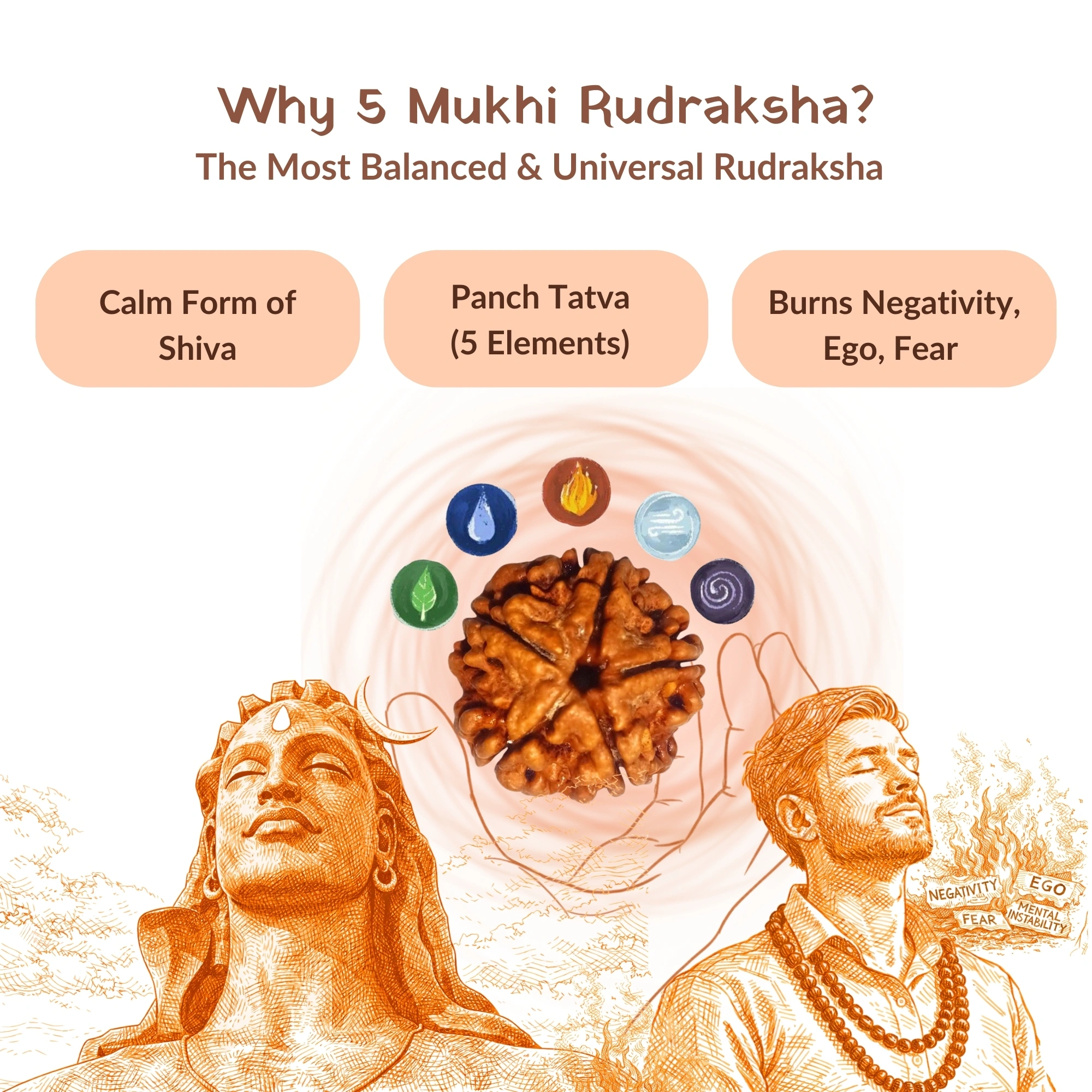
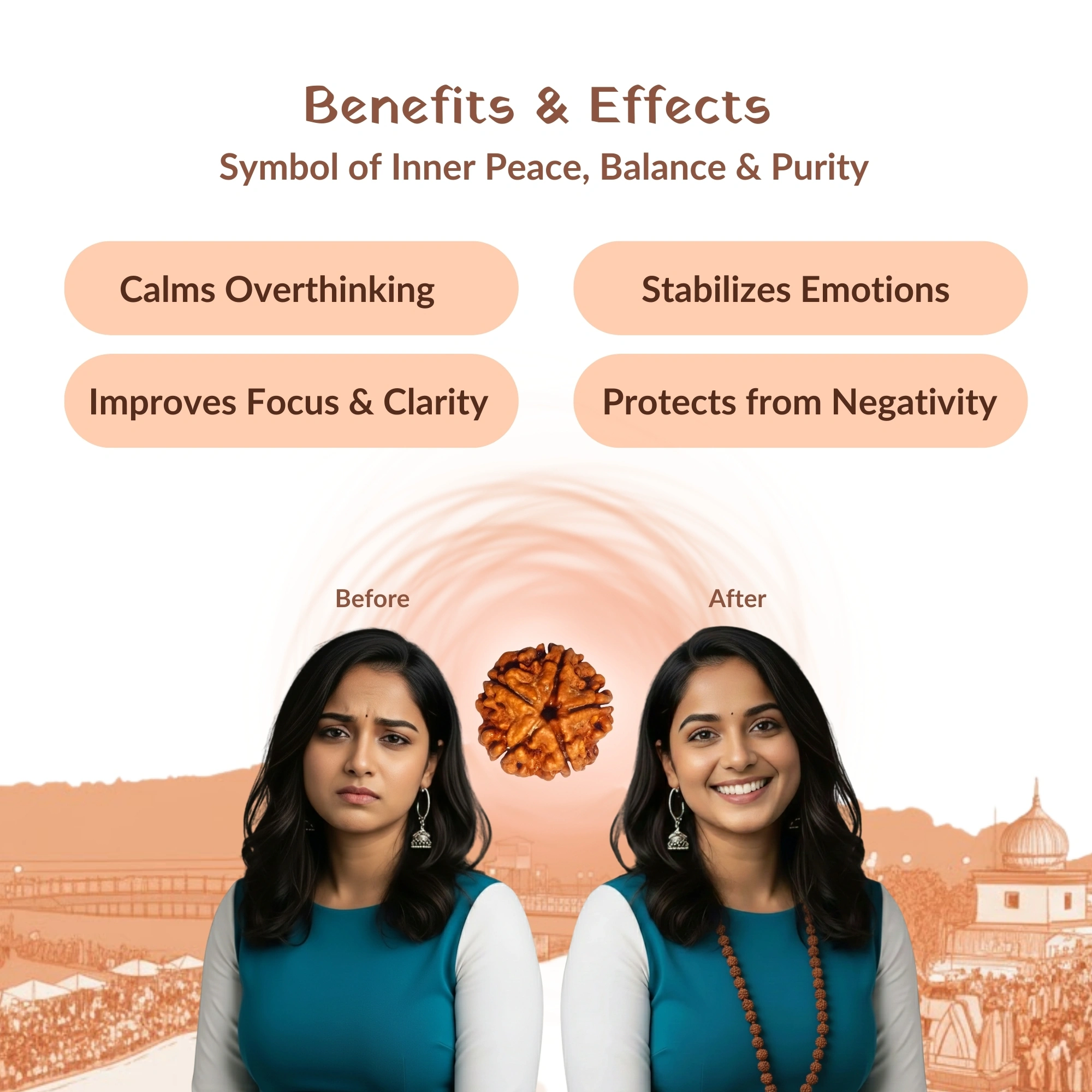
- Calms the mind — reduces vrittis (mental fluctuations)
- Enhances concentration — supports dharana (focused attention)
- Protects energy field — creates spiritual shield (kavach)
4. Planetary Balance in Vedic Astrology
In Jyotish (Vedic astrology), specific Rudraksha types are prescribed to:
- Balance malefic planets — reduce harmful planetary influences
- Strengthen beneficial planets — amplify positive planetary energies
- Remedy doshas — correct planetary imbalances in birth chart
Example: 5 Mukhi Rudraksha balances Jupiter (Guru), the planet of wisdom and prosperity.
📿 Order Energized 5 Mukhi Mala →
Physical Structure: How Rudraksha is Formed
The Mukhi (Faces)
Mukhi means "face" — the natural vertical lines running from top to bottom of the seed.
Formation:
- As the Rudraksha seed develops inside the fruit, natural clefts form
- These clefts create compartments (faces)
- The number of faces determines the type: 1 Mukhi, 2 Mukhi, 3 Mukhi, etc.
Why this matters spiritually: Each mukhi configuration creates a different energetic pattern. This is why different Rudraksha types have different benefits.
Natural vs Artificial Mukhi
Genuine Rudraksha:
- Mukhi lines are deep, natural grooves
- Lines run continuously from top to bottom
- Slightly irregular (nature is not perfectly symmetrical)
Fake Rudraksha:
- Mukhi lines are shallow cuts (made artificially)
- Lines may not run completely from top to bottom
- Suspiciously perfect symmetry
Learn how to identify genuine Rudraksha →
Who Can Wear Rudraksha?
Universal Accessibility
Unlike many spiritual items, Rudraksha is for everyone:
✅ All genders — Men, women, children
✅ All ages — Young to elderly
✅ All religions — Hindus, Buddhists, Sikhs, and even non-religious people wear for wellness
✅ All castes/communities — No restrictions
✅ All occupations — Students, professionals, businesspeople, homemakers
Specifically for 5 Mukhi (Panchmukhi):
- No astrological calculation needed
- No specific mantra required before wearing
- No dietary restrictions (though sattvic lifestyle enhances benefits)
Why This Openness?
Shiva Purana states: "Panchmukhi Rudraksha is for all beings, without distinction."
Shiva's compassion extends to all — Rudraksha carries that universal blessing.
📿 Order Energized 5 Mukhi Mala →
Rudraksha in Buddhism
Buddhist Connection
Rudraksha isn't exclusive to Hinduism. Buddhist monks, especially:
- Tibetan Buddhists — use Rudraksha mala for mantra japa
- Zen practitioners — for meditation beads
- Mahayana traditions — as sacred mala
Why Buddhists use Rudraksha:
- Represents Avalokiteshvara (Bodhisattva of Compassion) — similar to Shiva's compassionate aspect
- Aids meditation and mindfulness
- Traditional material for mala beads (along with bodhi seeds)
Interfaith Spiritual Tool
This demonstrates Rudraksha's universal spiritual utility — it transcends religious boundaries while remaining rooted in Vedic tradition.
Modern Scientific Perspective
Electromagnetic Properties
Recent studies have explored Rudraksha's physical properties:
Findings:
- Slight magnetic properties — due to seed composition
- Capacitance — ability to store subtle electrical charge
- Effect on heart rate variability — some studies show calming effect when worn
Interpretation:
- Ancient texts attributed spiritual power
- Modern science explores bioelectrical effects
- Both may describe the same phenomenon from different angles
Stress Reduction
Research observations (limited but growing):
- Wearing Rudraksha mala during meditation correlates with:
- Reduced cortisol (stress hormone)
- Lower blood pressure in some subjects
- Improved heart rate variability
Important: Research is ongoing. Traditional benefits are based on thousands of years of experiential wisdom, not just recent scientific studies.
Buy Authentic Energized Rudraksha
Ready to experience Rudraksha's benefits yourself?
📿 Order Abhimantrit Panchmukhi Rudraksha Mala →
What you get:
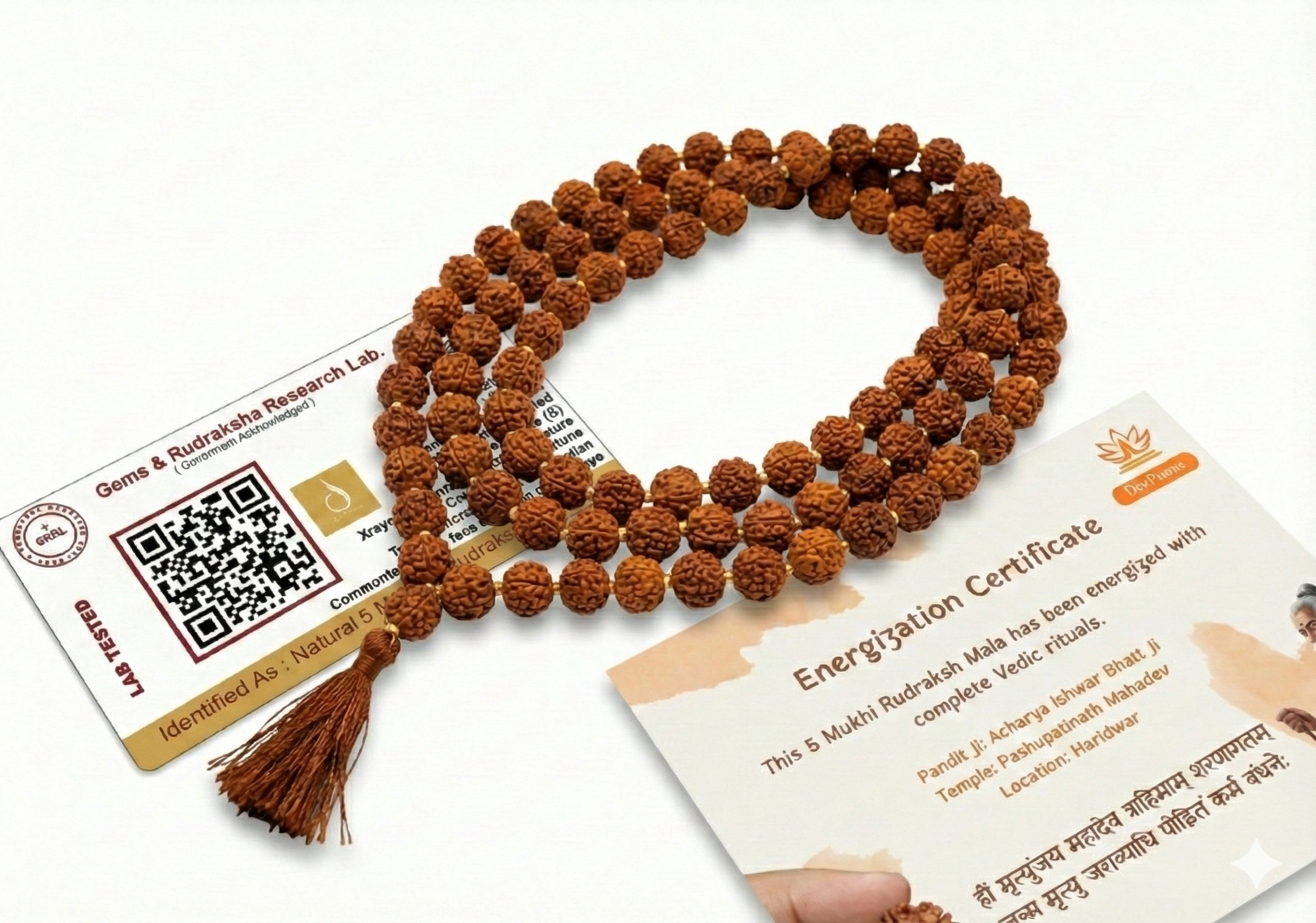
- Genuine 5 Mukhi Rudraksha (lab certified)
- Energized at Pashupatinath Temple by Acharya Ishwar Bhatt Ji
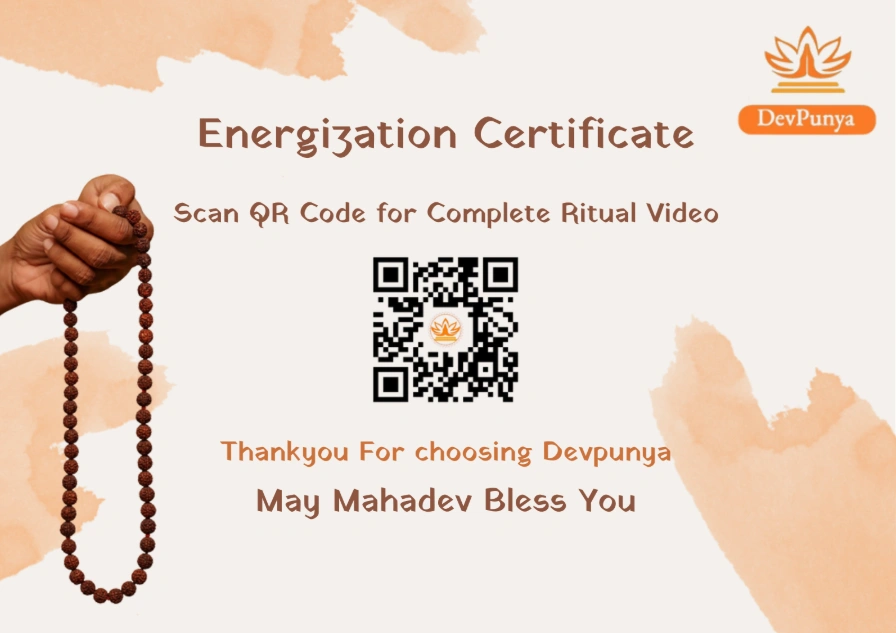
- Complete video proof of energization ritual
- Original certificate
- Wearing instructions
Next Steps: Learn More
Explore Related Topics:
Types of Rudraksha (1 to 21 Mukhi) →
Understand all Rudraksha varieties and their specific purposes
5 Mukhi Rudraksha Benefits →
Complete guide to the most popular and powerful Rudraksha
Abhimantrit vs Siddha vs Normal →
Why energization matters and what makes Rudraksha truly powerful
How to Wear Rudraksha →
Practical guide on wearing, mantras, and best practices
Frequently Asked Questions
Q: Is Rudraksha only for Hindus?
A: No. While rooted in Hindu tradition, Rudraksha is worn by Buddhists, Sikhs, and even non-religious people for its calming and wellness properties.
Q: What is the difference between Rudraksha and Tulsi mala?
A: Tulsi (holy basil) mala is made from plant stems. Rudraksha is a tree seed. Both are sacred, but Rudraksha is specifically connected to Lord Shiva, while Tulsi is connected to Lord Vishnu.
Q: Can I wear Rudraksha if I eat non-veg or drink alcohol?
A: Yes. The Shiva Purana has no dietary restrictions for 5 Mukhi Rudraksha. However, sattvic (pure) lifestyle amplifies benefits.
Q: How long does Rudraksha last?
A: With proper care, Rudraksha can last for many years — even decades. Some ancient Rudraksha beads are hundreds of years old.
More FAQs on wearing and care →
Summary: What is Rudraksha?
Rudraksha is:
- Sacred seed from Elaeocarpus ganitrus tree
- Originated from Lord Shiva's tears of compassion
- Carries natural faces (mukhi) from 1 to 21
- Used for spiritual protection, meditation, and wellness
- Mentioned in ancient Hindu scriptures
- Suitable for everyone (no restrictions for 5 Mukhi)
- Grows primarily in Himalayan regions and Indonesia
📿 Start your spiritual journey with authentic Rudraksha →
Related: Panchmukhi Benefits | All Types | How to Wear | Genuine vs Fake